Insect Habitat Survey
Insect habitat is any space, biological or non-living, which allows insects to flourish. This project examines wildflower strips planted next to apple orchards in the Columbia River Basin to improve habitat for pollinating insects.
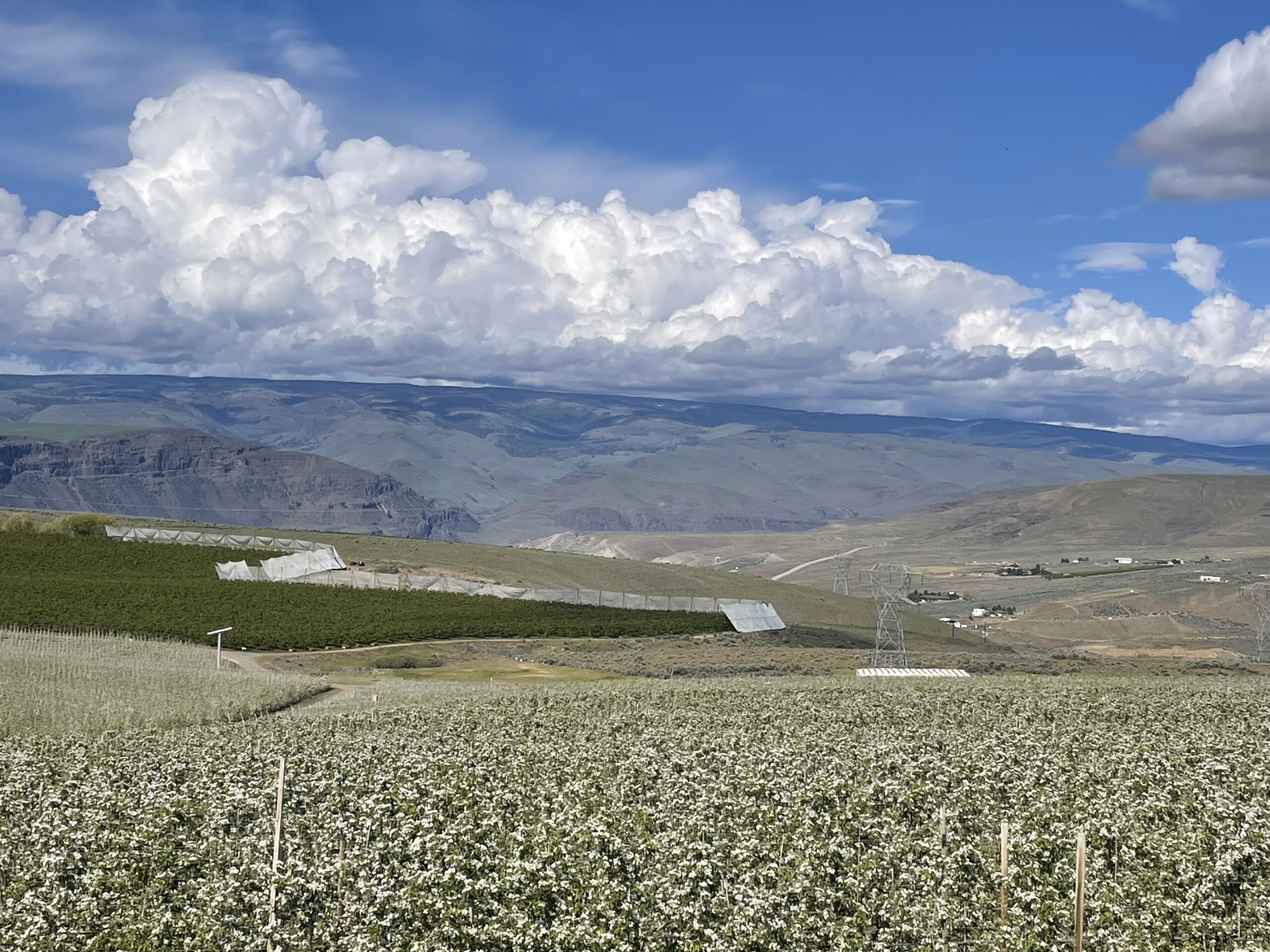
Bees and other insects
The primary focus of this study is how these flower strips impact wild bee populations, but wildflowers provide habitat for other beneficial organisms as well. Below are some of the most common species found in and around apple orchards during 2023.
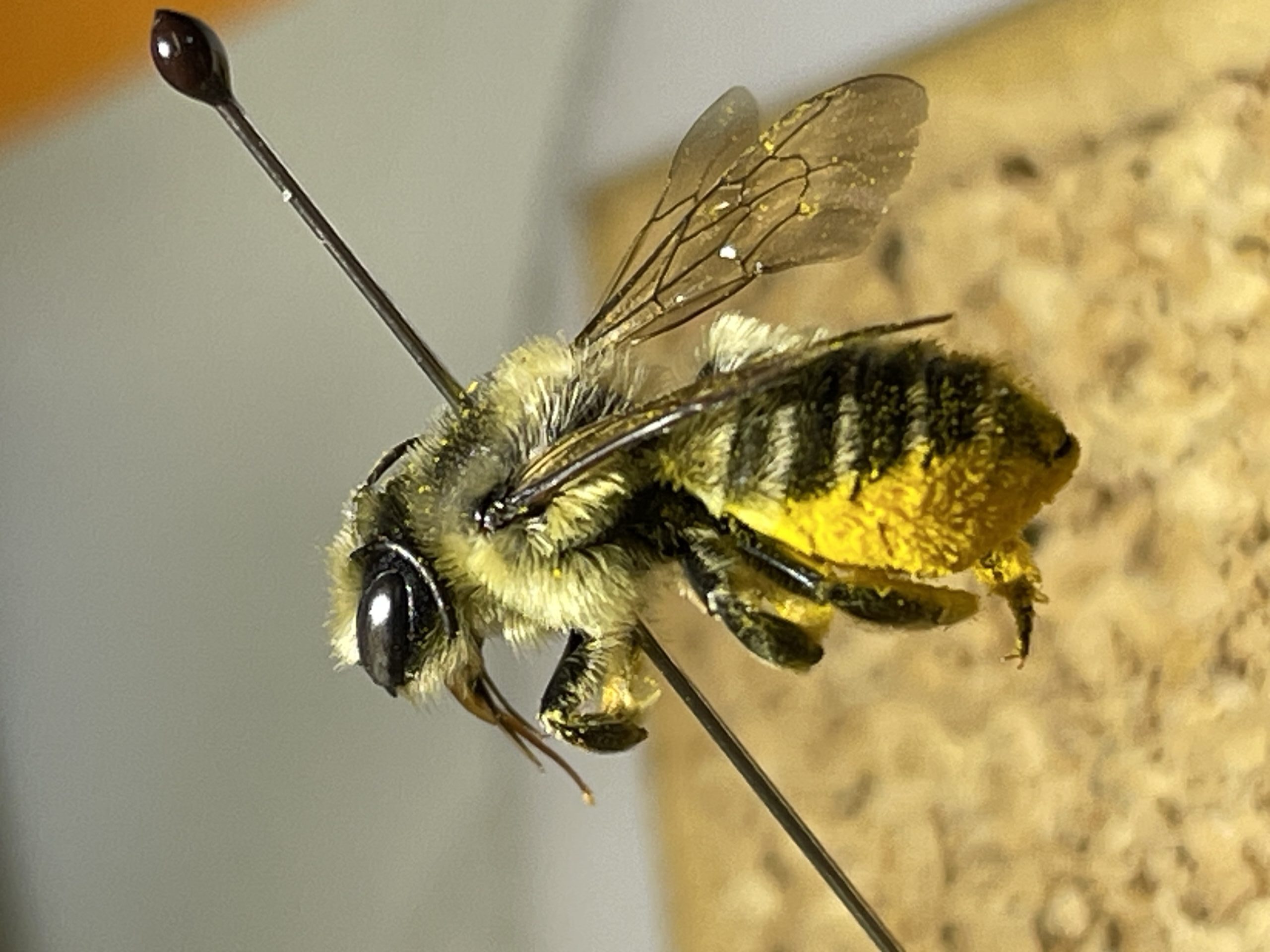
Pinned Bee with Pollen
This pinned Megachile bee has her tongue out, showing the mechanisms for lapping up nectar from flowers. The hairy underside of her abdomen, known as the scopa, is full of pollen she worked hard to collect. Researchers pin the specimens they collect in the field so they can identify them in the lab.
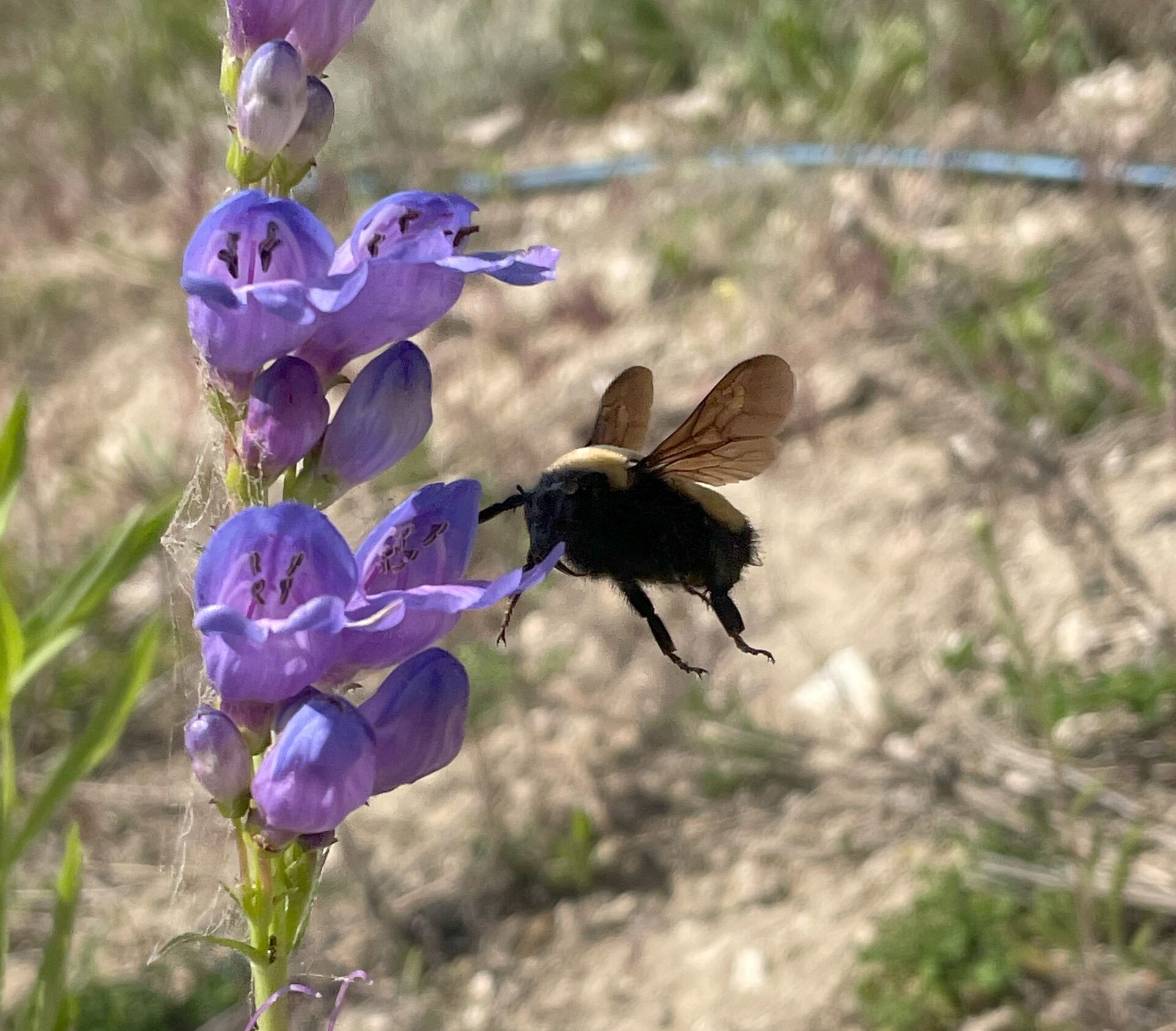
Bumble bee visiting flower
This Nevada bumble bee (Bombus nevadensis) can be seen visiting a Royal Beardtounge (Penstemon speciosus).
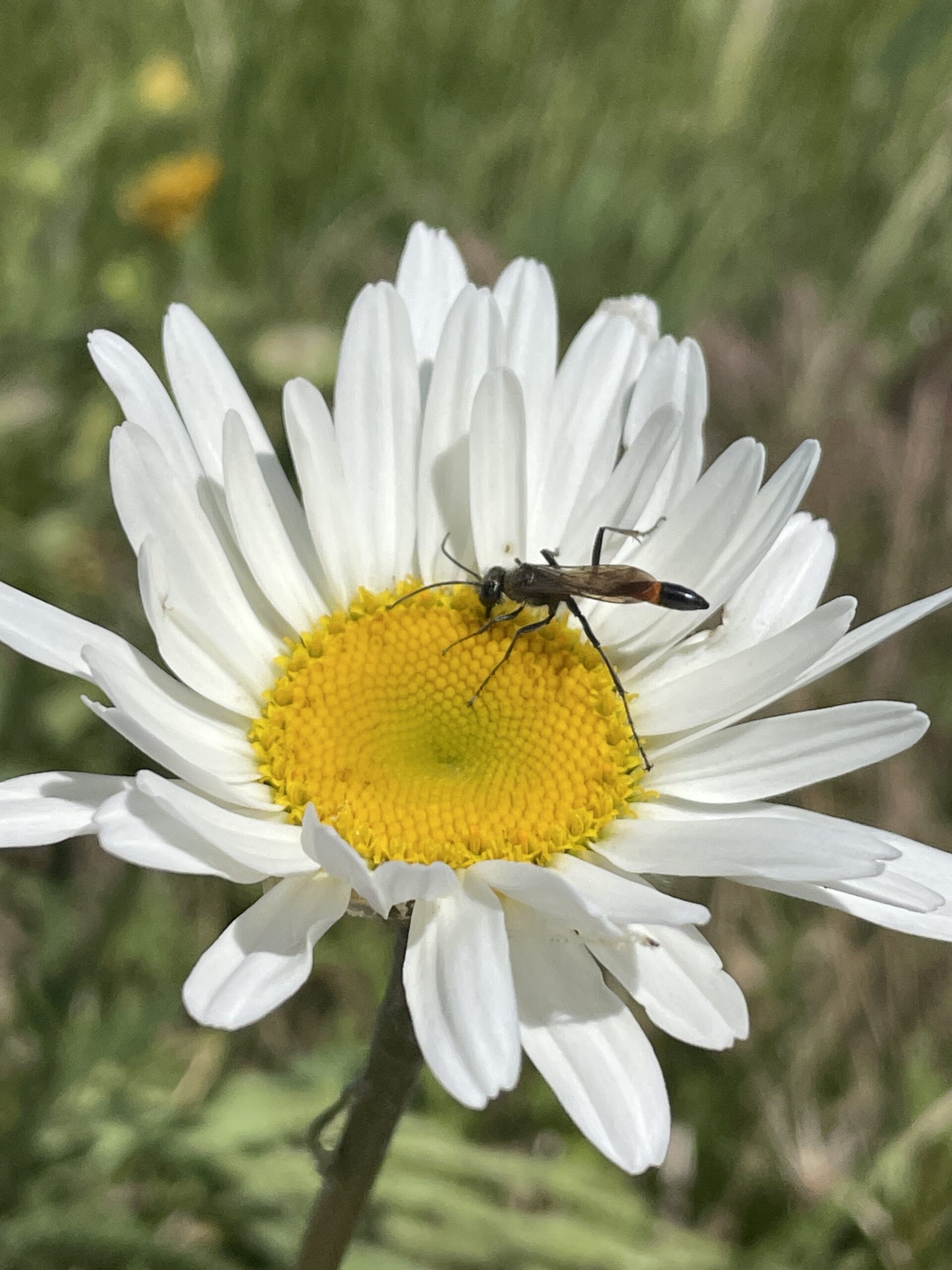
Wasp on flower
This wasp is likely in the Braconidae family, and can be seen visiting an Oxeye Daisy (Leucanthemum vulgare). Braconids often parasitize the larvae of pests like aphids, beetles, leaf miners, flies, and sawflies. The adults depend on flowers, while their young feed on the larvae of harmful apple pests.
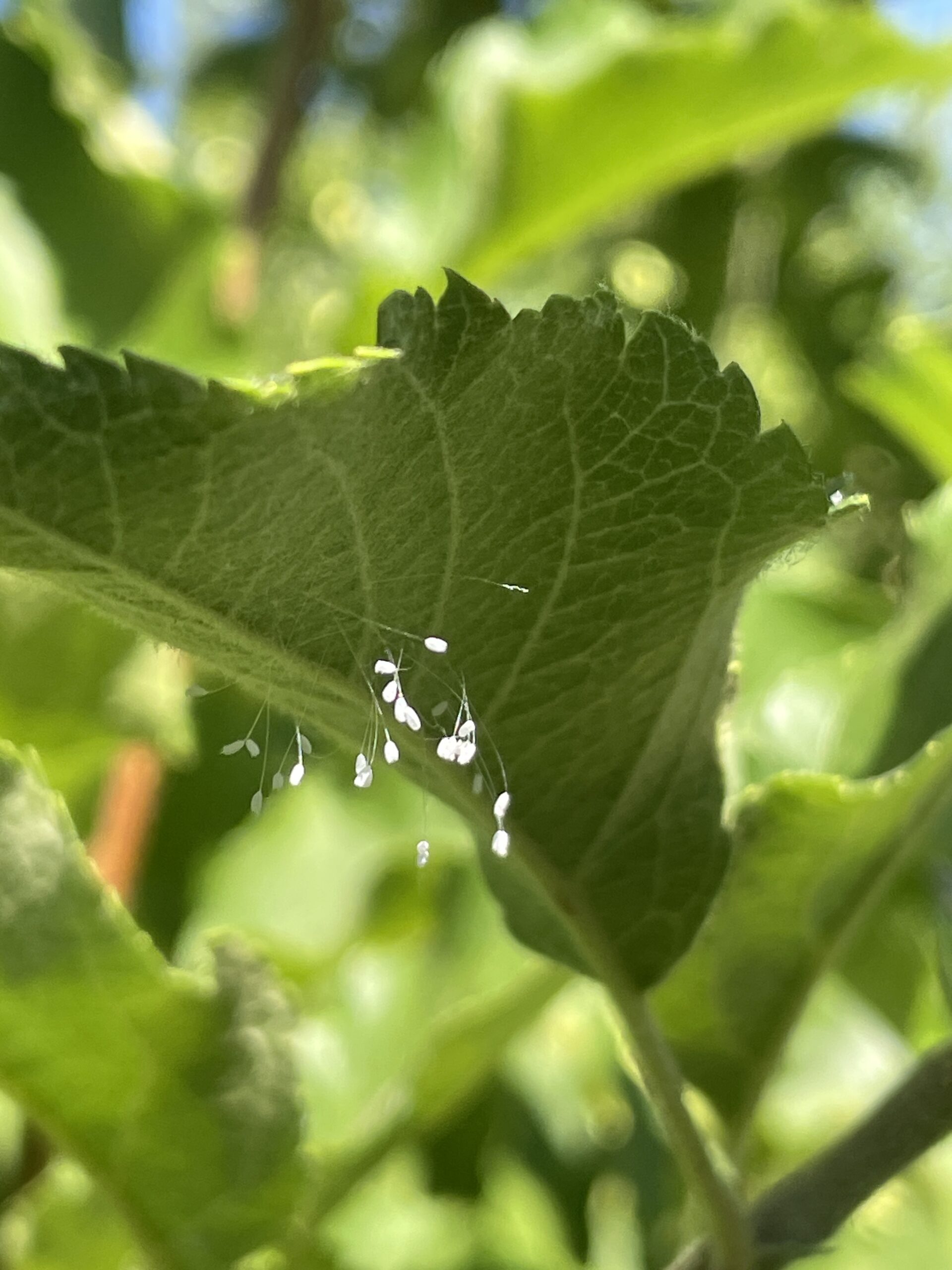
Green lacewing eggs
Lacewings, in the family Chrysopidae, lay their eggs in and around apple orchards. The adults feed on honeydew from aphids, and the aphids themselves. Lacewing larvae have hearty apetites, and feed on aphids, thrips, white flies, spider mites, and caterpillars.
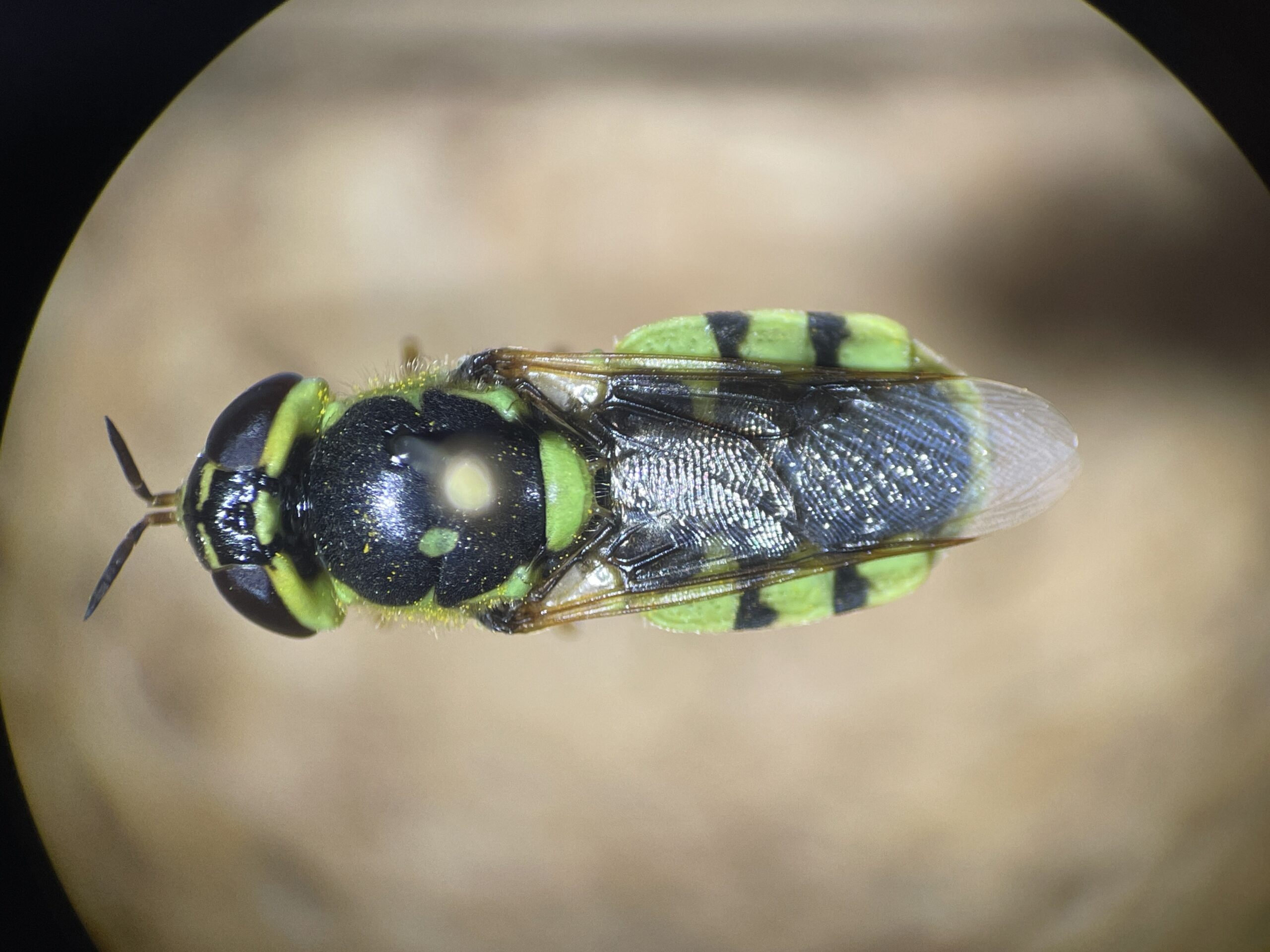
Green soldier fly
Green soldier flies (Hermetia illucens) are important pollinators as adults, and composters as larvae. Seen through the lense of one of our microscopes, this pinned specimen was caught in a wildflower planting at one of the commercial orcahrds we study.
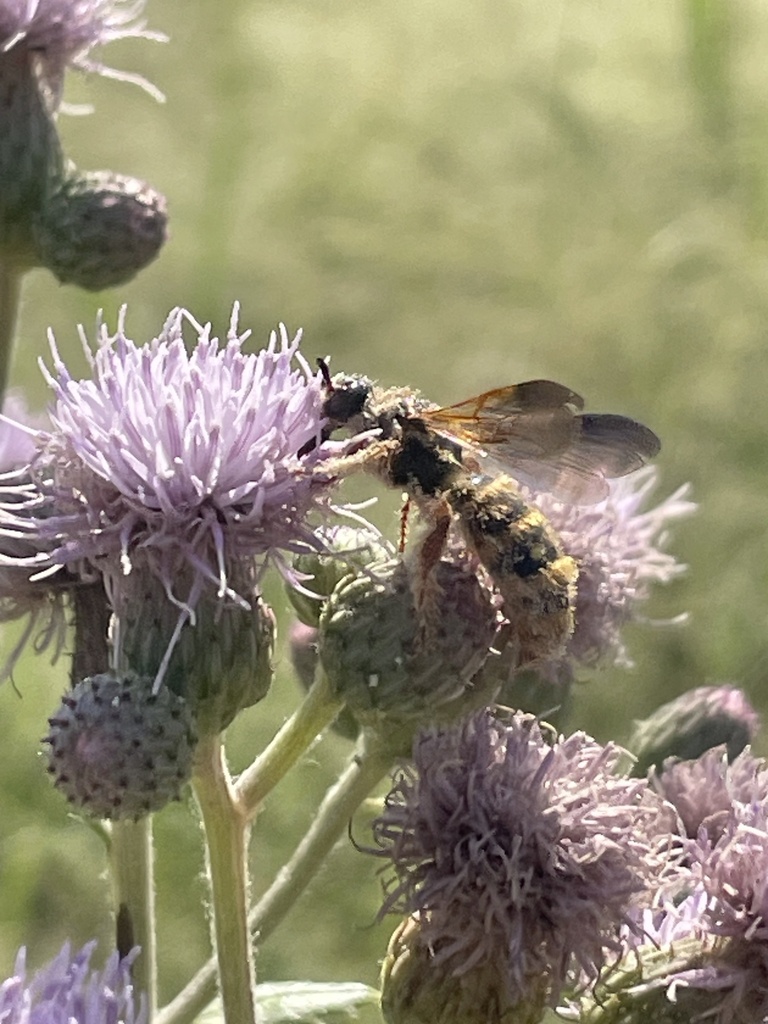
Wasp on thistle
This Crioscolia alcione, seen feeding from a creeping thistle (Cirsium arvense), depend on wildflowers to survive as adults. Their larvae parasitize scarab beetle larvae that live in the soil.
Flowers
Wildflower plantings adjacent to apple orchards are carefully maintained by growers. These strips provide key habitat for pollinators and line roadways with lush sprays of flowers.
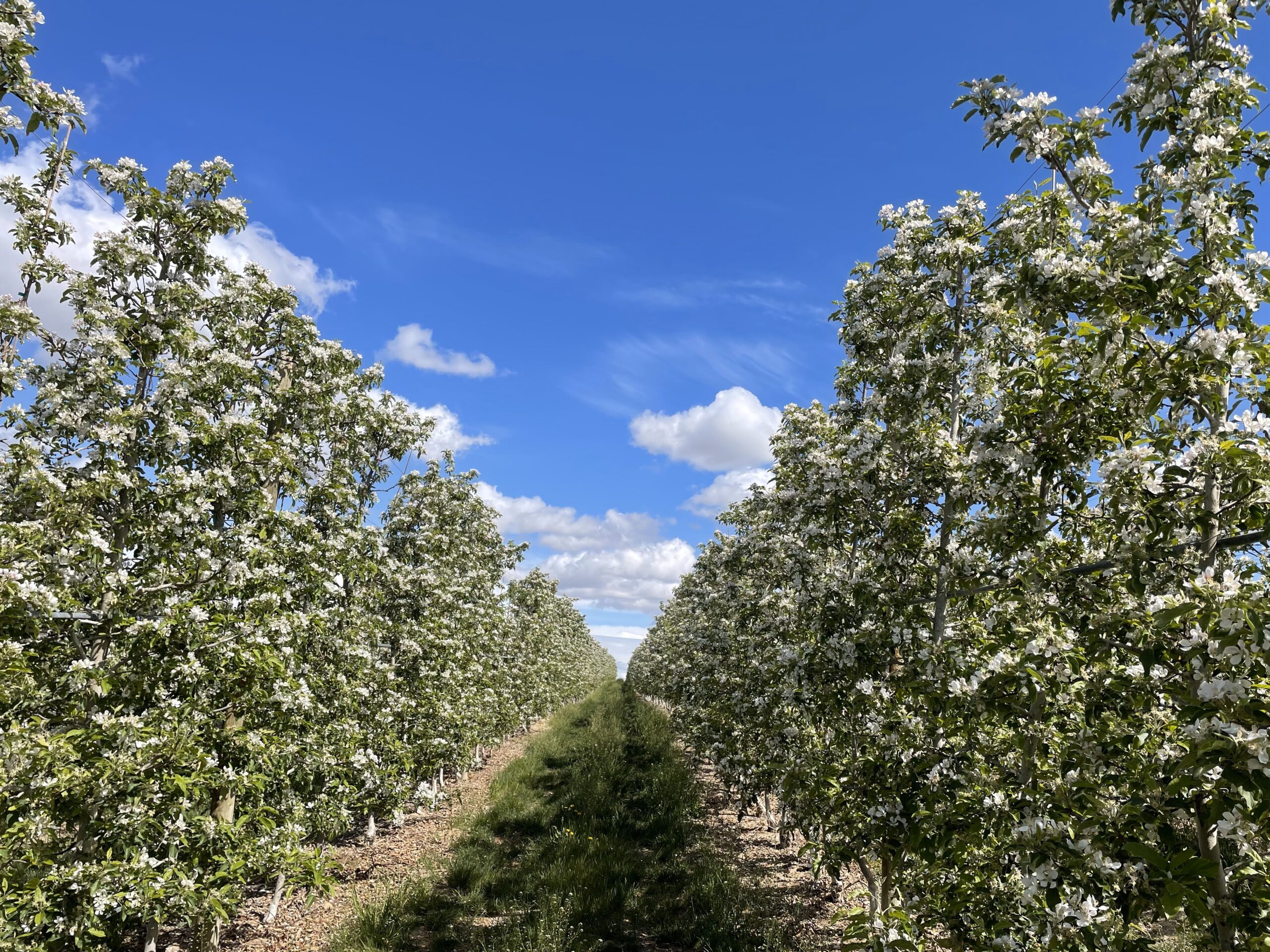
Apples in bloom
Apple trees provide vast numbers of flowers early in the spring, and keeping the grass longer in between them can provide small amounts of clover, dandelions, and chickweed as well.
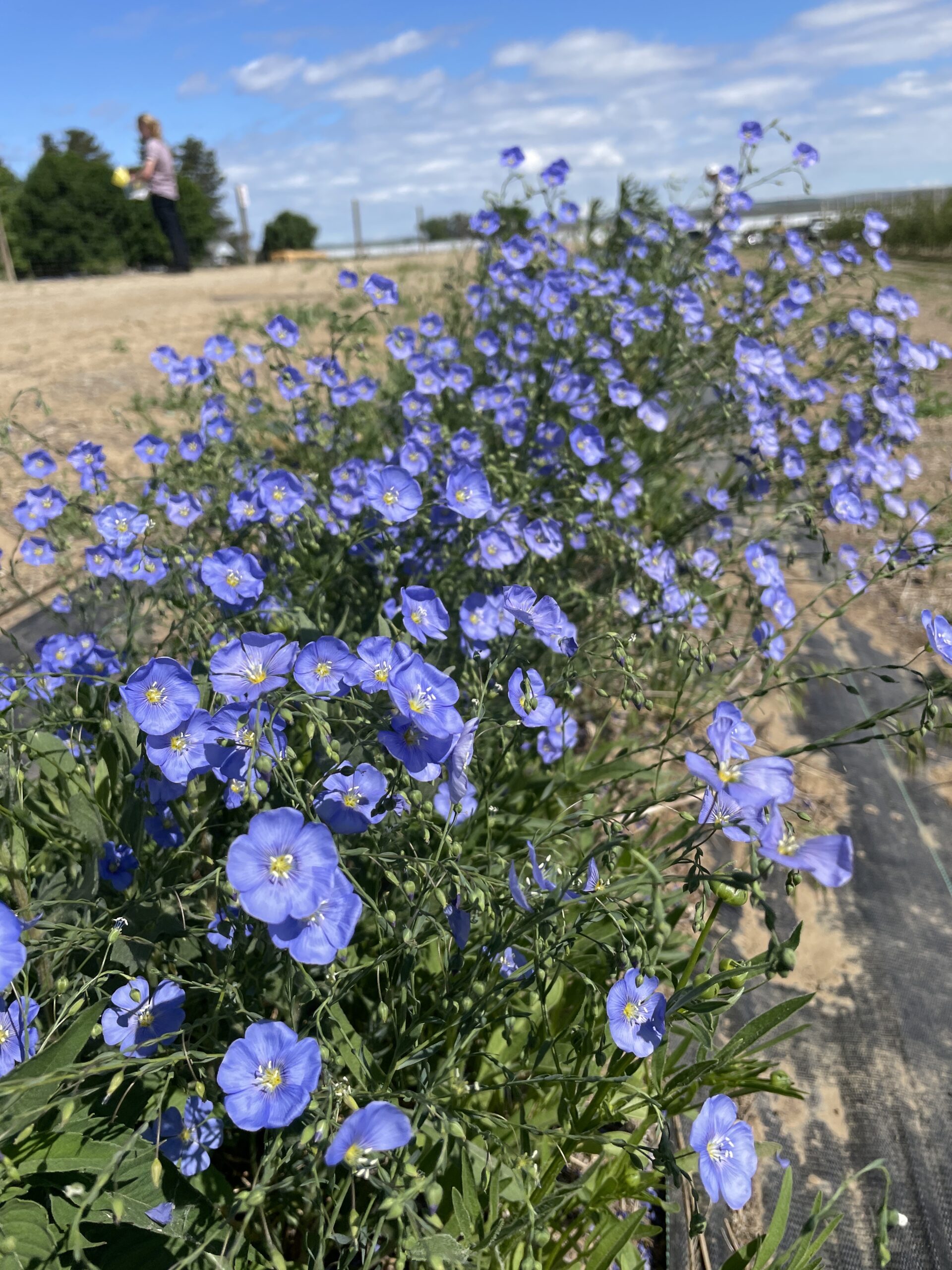
Flax filled wildflower strip
This perennial flax (Linum perenne) is visted by dozens of pollinators throughout the summer months. As you can see, it fills in nicely and keeps out weeds while other important flowers wait to bloom later in the year.
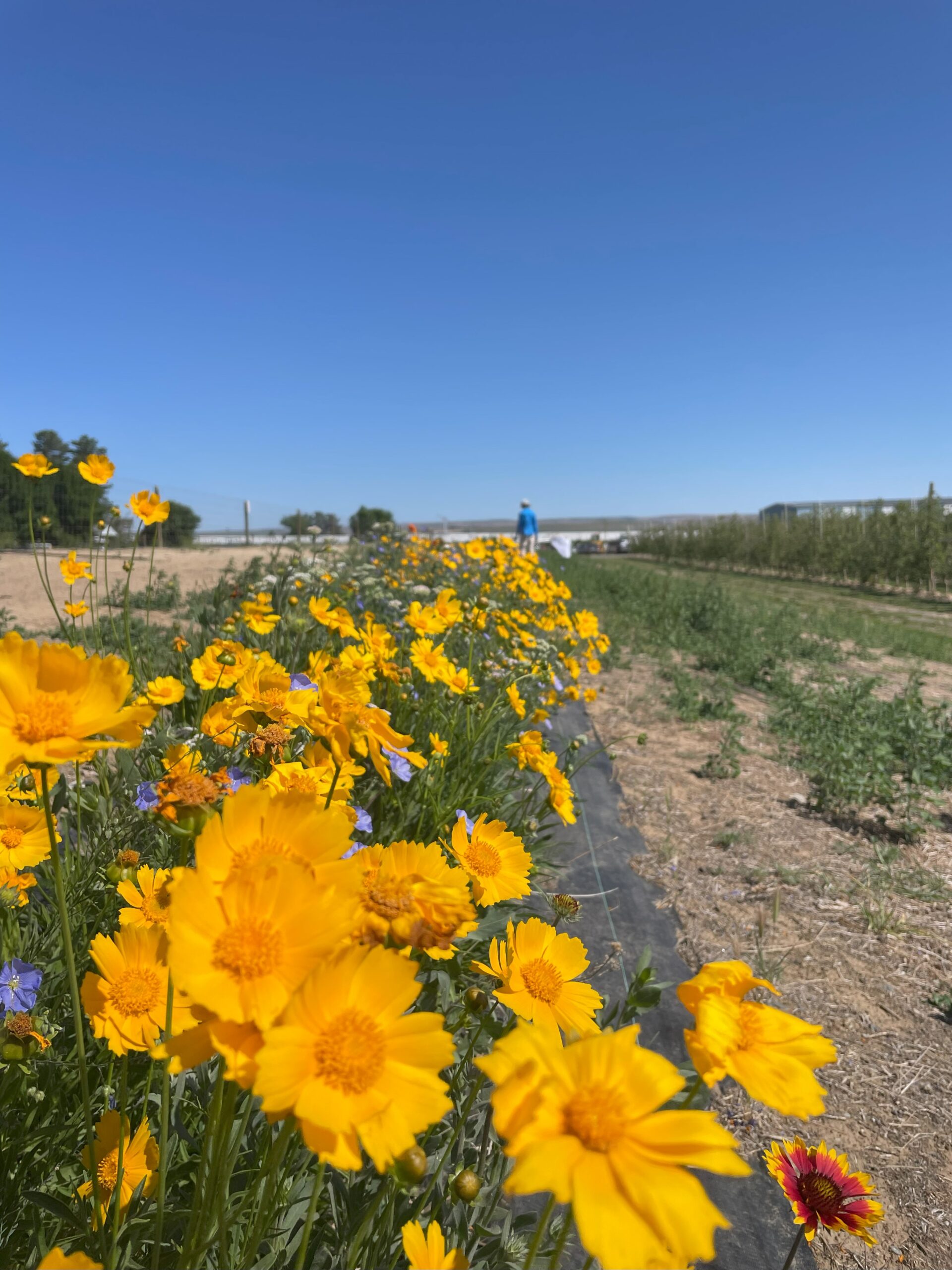
Tickseed filled wildflower strip
Shown later in the season than the photo before it, the perennial flax in it has mostly finished blooming and been replaced by tickseed (Coreopsis). A researcher can be seen using an aerial net to catch bees in the distance.
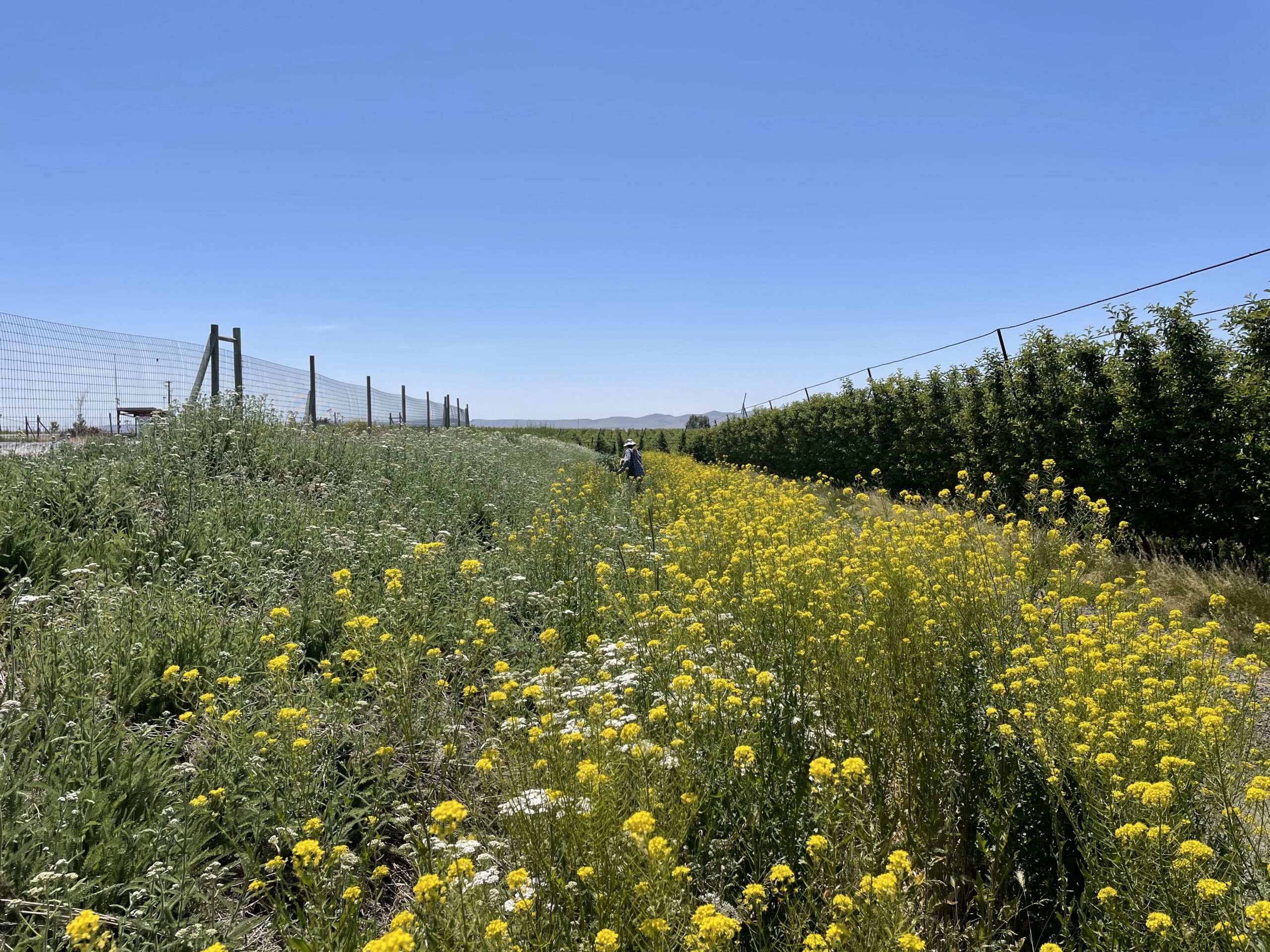
Researcher in flowers
Here you can see one of our researchers sampling for bees in a dense planting of yarrow (Achillea millefolium) and black mustard (Rhamphospermum nigrum). Dense plantings like this one provide ample resources, and this location had the most beneficial insects of any in our study in 2023.
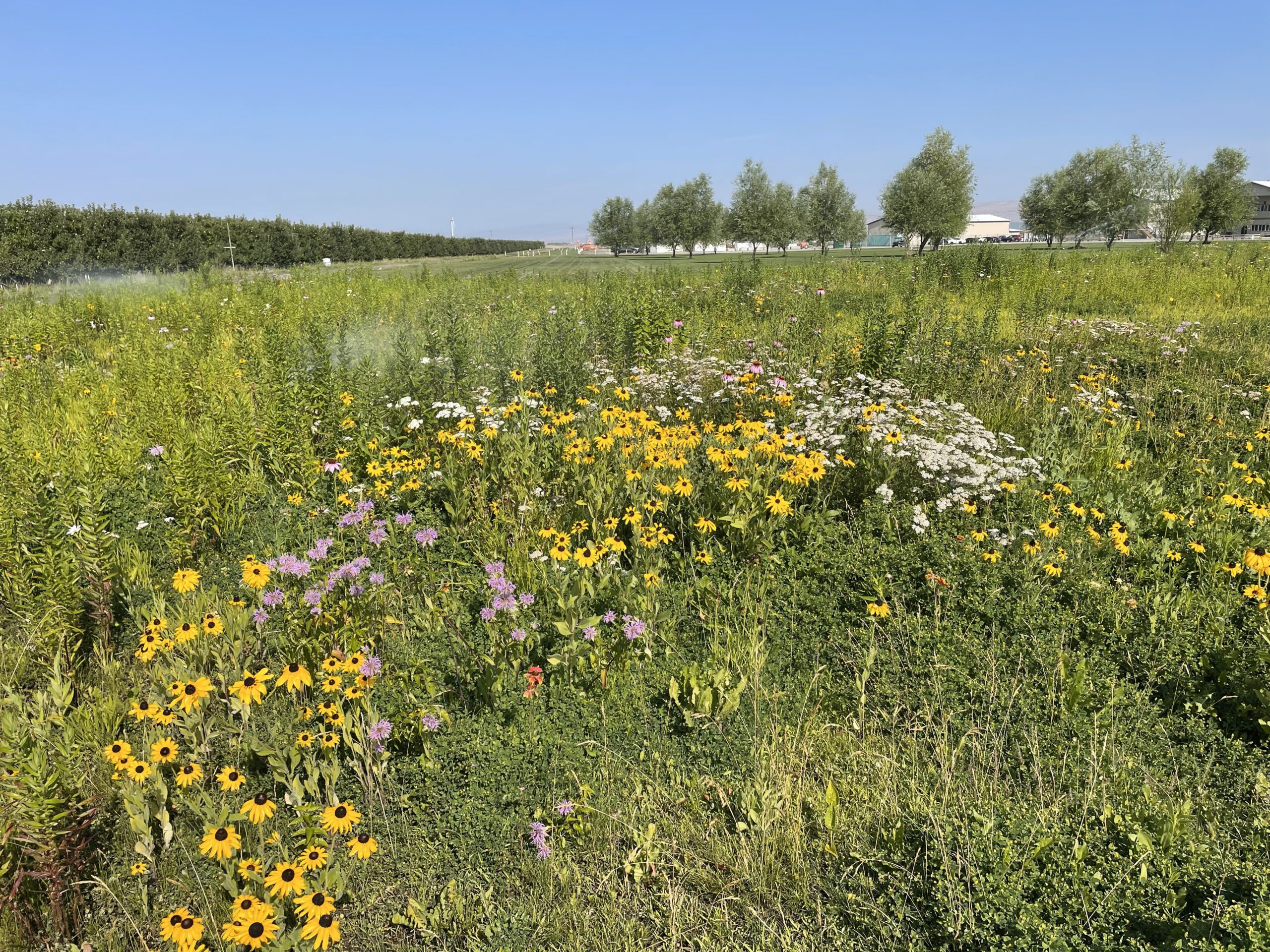
Diverse wildflower planting
Apple growers often plant in strips that run the length of their orchards, but occasionally also plant adjacent fields as well. This site boasts black eye’d susans, yarrow, black medick, purple coneflower, wild bergamont, and blanketflower.
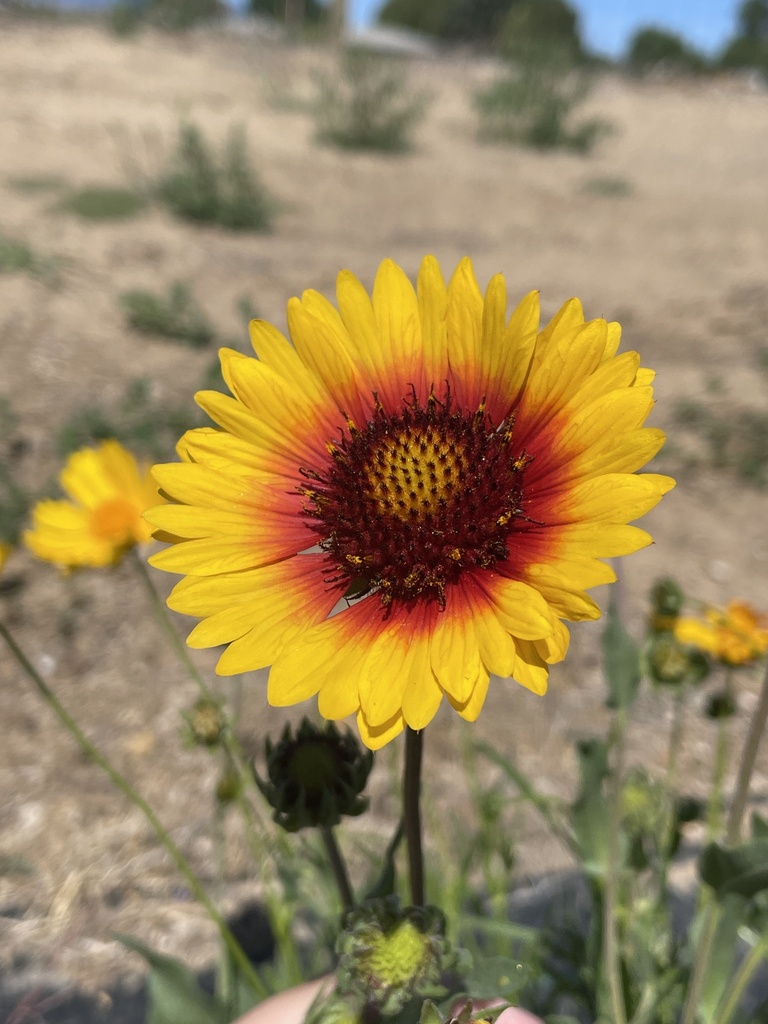
Blanket flower
Easily one of the most visited flower in our study, blanket flower (Gaillardia aristata) is beloved by bumble bees, mining bees, and honey bees alike.