Leafhopper Phenology Study
Leafhopper insects can spread phytoplasma pathogens that cause X-disease in cherry trees. Managing leafhoppers is difficult, so we are working to identify where and when different leafhopper species occur to help with decision support. Since 2022, we have traveled to 10 orchards weekly from Peshastin to Richland to quantify leafhoppers on sticky cards and vacuum samples, and additional sampling is being conducted in Hood River, OR.
With the data, we will make degree-day phenology models for leafhopper X-disease vectors so growers can predict when leafhopper risk is highest.
Leafhopper Phenology
Information on X-disease and the leafhopper vectors is being kept up-to-date on the WSU fact sheet. It is currently thought that six species of leafhopper are vectors of X-disease phytoplasma. Among them, the species Colladonus montanus reductus, Colladonus geminatus, and Euscelidius variegatus are the most common in Washington.
Currently, we have data from sticky card monitoring data from 2022 and 2023. Data from 2024 are still being counted and will be shared when ready.
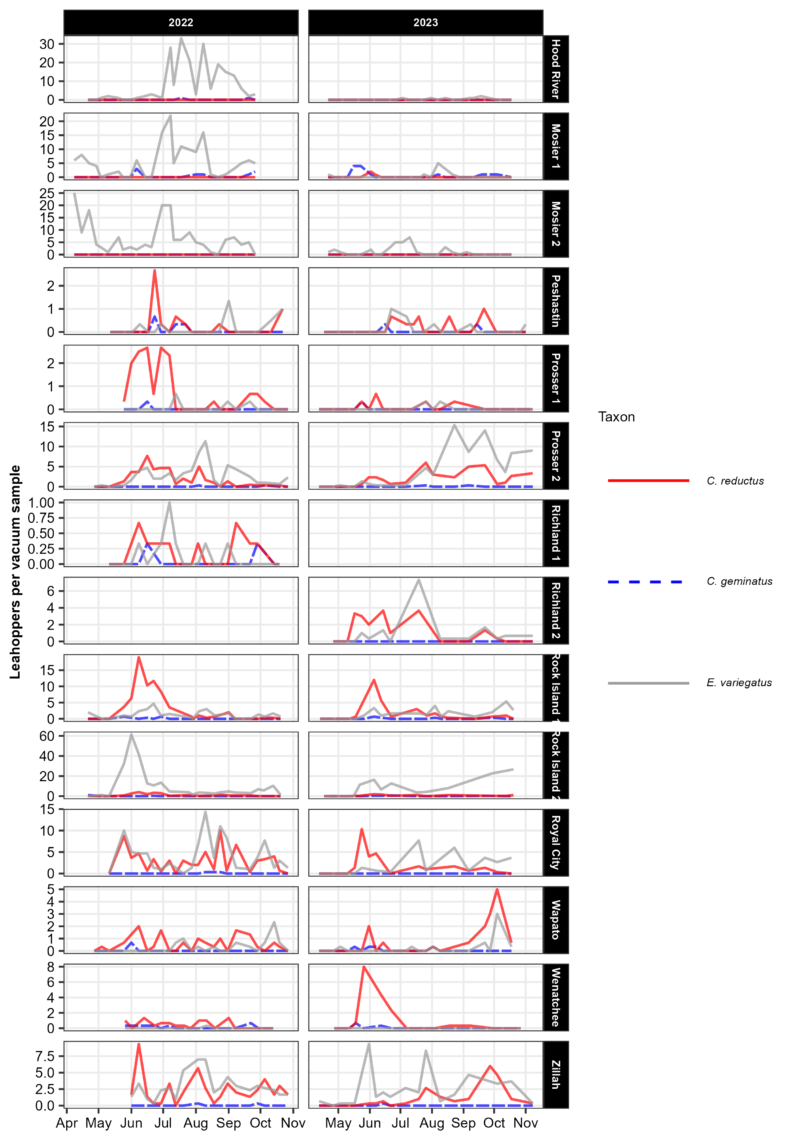
With available data, we have seen that Colladonus montanus reductus is the most common leafhopper found in orchards on sticky cards. Vacuum sampling tends to capture more Euscelidius variegatus at some locations. This website will be updated as new discoveries and interpretation occur.
Figure 1. Leafhoppers from sticky cards, 2022 – 2023
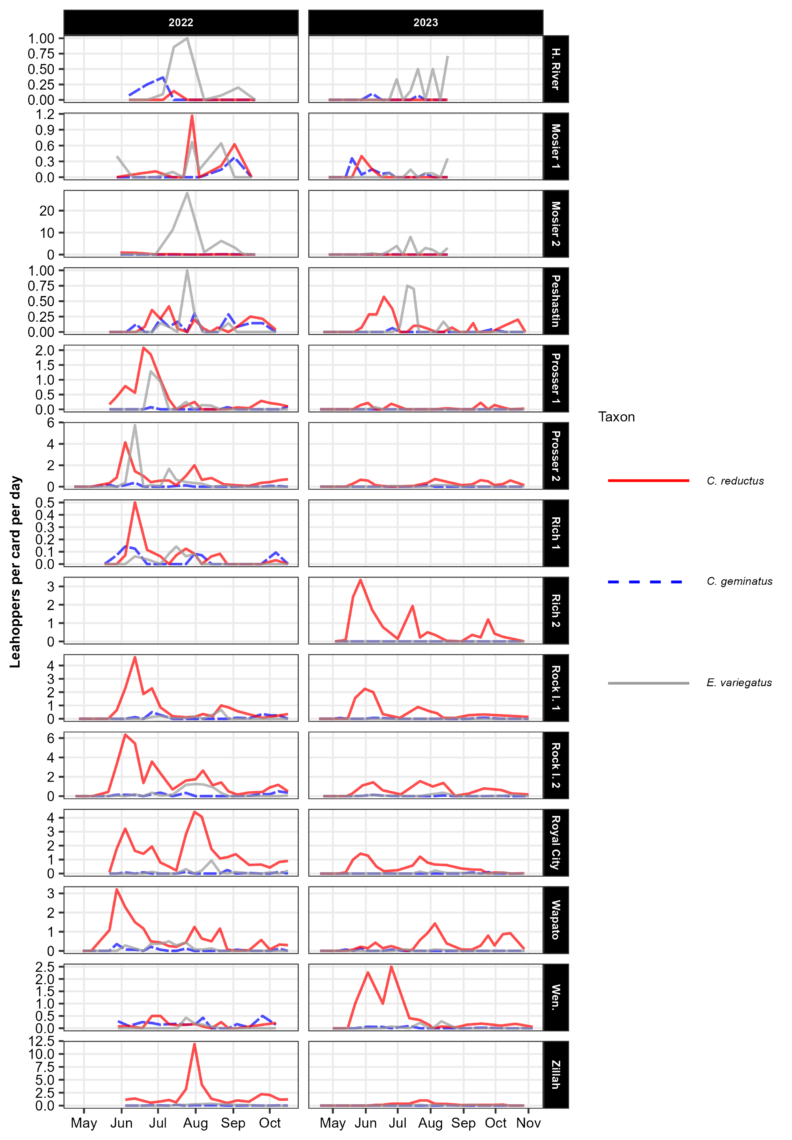
Figure 2. Leafhoppers from vacuum samples, 2022 – 2023