As we advance through the spring semester, which is in full swing, the last two weeks have been filled with inspiring conversations and visits that highlight the incredible talent within our college, evolution of our mission, and exciting opportunities ahead.
On January 13, I met with members of the Washington Grain Commission during their Pullman update on grower-funded research. I was very impressed by the work of our commission-supported endowed chairs, who continue to meet and exceed the expectations of their stakeholders. It was equally inspiring to see how engaged the commissioners are in interacting with our faculty: leaning and learning science, asking insightful questions, and demonstrating genuine commitment to advancing our shared priorities.
As a college, we have an opportunity to strengthen our collaborations and partnerships with Washington’s agricultural commissions, whose support is vital to our research and Extension enterprise. However, at the same time, an equally essential pillar of our tripartite land-grant mission is teaching, which equips our state with the skilled workforce it depends upon. In an era of receding budgets when state resources do not stretch as far as they once did, we seek the commissions’ support, partnership, voice, and advocacy in sustaining and elevating this critical component of our mission. Together, we can elevate all three dimensions of our land‑grant charge and deliver even greater value to the people we serve.
At the WSU Directors+ Forum, hosted by WSU President Elizabeth Cantwell on January 15, we learned about three priority areas for advancing the university research agenda: applied artificial intelligence (AI) in healthcare and agriculture; nuclear science and engineering; and the future of food. Earlier this week, President Cantwell convened the WSU college deans to begin mapping our collective assets and strengths in AI. There is significant momentum building in this space, particularly since the announcement of a $50 million federally supported Scientific Research Center on Aquaculture and AI. In the coming weeks, WSU will launch a comprehensive dashboard cataloging all ongoing AI-related initiatives and an inventory of our competencies and capacity across WSU. This will position us to collaborate more effectively, compete for emerging opportunities, and advance the university’s research mission with clarity and purpose.
This moment presents an exciting opportunity for CAHNRS. Significant work is already taking place across our college and in collaboration with other WSU units on applied AI and shaping the future of food and agriculture. As follow-up meetings take place, I’m eager to demonstrate the depth of our contributions and ensure CAHNRS is positioned as a key partner in the university-wide effort.
President Cantwell also outlined the current budget landscape. All units have been asked to prepare scenarios reflecting three, five, and ten percent cuts. I will be working closely with our leadership to identify strategic, thoughtful approaches that best preserve the integrity of our core mission while positioning the college for long-term strength and stability.
The Directors+ Forum also reinforced the university’s guidelines on lobbying. As private citizens, each of us is free to share our personal views with elected representatives. However, WSU time and resources, such as your university email account, may not be used for unofficial communications with legislators. If you’re passionate about an idea related to our mission that you believe should be elevated, please engage your supervisor, department chair, or me. Together, we will coordinate with the WSU Government Relations office to ensure any outreach is appropriate, aligned, and effective. You can find resources and guidance on the WSU Government Relations website.
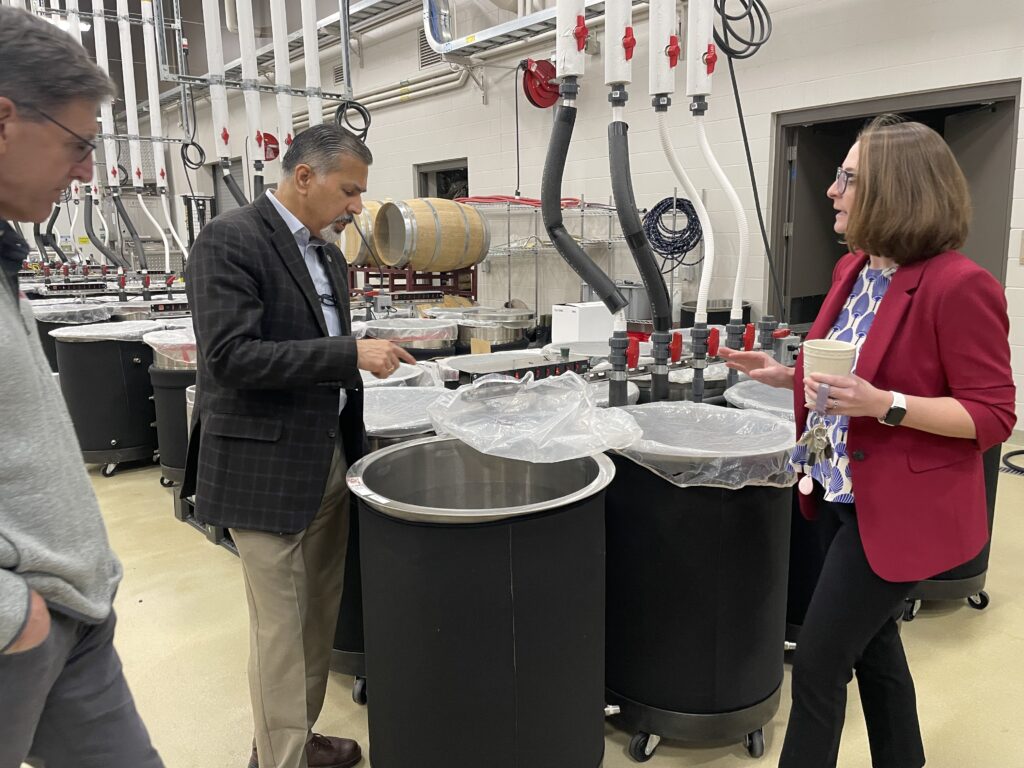
I enjoyed a phenomenal visit on January 16 to the Ste. Michelle Wine Estates WSU Wine Science Center at Richland, Washington, alongside members of the Department of Viticulture and Enology. The visit was exceptional, and I had the opportunity to meet with representatives of the Washington State Wine Commission, a highly engaged group that is eager to deepen its collaboration with CAHNRS and maintain an incredible relationship with our V&E faculty. My sincere thanks to Founding Department Chair Jean Dodson Peterson for organizing such an excellent program.
Washington is home to the second-largest wine industry in the country, after California, and the Wine Science Center’s state-of-the-art infrastructure positions it among the premier research facilities of its kind in the nation. I was truly impressed by the caliber of work being done here to support and advance Washington’s wine and viticultural industries. The research, innovation, and partnerships at this facility are elevating our college and the entire industry.
On January 21, I joined members of the School of the Environment (SOE) to tour the WSU Arboretum and E.H. Steffen Center, an outdoor learning and research environment for ecology and conservation. SOE represents a model partnership between CAHNRS and the College of Arts and Sciences. If anyone doubted whether different colleges and cultures could work in tandem, here are two partners, in place and working seamlessly together for over 20 years. It is a powerful illustration of what collaboration across academic units can achieve. I want to acknowledge the leadership of SOE Director Allyson Beall King.
I was pleased to see the assets we have in the arboretum and the Steffen Center, as well as the neighboring WSU Bear Research, Education, and Conservation Center—a truly unique national resource for grizzly research. As a member of the State of Washington’s Board of Natural Resources (BNR), I help oversee management of our state’s lands and forests. Witnessing the talent in SOE, I am eager to explore collaborations with fellow BNR institutions like the University of Washington’s School of Environmental and Forest Sciences on projects of importance to our state. Together, we have the opportunity to build partnerships that advance science, enhance resource management, and deliver direct benefit to the people of Washington.
I was delighted by the great turnout January 20 for our first Coffee Beans with Deans get-together. I enjoyed several one-on-one conversations with faculty. My hope is that this series continues to grow, so much so that we outgrow our Hulbert conference room space and eventually host a future session in larger venues or even in the new USDA-ARS Plant Sciences Building once it opens. The next Coffee Beans with Deans session is 9 a.m. Wednesday, February 18. To schedule a conversation, please visit the event’s RSVP site.
Earlier this week, I had the opportunity to participate in the Adams County Wheat Growers Annual Meeting in Ritzville, Washington, organized by Aaron Esser. The event drew more than 120 growers, a reflection on the strength and engagement of the community. I valued the chance to speak directly with growers, hear what is top of mind, and learn how our faculty are addressing their challenges by developing practical, field-tested solutions. These conversations highlight the essential role CAHNRS plays in supporting Washington agriculture and reaffirm the importance of keeping our work grounded in the realities of growers’ fields.
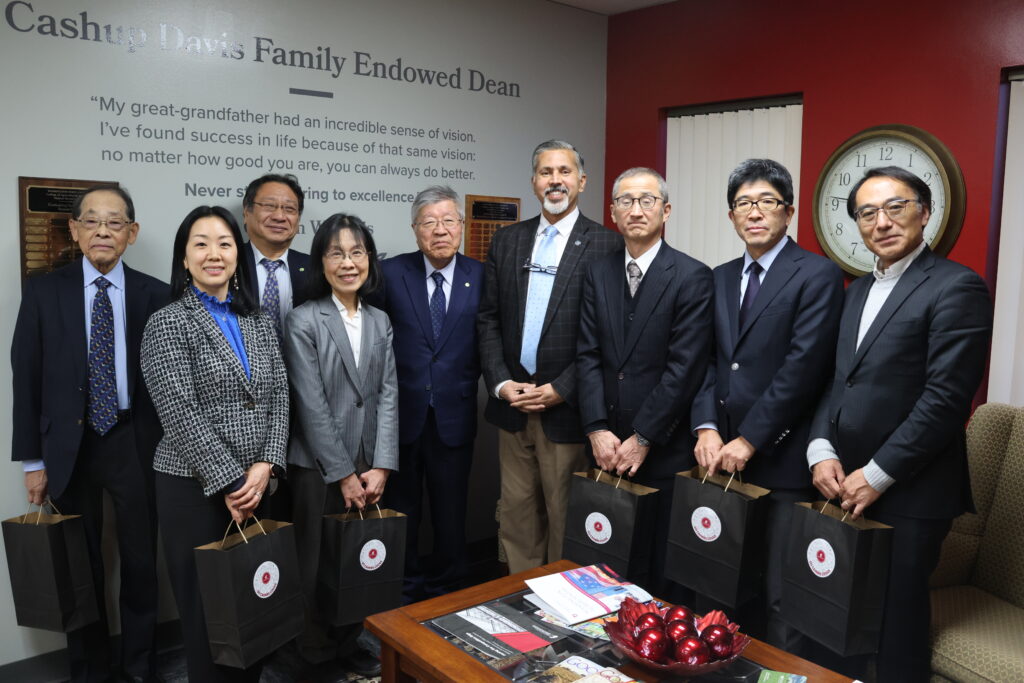
I concluded last week by hosting a delegation of seven scientists and professionals from the National Agriculture and Food Research Organization (NARO) in Tokyo, Japan. Their visit focused on exploring opportunities for collaboration between their institute and CAHNRS—an exciting prospect, given NARO’s global leadership in agricultural science. Scot Hulbert provided a brief tour of campus, including a visit to the WSU Creamery facility, and created meaningful opportunities for the delegation to engage with selected faculty. This exchange opened the door to potential international partnerships that can elevate our research and broaden our global impact.
A brief reminder that our CAHNRS Town Hall Meeting is scheduled for Thursday, February 12, from 3:00-4:00 p.m. in Johnson Hall Annex C107 with an option to join online via Zoom. I encourage you to submit your questions in advance and take part in important conversations with CAHNRS leadership, while staying informed about the priorities shaping our college.
Kudos Corner
Kudos to Nancy Deringer, who was named the permanent associate dean for Student Success and Academic Programs on January 1. Our college looks forward to her continued excellence in student recruitment, retention, and support.
Thanks as well to Miguel Inzunza, director of recruitment & retention, and CAHNRS student ambassador and fruit and vegetable management major Daniel Pastor for representing the college during the January 22 WSU Board of Regents Meeting at Spokane. Inzunza presented information on CAHNRS’ recruitment efforts, partnership with WSU Enrollment Management, and unique outreach to high school and transfer students, educators, and communities, while Pastor shared his student experience and took questions from board members.
Congratulations to CAHNRS student ambassador and ag technology and production management major Ryan Utley, noted as one of 41 student leaders selected nationwide for the Agriculture Future of America Ambassador Program.
To all faculty and staff, please share your kudos and awards with me. I am eager to learn about and champion the accomplishments of CAHNRS.
Until next time, Go Cougs!
Sincerely,
Raj