Much of the past week has been devoted to the annual reviews of our CAHNRS chairs and directors. These conversations are always valuable, and I have really enjoyed learning about the great accomplishments transpiring across our units. Between these formal reviews, I took part in a series of enlightening visits centered on incredible student experiences and achievements.
One highlight was an exceptionally positive tour on April 8 to the Department of Human Development. While this field is well outside my own disciplinary strengths, the experience was an absolute pleasure! I was impressed by the enthusiasm, pride, and shared sense of purpose among the faculty members as they described the work taking place in their department. Their mindset grounded in positivity and impact is powerful!
Throughout the visit I observed a common theme: Students were actively engaged in every lab I visited. The department’s intentional emphasis on high-quality student learning experiences stood out. This commitment matters. National data consistently shows that successful internships are the number one vehicle for successful employment post-graduation. In the Department of Human Development, internships are a degree requirement, and the department supports its students in landing a high volume and variety of these valuable, broad-range opportunities.
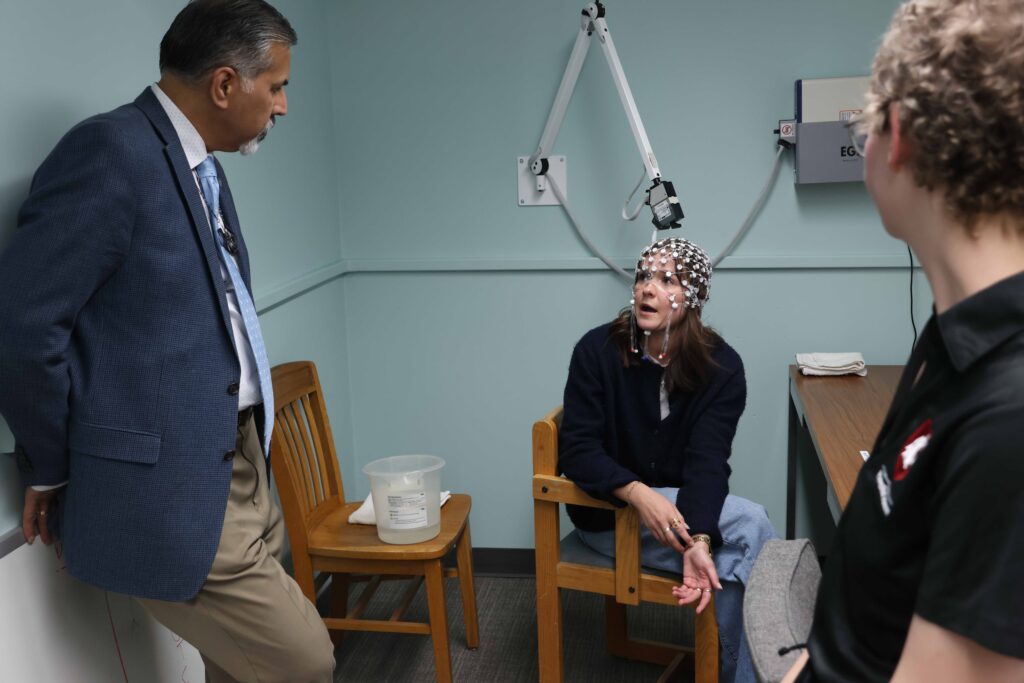
In Sammy Perone’s Lab for the Developing Mind, I observed students Taylor Schillinger and Ashley Murray as they tracked the range of signals emitted by the human brain. Nicole Scalise’s Early Learning Lab explores how children develop and improve their cognitive skills. Patricia Pendry’s team addresses mental health and the positive impacts of human-animal interactions. I walked away inspired and energized from these visits. Here at the intersection of fields like neuroscience, psychology, cognition, and health are great examples of transdisciplinary research, supported and driven by our students.
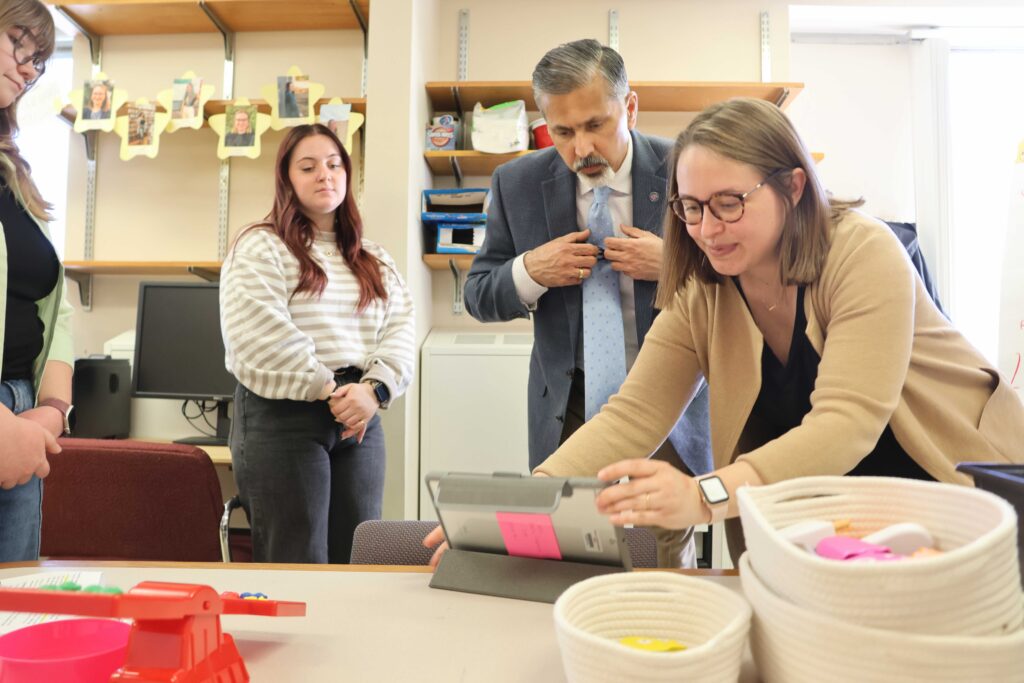
This visit to the human development department represents a major milestone, as it marks the culmination of my visits to all CAHNRS academic units and research and Extension centers across our state. I look forward to continued invitations by faculty and their chairs for additional opportunities to visit their labs and units, where I can further observe, listen, and learn about the depth and breadth of their scholarly engagements and activities. These experiences are fundamental to my ability to lead with purpose: to effectively support and advocate for your priorities and to secure resources necessary for your continued success in teaching, research, and outreach.
I will also continue making progress toward visiting other WSU campuses and Extension offices in every county across our state, a commitment I made to myself early on, and one I take seriously. As I do so, I look forward to engaging with key partners, including organizations such as the Farm Bureau and others with a strong presence in these communities, to identify our shared priorities and explore how, together, we can advance our common mission in meaningful and lasting ways.
In the latest session of the WSU Systemwide Co-Design Council, April 9-10 in the Tri-Cities, members engaged in thoughtful deliberation around questions posed by President Cantwell and system stakeholders. Together, we developed strategic recommendations to support the president’s ongoing listening sessions across the WSU system to inform an action plan scheduled for release this June. A special focus of our discussions was identifying areas where change needs to be sparked.
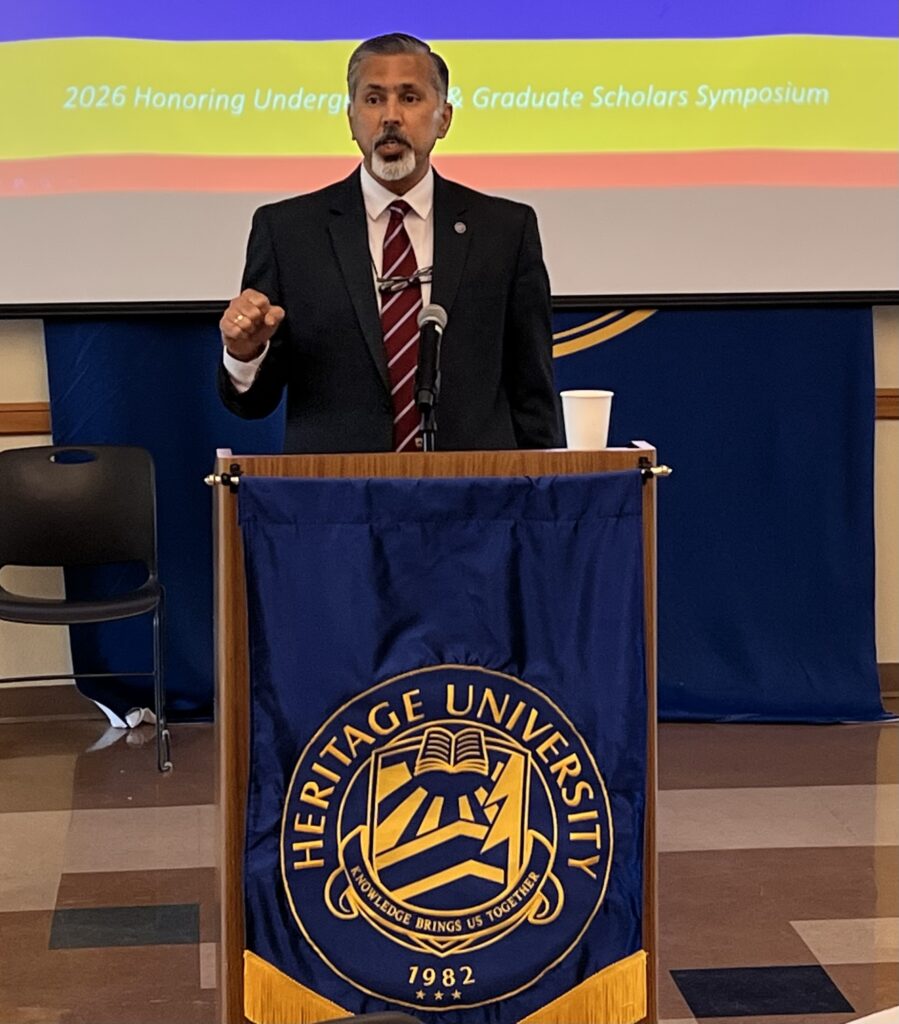
On April 10, I had the opportunity to take part in a rich and engaging conversation at Heritage University in Toppenish, Washington. The private higher education institution is located on the Yakama Indian Reservation. I thoroughly enjoyed speaking with students about leadership and my own personal and professional journey, and they asked a lot of great questions. I also met with Heritage President Chris Gilmer to explore opportunities for collaboration, including developing articulation agreements that would support 3+1, 4+1, or 2+2 undergraduate and master’s degree pathways. This is a wonderful opportunity to expand access and create mutual benefits for both institutions.
Over the weekend of April 11-12, I had the great pleasure of touring the famous Skagit Valley Tulip Festival with my wife, Reena Khosla. Experiencing the vast fields of tulips in full bloom was a powerful reminder of the beauty and renewal that define spring in our region. We felt very fortunate to see this incredible blossoming.
On April 14, the Government Relations team and I hosted Washington State Senator Mark Schoesler for a discussion on CAHNRS priorities. We toured multiple sites, including the WSU Creamery, site of a planned $13.5 million upgrade of our cheesemaking equipment and production capacity. I am preparing to present a formal proposal for this investment to the Board of Regents in May. The creamery modernization was also a topic of conversation with Dairy West CEO Steve Seppi, as we discussed potential partnership with the regional dairy checkoff organization to support this important CAHNRS initiative.
The U.S. president’s proposed fiscal year 2027 budget includes significant cuts to several federal agencies that fund research at WSU. While these proposals warrant attention, I would caution against losing sleep. We are facing a similar scenario to last year’s proposals, and congressional deliberations ultimately resulted in the same or slightly higher funding levels—thanks to our congressional support.
Also last week, I met with Robin Twyman, Consul for Business and Government Affairs at the United Kingdom Government Office in Seattle, to discuss potential collaborations with scientists from the UK. As we pursue major international research initiatives, and need a UK partner, this relationship could help bridge that gap.
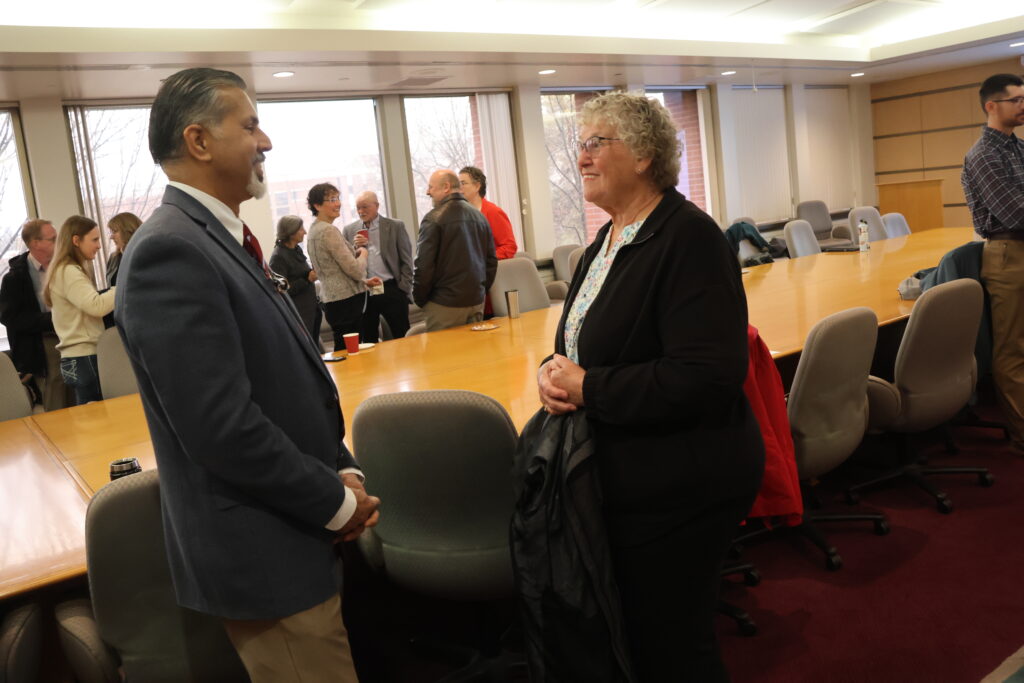
On April 15, we welcomed the Dean’s Advisory Council to Pullman for more than a full day of engagement, starting with a well-attended Coffee Beans with Deans session. Council members provided valuable constructive feedback that will help shape our mission going forward. I heard multiple times how encouraged they are by the direction CAHNRS is taking, feedback that reinforces our shared momentum.
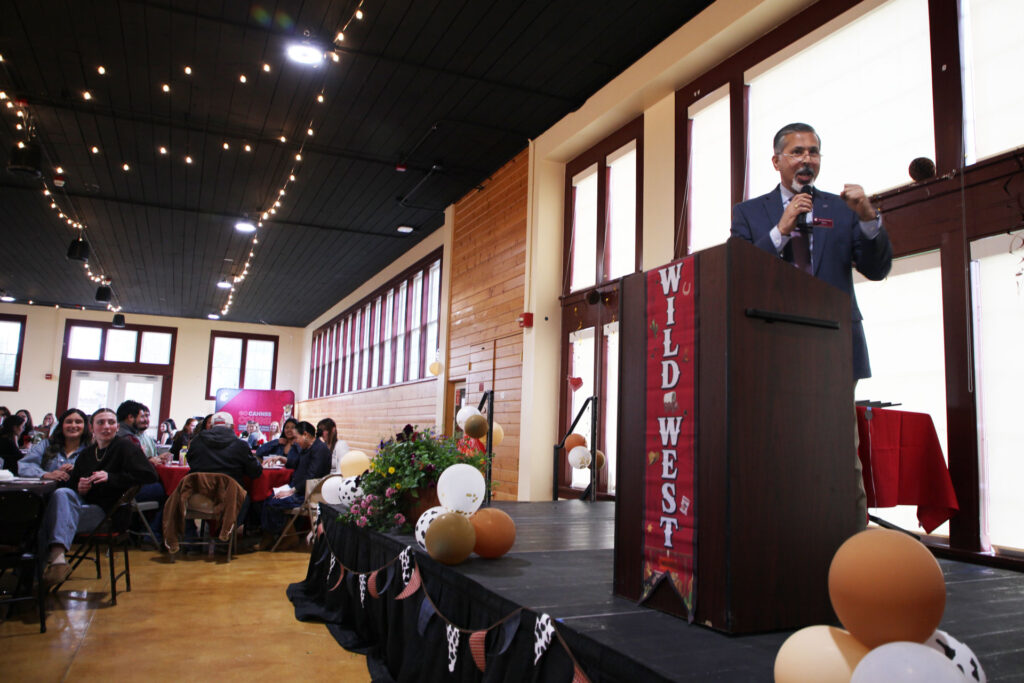
I cheered on our outstanding scholars April 16 at the CAHNRS Student Awards. The students were surrounded by donors, families, friends, and partners, and it was good to see that those who are investing in our students’ success were here in person to support them. The event was entirely student-run and a source of great pride. I left with the renewed sense that our future is secure: We are educating exceptionally talented students and developing future leaders.
Finally, on April 17, I met members of the AMDT Advisory Board: industry leaders who help guide our curriculum and research priorities. We discussed the issues that matter to them and their field. They are keen on developing our students into future employees and future employers, with a focus on developing entrepreneurship in our students going forward. I joined them to celebrate the student award winners at the annual AMDT Fashion Show. This was an incredible exposition of creativity in CAHNRS. I was so pleased to be part of this vibrant and colorful gala!
Kudos Corner
Congratulations to the members of our college inducted into WSU’s Quarter Century Club: Ahamed Moinuddin Syed Ghouse, David Dean, Brad Gaolach, Paul Hwang, Markus Keller, Esther Kruse, Mark Lange, Laura Lavine, Huimin Lin, Julie Lusby, Michael Mitchell, Patricia Mulvaney, and Michael Wallace. Thank you for 25 years of service!
Jason Mieirs, farmer at Prosser IAREC, earned a 2026 WSU Crimson Spirit Award, honoring those who provide outstanding service and exceed expectations.
Kingsley Umani, a graduate student in Biological Systems Engineering who is based at IAREC, took first prize for his poster in the Engineering and Environmental Sciences section of the 2026 GPSA Research Exposition. His project is guided by Lav Khot and Michelle Moyer.
Congratulations to Patricia Pendry, professor in the Department of Human Development and now a new Fellow of the International Society of Anthrozoology. She will be inducted at the association’s conference this July in Paris, accompanied by three undergraduate students who will present research.
Kudos to five undergraduates who earned scholarships to attend the 2026 meeting of the Pacific Branch of the Entomological Society of America. Jose Perez-Olmos (Landscape, Nursery, and Greenhouse Management/MANNRS); Anufat Terlaje-Pangelinan (MANNRS); Jesus Lopez Borges (Economics/Field Crop Management/MANNRS); Lydia Sawyer (School of the Environment); and Rachel Holland (SOE Tri-Cities) took part.
Until next time, Go Cougs!
Sincerely,
Raj