This June, my journey across our university campuses and communities reaffirmed a powerful truth: The land-grant mission is not a static legacy—it is a living commitment. It thrives in our fields, laboratories, Extension offices, and partnerships. And just as importantly, it challenges us continuously to ask how we can do our work—together—even better.
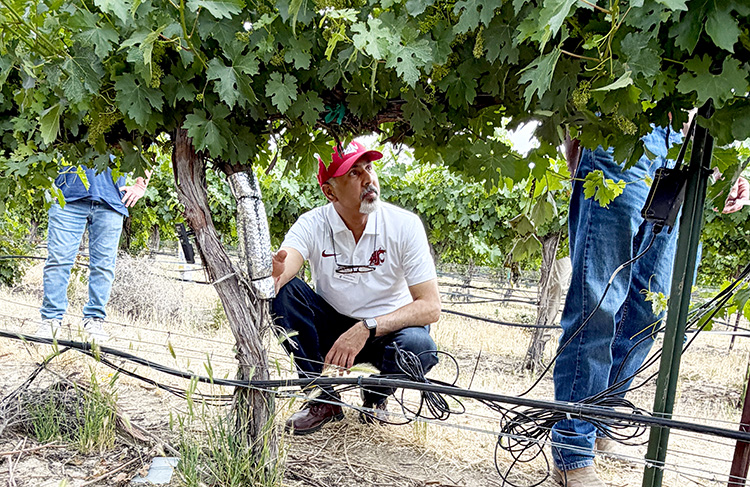
On June 3, I toured the Irrigated Agriculture Research and Extension Center (IAREC) alongside leaders from our state legislature—State Senate Agriculture & Natural Resources (ANR) Committee Chair Mike Chapman and House ANR Committee Chair Kristine Reeves—as well as key partners. We saw firsthand the impactful research happening there. One such innovation was the Smart Apple Orchard Test Bed, where next-generation sprayer technologies deliver inputs with precision and purpose—at the right place, in the right amount, and at the right time. These innovative techniques and technologies demonstrate how science directly serves growers, conserves resources, and shapes the future of agriculture.
Equally meaningful were the discussions with longstanding partners and valued supporters of WSU research such as the Northwest Nursery Improvement Institute, a nonprofit organization distributing virus-certified trees, as well as Proprietary Variety Management, which manages commercialization of our Cosmic Crisp® apple. Together, we explored how we can strengthen alignment, expand communication, and further elevate the success of growers through science and innovation. The shared commitment to progress was mutual.
Our mission is also advanced by the strength of our internal collaboration. In conversations with WSU Facilities Services leadership (Olivia Yang, Joe Kline, and Kate Kamerrer), we explored how integrating their expertise more fully into CAHNRS initiatives can accelerate progress on key projects. I also extended an invitation to our Chairs and Directors meeting. By bringing teams together across disciplines and functions, we multiply our impact.
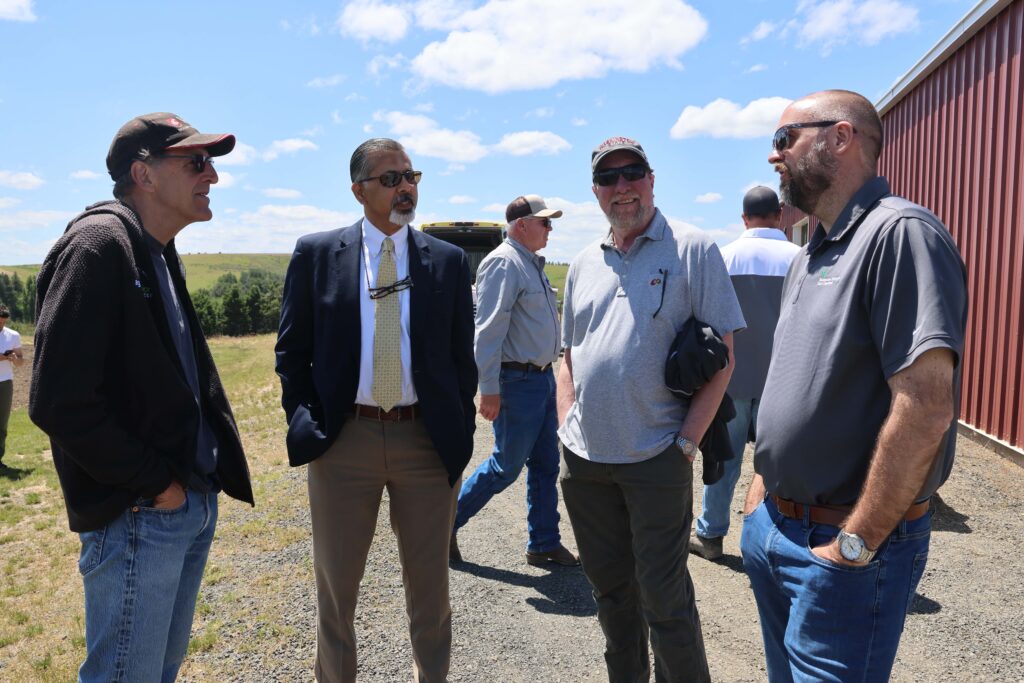
On June 4, at the Grass Breeding and Ecology Farm Tour, I saw firsthand the integral connection between our research programs and industry partners. I met with Orlin Reinbold, turfgrass seed industry member and longtime supporter of our program; former Washington Turfgrass Seed Commission Chair Travis Meacham; Commission Administrator Shane Johnson; and others. They shared energy and ideas about how we can more strongly support this important industry.
Varuni Kulasekera, executive director of the Australian American Fulbright Commission, met with me to explore opportunities for CAHNRS to host a distinguished Australian scientist. WSU continues to stand out as one of the commission’s strongest partners. I strongly encourage faculty who are planning sabbaticals to consider pursuing a Fulbright award. It is an exceptional opportunity that provides meaningful support for global collaboration and scholarly exchange.
That same spirit of partnership extends across campus. In a conversation with our new WSU Athletics Director Jon Haarlow, it was clear that we share a common mission: to elevate the Cougar experience and strengthen community connections. Exciting activities are planned for the upcoming semester, including the return of the Harvest Market and the debut of the new Ag Innovation Weekend.
Innovation in agriculture also depends on bold vision. The Washington State Potato Commission’s interest in a genomics and phenomics laboratory represents precisely the kind of forward-thinking partnership that can transform an industry. By leveraging our tri-state collaborations and scientific expertise, we can accelerate the development of new varieties and solutions for producers.
School of Food Science Director Soo-Yeun Lee and Extension Specialist Bryan Mader joined me at the Food Process Pilot Plant, which supports novel approaches in food science, food engineering, and postharvest technology. Our conversation touched on the value of Murdock grants and federal capacity funding to strengthen impact.
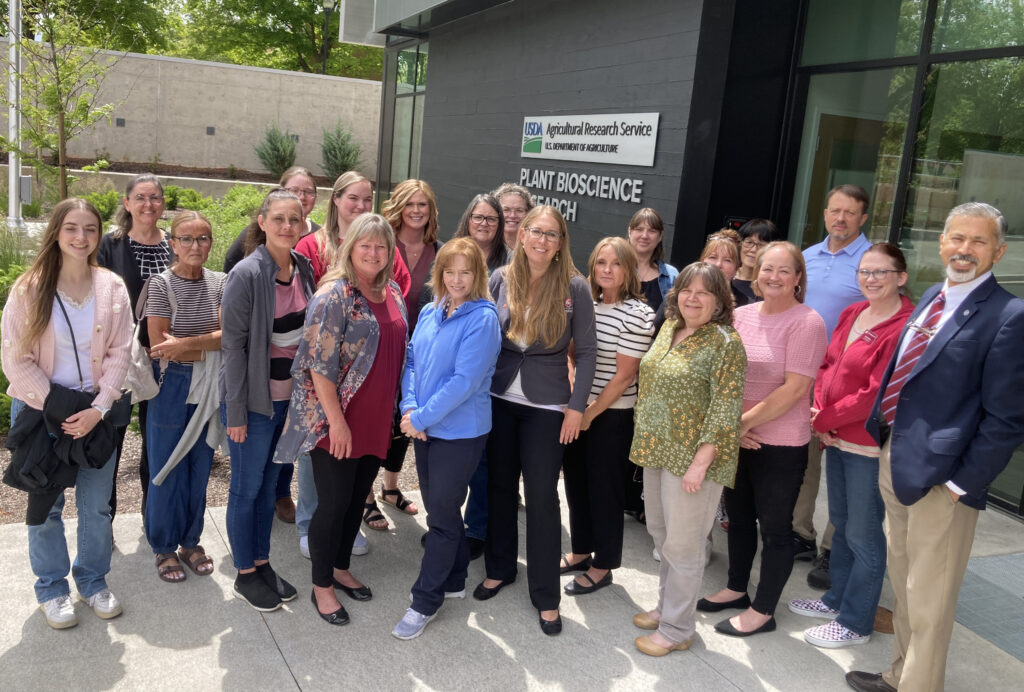
On June 8, I invited the administrative managers of CAHNRS to tour the nearly complete USDA-ARS Plant Sciences Building. This much-appreciated visit is part of a broader effort to help team members who play a crucial role in our mission gain a personal sense of the efforts they support. I envision future visits to Research and Extension Centers with admin managers.
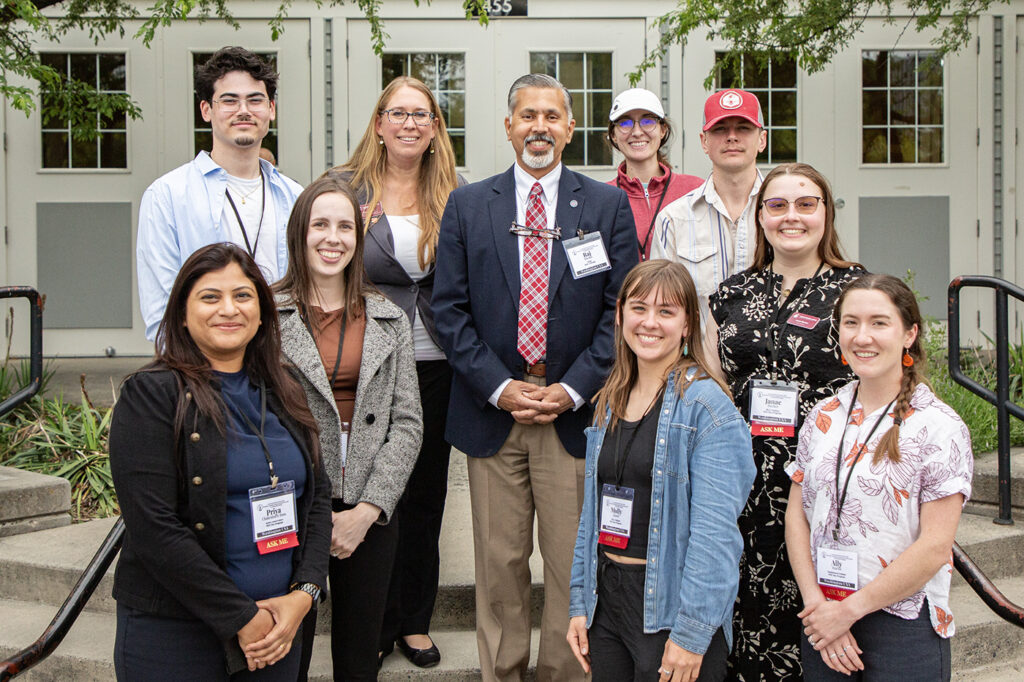
That evening, I greeted an international group of beekeepers, donors, and scientists hailing from as far away as Croatia at the Nutrition, Landscape Change and Honey Bee Health Conference. Entomology Assistant Professor Priya Chakrabarti Basu deserves recognition for her organization of this important gathering. The same goes for some of our unsung outreach and teaching heroes, such as Scholarly Assistant Professor Rae Olsson and Education and Outreach Coordinator Bri Price.
On June 9 and 10, the director and associate director of Extension and I made marathon visits to several western Washington Extension offices: Lewis County Extension in Chehalis; Cowlitz County Extension in Kelso; Wahkiakum County Extension in Cathlamet; and Thurston County Extension in Olympia. Faculty, staff, and volunteers were very appreciative. Master Gardener/Master Recycler Composter Program Coordinator Jason Adams; Wahkiakum County Director Caroline Shofner; and Thurston County Director Stephen Bramwell deserve kudos for their energetic work to foster partnerships and garner resources for impactful programs. Their work embodies the very best of our land-grant mission.
On June 10, it was on to Elma, Washington, to acknowledge more than 30 retired WSU Extension personnel at a special gathering. These individuals made a huge difference during their careers and continue to do so years or even decades after retiring. Many have established scholarships that support our students. It was very gratifying to be able to celebrate these friends of WSU.
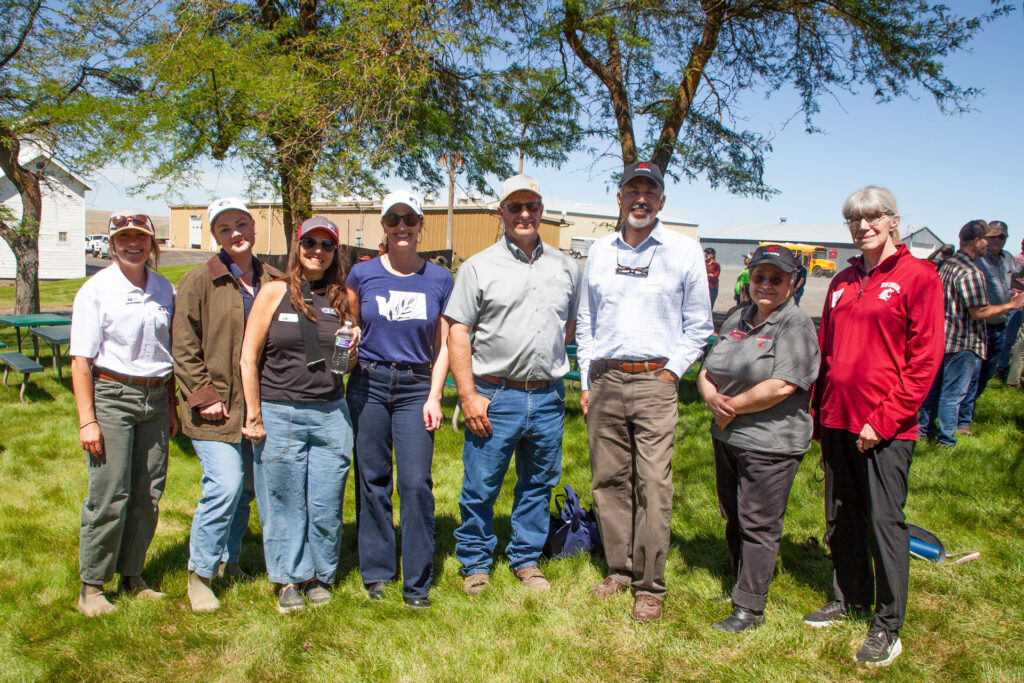
Finally, at the Lind Field Day on June 11, I was reminded of the enduring importance of connection between research and the people it serves. Bringing together growers, industry leaders, and researchers fosters knowledge exchange and trust, which is foundational to our success. Joining me at the field day were State Senator Mark Schoesler, Washington Grain Commission Chairman Kevin Klein, and local grower Derek Schafer. We rode the trailer to six stops highlighting small grains research.
As I reflect on these experiences, one message stands out: Our strength lies in connection. Connection between research and application. Connection between campus and community. Connection across disciplines, industries, and borders.
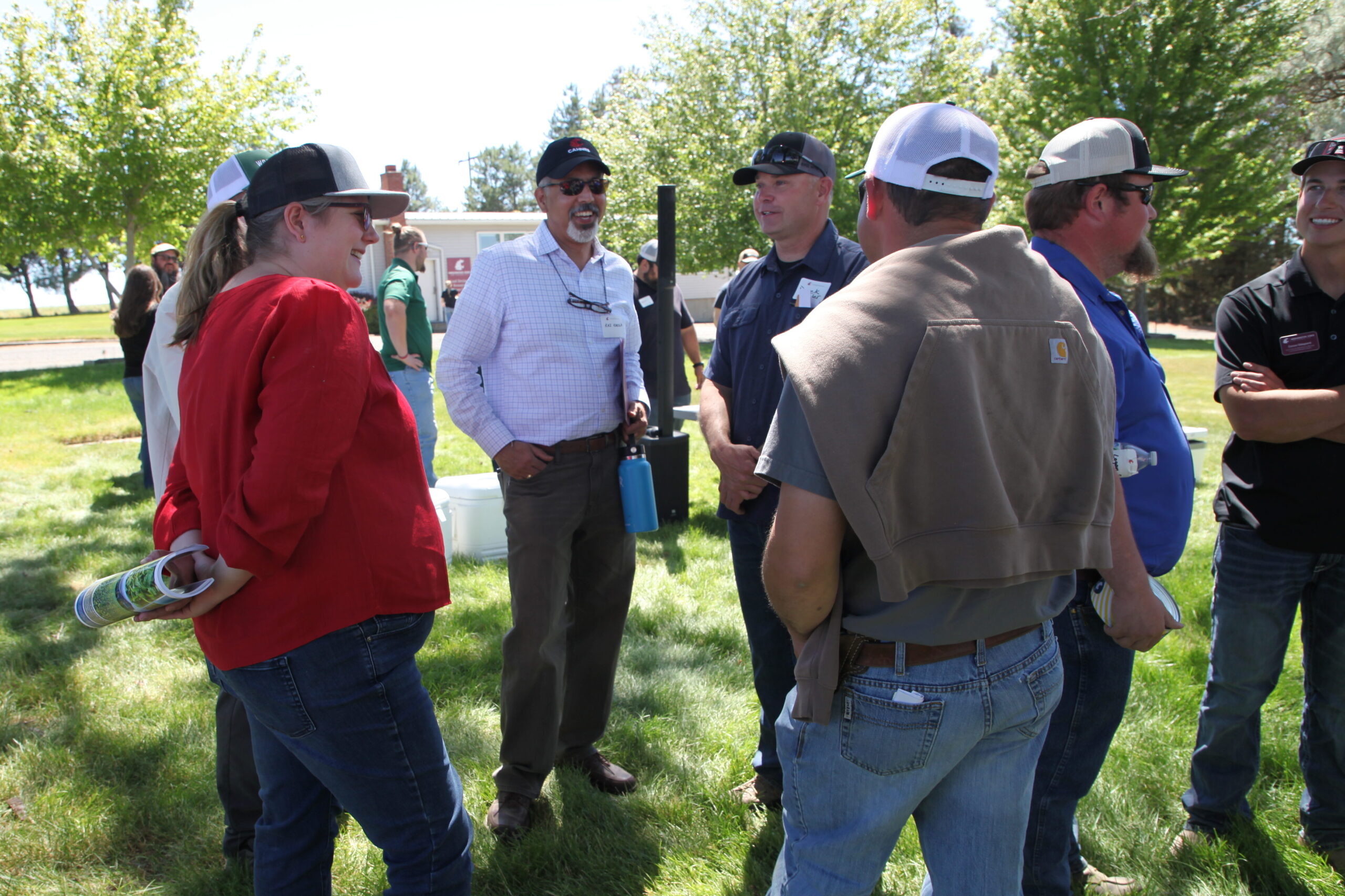
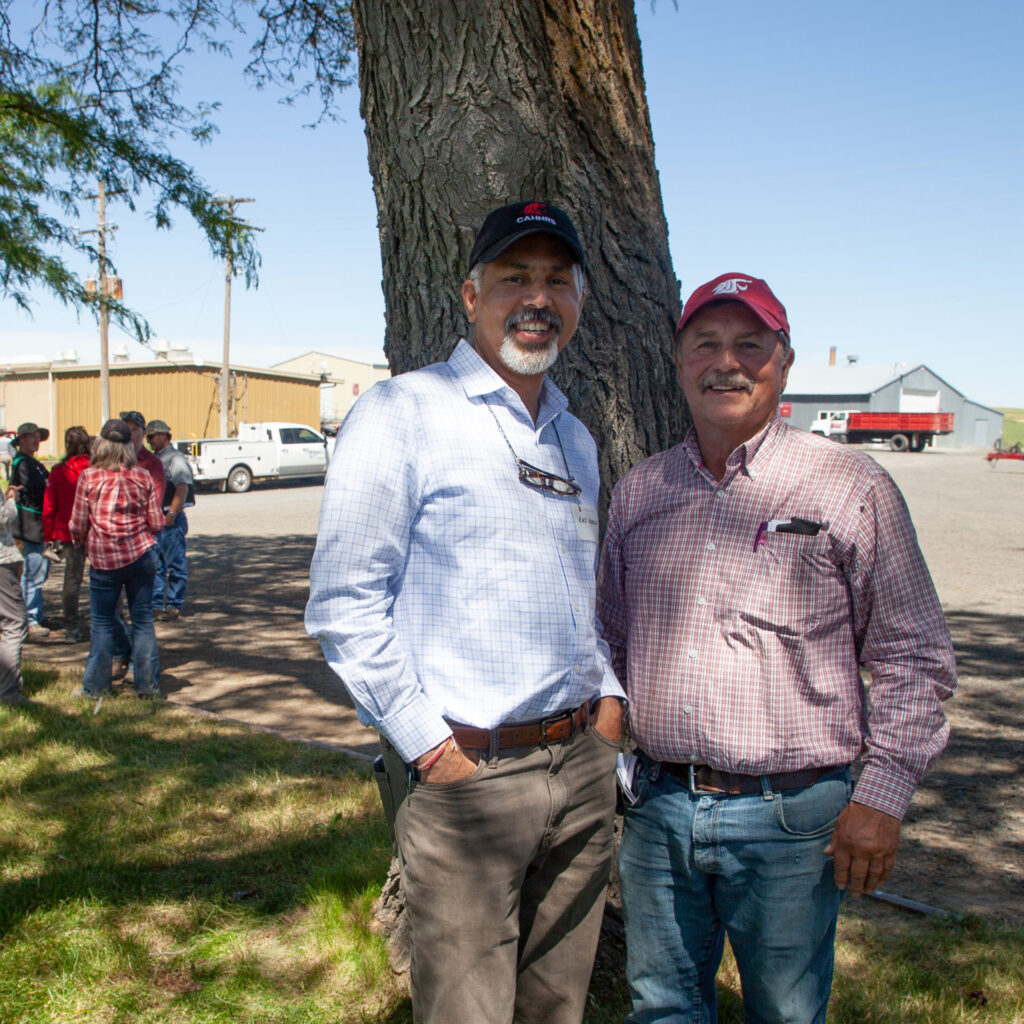
at the 108th Lind Field Day on June 11.
The land-grant mission calls us to serve, to listen, to lead, and to innovate with purpose. Together, we have both a responsibility and an opportunity to shape a future that is more resilient, sustainable, and impactful. Let us continue this journey with clarity of purpose, strength of partnership, and an unwavering commitment to excellence.
Kudos Corner
Lindsey du Toit, chair of the Department of Plant Pathology, earned the Excellence in Science Award from the Seed Science Foundation of the American Seed Trade Association. Awarded June 10 at the organization’s summit in Milwaukee, this honor recognizes significant contributions to the seed industry.
Brittany Cooper, professor in the Department of Human Development, received the Society for Prevention Research’s Service to SPR Award. This honor reflects Cooper’s ongoing contributions to the society, including through her role as past president.
Regional Extension Agronomist Morgan Menaker is the recipient of $43,000 from the Washington Grain Commission for a newly accepted proposal to investigate residues and their effect on soil seedbank and weed pressure in wheat. This work is in partnership with USDA-ARS Weed Scientist Olivia Landau.
Kudos to Whitman County Extension Coordinator Kelly Stewart for her outstanding support of colleagues, volunteers, and regional programs. Stewart co-organized the recent WSU Blue Mountain Extension Tour for Master Gardener Program members. She goes out of her way to welcome others and enhance the experience of those working around her.
Until next time, Go Cougs!
Sincerely,
Raj