Summer travel across Washington has reinforced something I have long believed: Our college’s greatest strength is its people. Everywhere I have gone, I have seen the impact of our faculty, staff, students, and partners working together to advance our land-grant mission and create meaningful change in communities throughout the state.
From one-on-one conversations with Extension professionals and industry leaders to larger gatherings with educators, researchers, and stakeholders, I have been reminded that CAHNRS continues to invest in its team, strengthen strategic partnerships, and expand its service to Washington’s communities.
One example of that commitment is our ongoing efforts to recruit exceptional talent. CAHNRS is currently conducting several important faculty and leadership searches for a new meat scientist, two weed science faculty positions, multiple endowed faculty positions, and the next WSU Extension Agriculture and Natural Resources Program Unit Director. These positions represent critical investments in our future and in the long-term success of our teaching, research, and Extension programs. I have greatly enjoyed meeting many of the outstanding candidates we are attracting to Pullman and our statewide programs. Their enthusiasm, expertise, and commitment to service are inspiring, and I wish our units the very best as they move through the hiring process.
On June 29, I visited the Okanogan County Extension office, where I met with Office Manager Kellie Conn, WSU 4-H Youth Development Program Director Kayla Wells-Yoakum, and members of the local weed control district. Our conversations highlighted the many ways this dedicated team serves the region.
Although Okanogan County is modest in population, it is a vital center for Washington’s tree fruit industry. Extension faculty and staff provide essential support to growers through pesticide licensing programs and other agricultural services, while also advancing community health and food security through initiatives such as the pressure gauge testing program for home canners and grant-funded safe storage programs. The county’s growing 4-H program reflects the tremendous dedication of volunteers and community partners who are helping shape the next generation of leaders.
I was especially grateful for the opportunity to spend time discussing the impact of 4-H across the region with Director Wells-Yoakum. These conversations gave me insights and enhanced my understanding of how our people are transforming lives and advancing our mission every day.
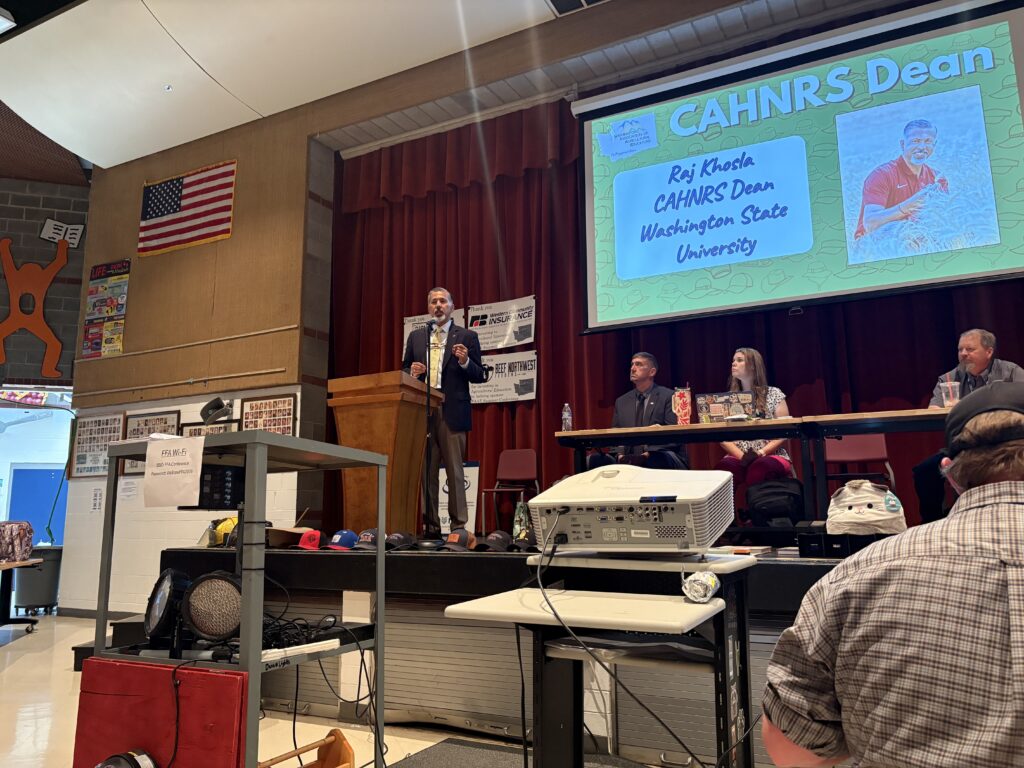
The following day, I joined more than 200 agricultural educators, along with CAHNRS faculty and staff, at the Washington Association of Agricultural Educators Summer Conference. I appreciated the opportunity to share our strategic direction and discuss why strong partnerships with agricultural educators are essential to our future. Together, we help students discover opportunities, develop confidence, and build pathways to success. When students are at the heart of our mission, then agricultural educators are among our most important partners in preparing and inspiring the next generation.
Another exciting opportunity emerged on July 7, when I met with a senior leader at Microsoft—Ranveer Chandra, vice president of Frontier Tuning and chief technology officer for Agri-Food. The conversation was both energizing and forward-looking, centered on how emerging technologies can help expand access to trusted, research-based knowledge.
Imagine an AI-powered Extension agent that places the expertise of WSU directly into the hands of our citizens, growers, and landowners. A homeowner could use a mobile device to identify the best plants for a garden. A grower could receive science-based recommendations for orchard rootstocks or vineyard management practices. By combining Microsoft’s technology with WSU’s research and Extension expertise, we have the opportunity to serve our communities at scale and explore entirely new ways of delivering practical, site-specific knowledge that is developed and tested in our state.
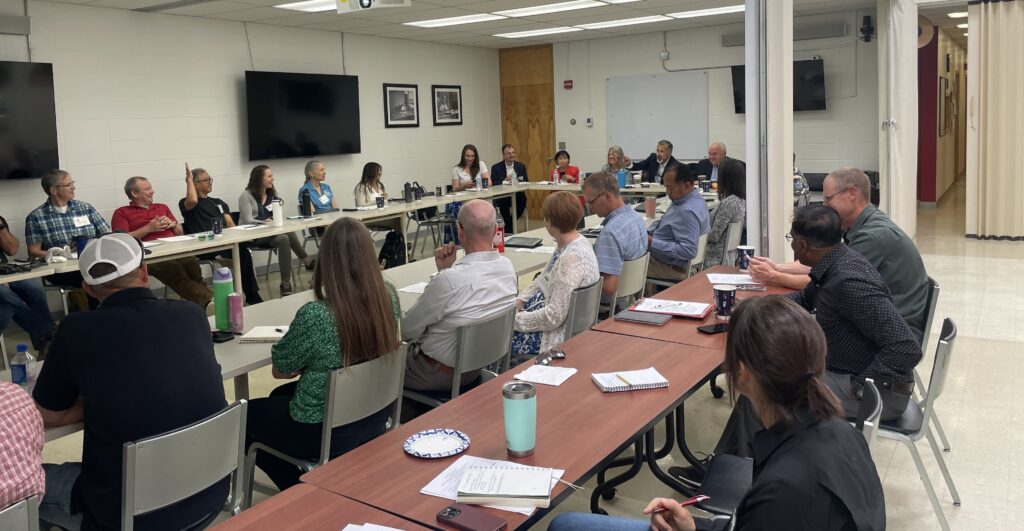
Partnerships were also a central theme during a statewide meeting at the Irrigated Agriculture Research and Extension Center in Prosser, which brought together leaders and scientists from CAHNRS, the USDA Agricultural Research Service, and the Washington State Department of Agriculture. The gathering reunited partners after a three-year hiatus and created valuable opportunities to discuss shared priorities, future collaboration, and innovative approaches to addressing agricultural challenges. I was pleased to welcome USDA-ARS Deputy Administrator Nora Lapitan, Pacific West Area Director Tara McHugh, representatives from WSDA, and research leaders from across Washington. The participation of stakeholders from the tree fruit, grape and wine, and hop industries further strengthened the conversation and affirmed the importance of working together to address the needs of our state’s agricultural economy.
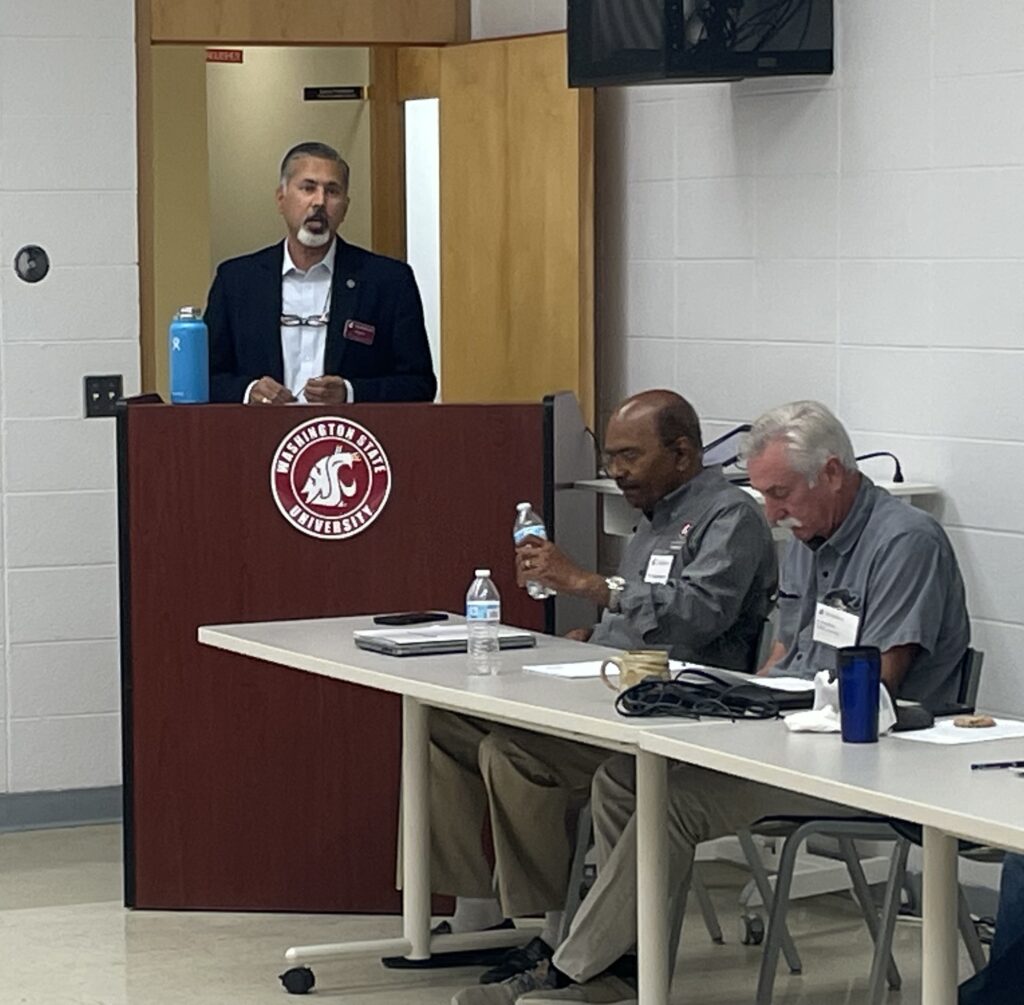
My sincere thanks to IAREC Director Naidu Rayapati for hosting this important event and helping facilitate productive discussions that will shape future collaboration and innovation.
As I write this message, I am preparing to spend a few days away with my family to recharge and reflect. Summer offers all of us an opportunity to step back, replenish our energy, and invest in the people and experiences that matter most. I encourage each of you to make time for rest and renewal. The work we do is important, but sustaining excellence requires balance, perspective, and self-care. Thank you for all that you do on behalf of our students, communities, and stakeholders. I look forward to the opportunities ahead as we begin another academic year together, energized by our shared purpose and inspired by the impact we create across Washington and beyond.
Lastly, I invite you all to join us in celebrating a significant milestone that Scot Hulbert attained earlier this year as he became emeritus professor and associate dean of the college. We will be celebrating his retirement 4:30-6:30 p.m. Friday, August 7, at the WSU Eggert Family Organic Farm. Your RSVP is required. Hope to see you all.
Kudos Corner
Congratulations to Department of Viticulture and Enology doctoral student Raquel Venegas and master’s student Alyssa Perez, who received, respectively, the George & Susan Carter Scholarship and the Albert Don Memorial Scholarship from the Washington Wine Industry Foundation.
Kudos to Debbie Handy, scholarly professor in the Department of Human Development, who was one of just three individuals selected for the 2026 American Association of Family and Consumer Sciences (AAFCS) Distinguished Service Award.
Chelsea Davis, animal care facility manager in the School of the Environment, received thanks for outstanding contributions to the WSU Bear Research, Education, and Conservation Center. Davis ensures exceptional daily husbandry care and environmental enrichment, works closely with research and veterinary scientists, and leads the Bear Center’s volunteer program, providing students with hands-on learning opportunities.
The produce safety research and outreach of Claire Murphy, assistant professor in the School of Food Science based at the Prosser Irrigated Agriculture Research and Extension Center, is showcased in a new video developed by CAHNRS Communications. IAREC Director Naidu Rayapati hopes to develop additional short videos featuring other faculty programs.
Until next time, Go Cougs!
Sincerely,
Raj