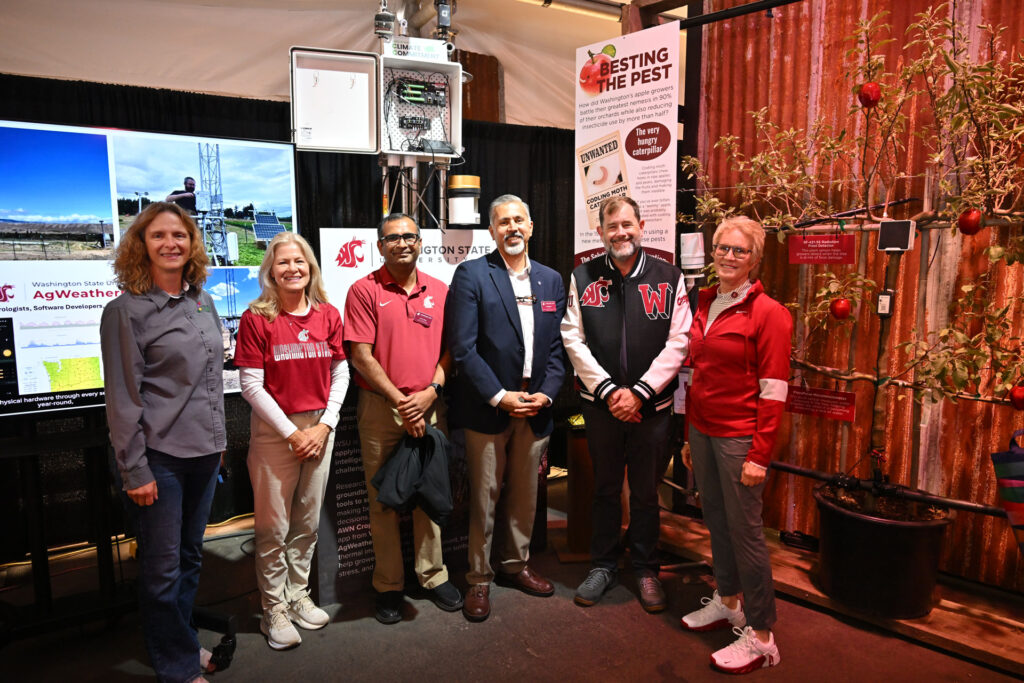
Dean Raj Khosla; Provost Chris Riley-Tillman; and WSU President Elizabeth Cantwell visit the WSU exhibit at the Washington State Fair.
To gain the truest understanding of our mission in CAHNRS, nothing beats being there in person. The power of the land-grant mission is best experienced not in reports or presentations, but in the classrooms, research centers, farms, communities, and businesses where our faculty, staff, students, and partners are making a difference every day. That is exactly what the college leadership team has been doing recently, both in Pullman and during an extended nine-day visit to western Washington.
At WSU Vancouver, accompanied by Associate Deans Sieg Snapp, Vicki McCracken, and Nancy Deringer, Director of Strategic Initiatives Krissi Hewitt, Department of Human Development Chair Kory Floyd, and Extension Associate Director Mike Gaffney, I had the opportunity to learn about the impactful work taking place in the Department of Human Development, the School of Economic Sciences, and the School of the Environment.
I was quite impressed as Prevention Science students shared their backgrounds, areas of work, and why they chose this interdisciplinary program. Another highlight was our session with Amy Salazar, associate professor in human development, who discussed her groundbreaking research on foster care and an annual exchange with Japan. We also met Christine Portfors, associate vice president and vice provost for academic and student affairs. These visits were invaluable reminders of the talent and dedication that define WSU.
The 78th Street Heritage Farm in Clark County is a hidden gem of CAHNRS and a remarkable example of our land-grant mission at work. Once a county poor farm, this 79-acre property has become a vibrant hub for Extension and community engagement. By creating new economic opportunities through shiitake mushroom production, faculty are fostering new lines of low-investment economic support for local farmers. A volunteer-run three-day plant sale recently brought in over $120,000 to support local programs and people. The faculty and master gardener volunteers at Heritage Farm demonstrate how innovation and service can strengthen communities.
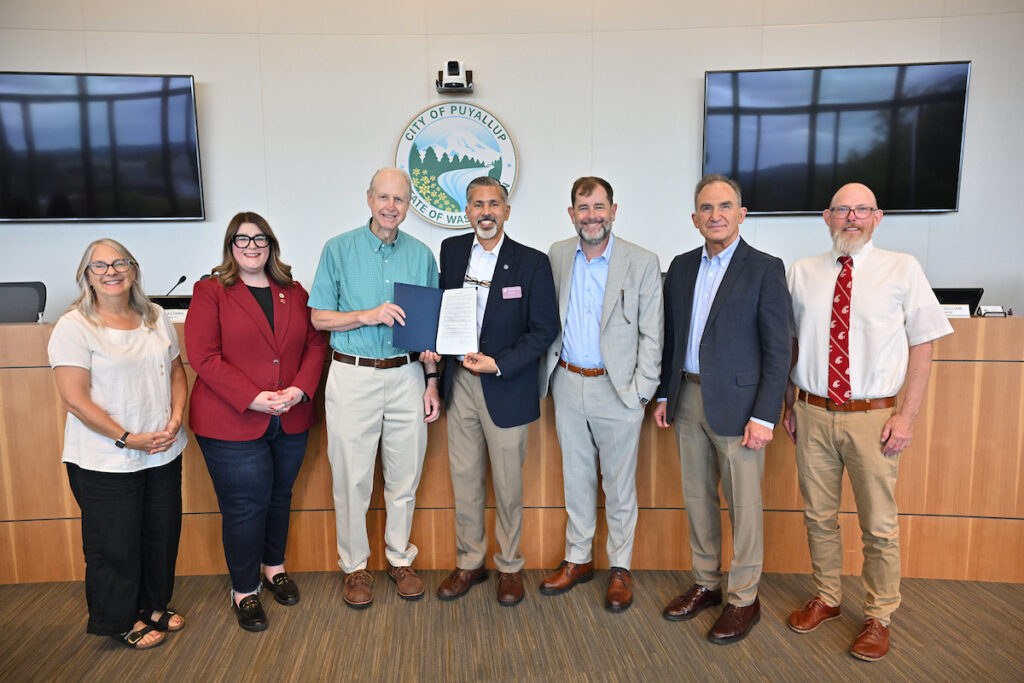
That same spirit was evident at the WSU Puyallup Research and Extension Center, which has served Washington communities since 1894. The City of Puyallup’s proclamation of September 21-26 as WSU Puyallup Research and Extension Center Appreciation Week reflects the deep and enduring partnership between WSU and the people we serve. Joining Provost Chris Riley-Tillman, REC Director Todd Murray, city leaders, and community partners for the celebration was both humbling and inspiring. It was clear that Puyallup truly values our partnership.
The reach of CAHNRS was also on full display at Taste of the State in Seattle, attended by President Elizabeth Cantwell and Provost Chris Riley-Tillman. From honey and apples to cheese and ice cream, our products showcased the science, innovation, and expertise behind the food systems that sustain us all. Food connects everyone, and it provides a powerful opportunity to share the story of how research, education, and partnership improve lives.
Throughout our travels, we strengthened relationships with important partners, including the Washington Research Foundation and Ranveer Chandra, Microsoft’s vice president of frontier tuning and chief technology officer for agri-food. We also celebrated philanthropy at WSU’s inaugural Crimson Celebration, recognizing supporters such as the McCluskey family, who earned the distinguished status of WSU Benefactors for their personal contributions and whose generosity continues to create opportunities for future generations.
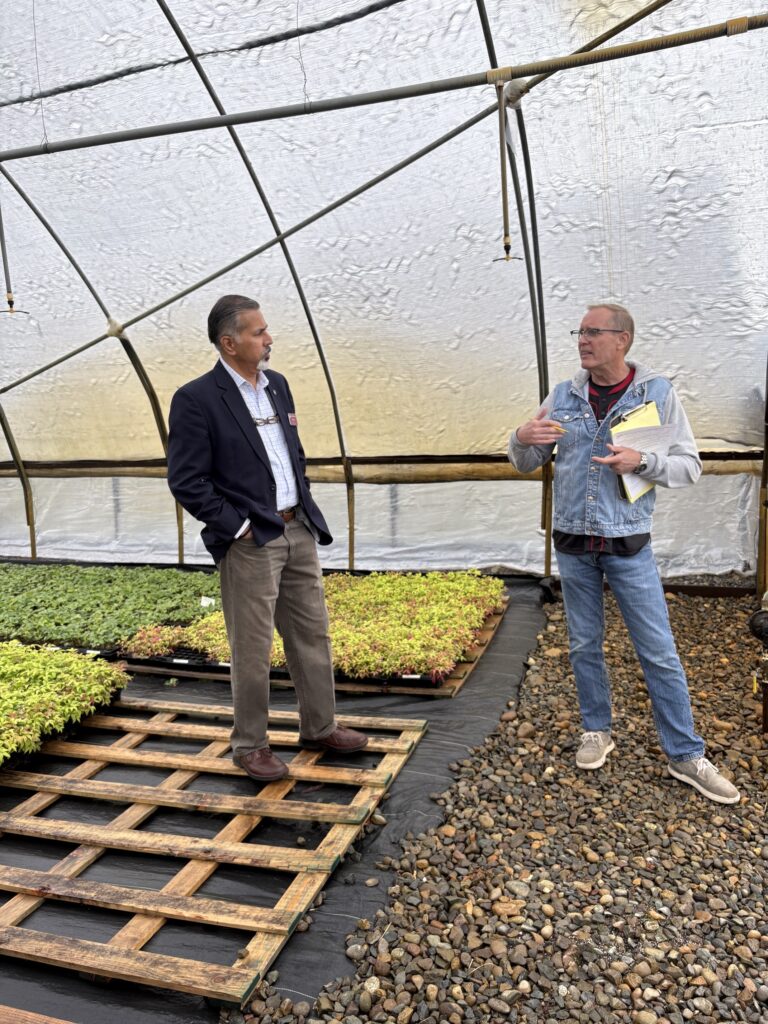
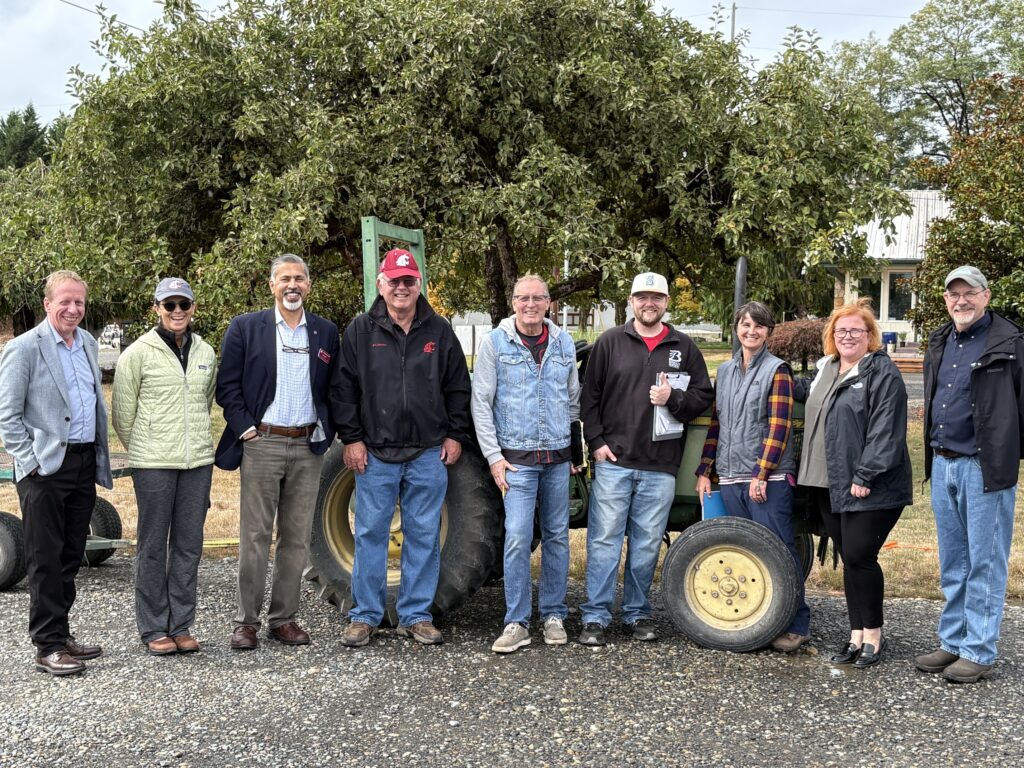
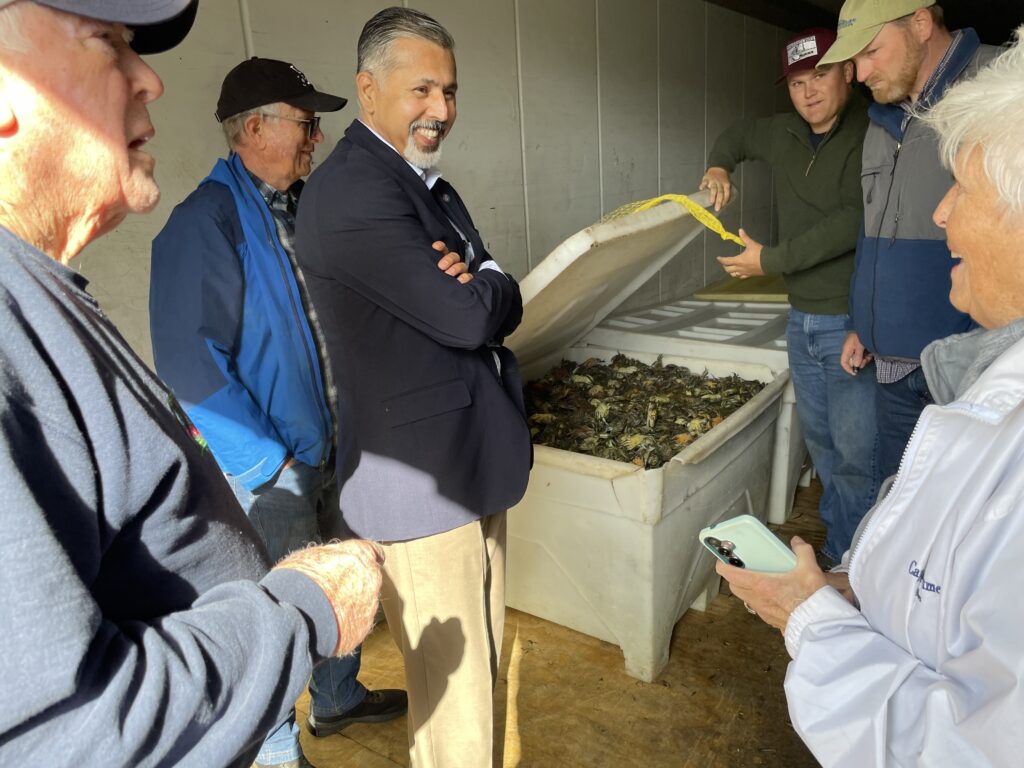
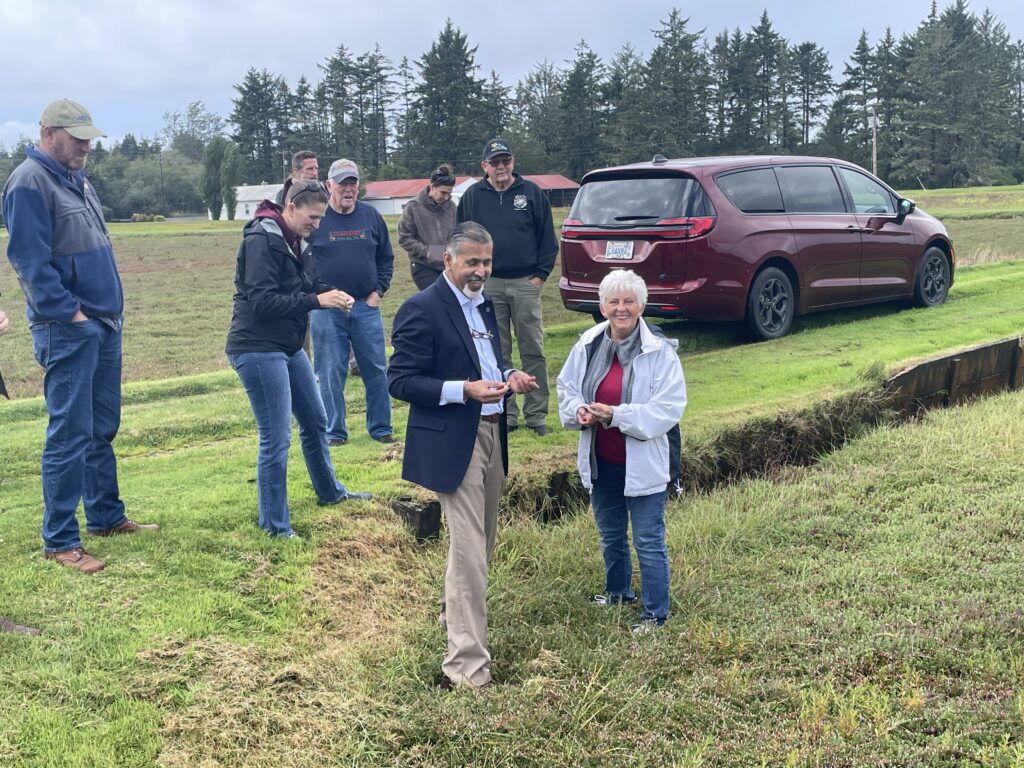
Our visits to cranberry growers in Long Beach, shellfish producers along Willapa Bay, and industry leaders at Briggs Nursery, along with the leadership of the Washington State Nursery and Landscape Association, underlined the importance of continued education and research, and the importance of maintaining strong connections with Washington’s agricultural and natural resource sectors. These partnerships are essential to advancing research, supporting industry innovation, and ensuring that WSU remains responsive to the needs of the communities we serve. I am thankful for the Briggs family’s support of student scholarships and their work delivering clean, virus-free plants.
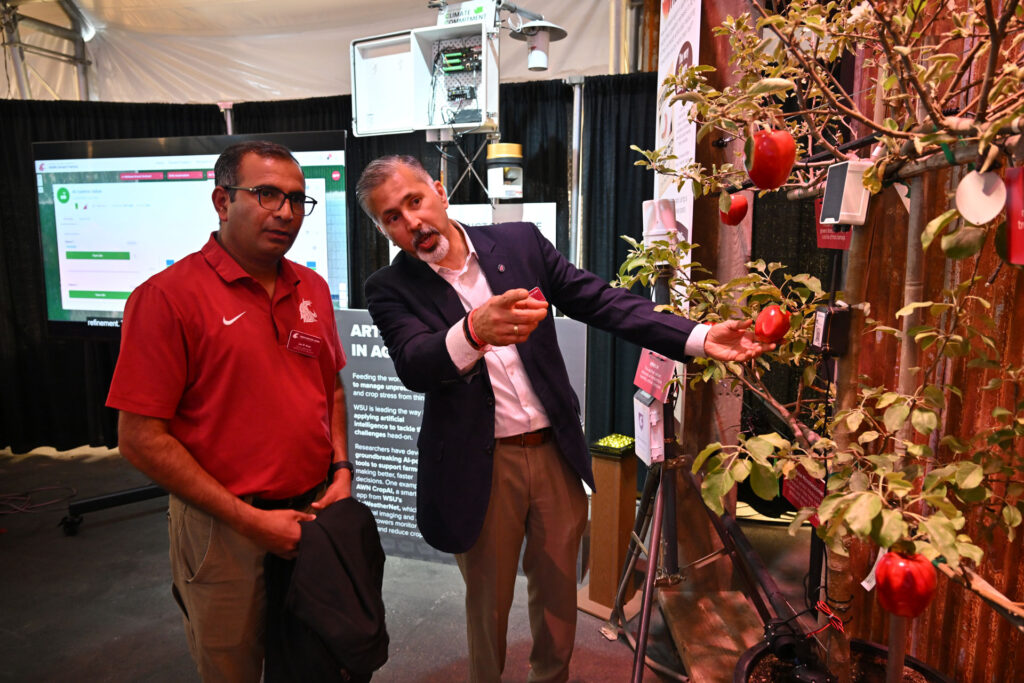
Another highlight was the opening of the WSU exhibit at the Washington State Fair. I joined WSU leadership, WSDA Director Derek Sandison, Washington Tree Fruit Research Commission Executive Director Ines Hanrahan, Professor Lav Khot, and other leaders to celebrate a showcase of WSU impacts across tree fruit, dairy and animal science, natural resources, AgWeatherNet, the Composite Materials and Engineering Center, and the School of the Environment. This amazing creation inspired discussion of future displays at SeaTac or downtown Seattle.
Back on campus, we completed listening sessions with each of the five units involved in creating a new school within CAHNRS, including a recent meeting with colleagues in the Department of Horticulture. We will share more at the upcoming CAHNRS Town Hall, 4-5 p.m. Tuesday, September 29, at Johnson Annex C107. Please prioritize being present!
We also launched a search for the next director of the School of the Environment (SOE), and I appreciated the opportunity to meet with nearly every SOE faculty member during their recent retreat.
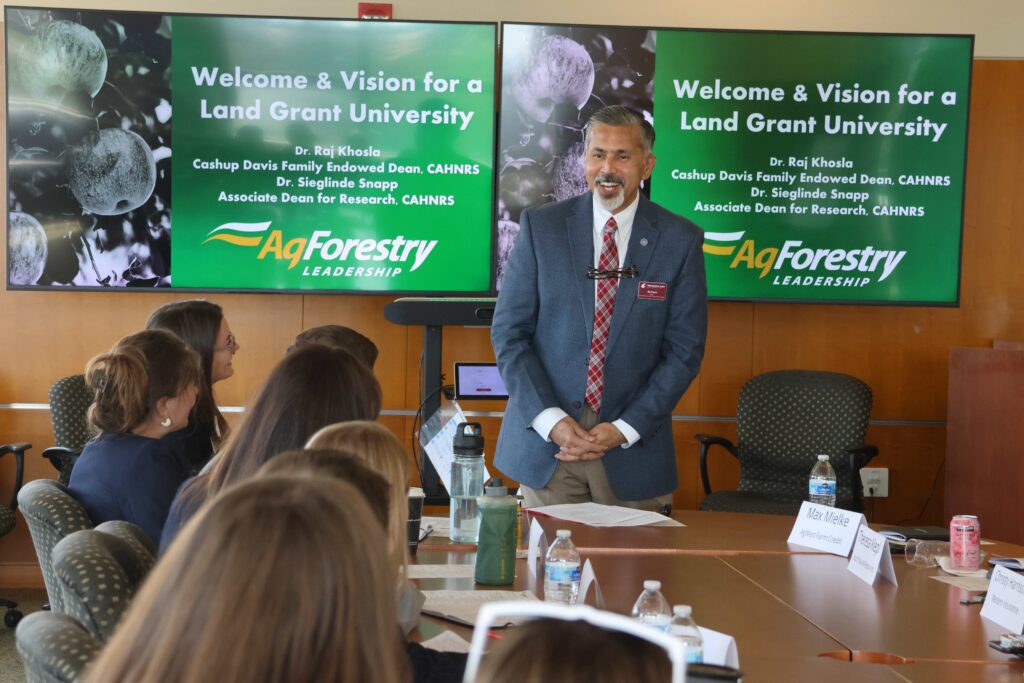
I was equally honored to speak with the 46th cohort of the AgForestry Leadership Program on September 10 about leadership, vision, mentorship, and service. Programs like AgForestry play a vital role in preparing the next generation of leaders in the agriculture, forestry, natural resources, and related industries.
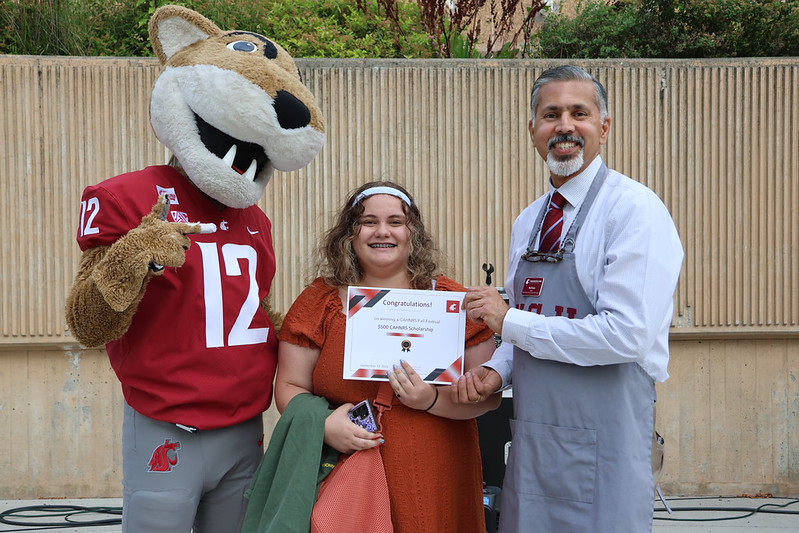
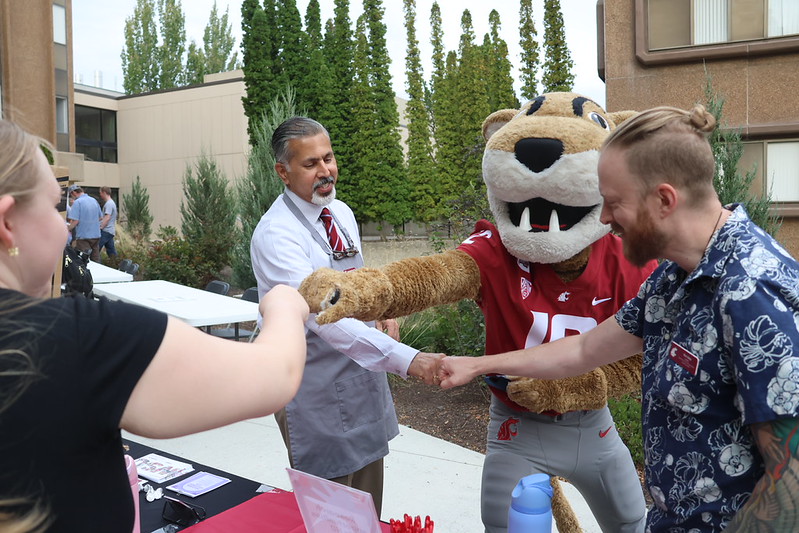
Finally, what an outstanding start to the academic year we had at our Fall Festival. Spillman Plaza was energized by the enthusiasm of our students as we awarded scholarships, celebrated student organizations, and welcomed new opportunities for engagement. I visited every club present and learned about cross-campus organizations. Shout-out to the members of the Horticulture Club, who expressed interest in contributing to our new Farm to Table initiative. Fall Fest is a gateway to student involvement in CAHNRS, and a very memorable start to the academic year.
As I reflect on these experiences, one message stands out clearly: Seeing truly is believing. Across Washington, I witnessed the extraordinary impact of our students, faculty, staff, volunteers, alumni, and partners. Their work embodies the very best of the land-grant mission, creating knowledge, expanding opportunity, and improving lives. It leaves me deeply grateful for the people who make CAHNRS exceptional, and optimistic about all we will accomplish together in the months and years ahead.
Kudos Corner
Over a dozen CAHNRS scientists and students, including Jake Blauer, Lee Kalcsits, Mark Pavek, Kate Evans, Matt Whiting, Stefano Musacchi, Carolina Torres, Sindhuja Sankaran, Kirti Rajagopalan, Bernardita Sallato, Lisa Wasko DeVetter, Micah Evalt, Claire Winslow and others engaged with global colleagues at the International Horticultural Congress, held August 23-28 in Kyoto, Japan.
Winslow delivered an invited seminar on new pest management strategies in blueberries, while Evalt presented graduate research on new crop improvement tools for berries, served as an oral presentation judge, and received the U.P. Hedrick Award for best student review paper.
Zoe Andersen, IAREC-based doctoral student in the School of Food Science under the mentorship of Claire Murphy, received a Student Travel Scholarship to attend the 2026 International Association for Food Protection Conference in New Orleans. She was recognized during the conference in July, an honor that highlights her hard work, scholarly achievements, and dedication to research excellence.
Meijun Zhu, professor in the School of Food Science, showcased her research group’s innovative work examining the interactions among dietary bioactive compounds, gut microbiota, and intestinal barrier function in a presentation in Brazil.
Edmund Larbi Afari and Paul Olaoluwaniyi Dahunsi, doctoral students in Zhu’s laboratory, won, respectively, the 2025-2026 CAHNRS Graduate Student Leadership Award for exemplary leadership and contributions; and the 2026 IFT Feeding Tomorrow Fund Travel Scholarship, which provides valuable opportunities to engage with food science professionals and explore emerging research.
Until next time, Go Cougs!
Sincerely,
Raj