
CAHNRS Quarterly Reach Report – Spring 2025
Message from Dean Powers

As the first Cashup Davis Family Endowed Dean of WSU’s College of Agricultural, Human, and Natural Resource Sciences (CAHNRS), it’s been my pleasure over nearly three years to share the accomplishments and impacts of our faculty, staff, students, and partners. Our latest Quarterly Reach Report focuses on the people of CAHNRS, highlighting some of the many personalities and projects that help our college and stakeholders succeed.
Along with sharing a timely update on grants, papers, hires, and academic opportunities, we hear about the impact of our new Student Outreach and Retention program. We also encounter inspiring colleagues like recruiter Junior Gomez, who helps incoming students find their path to college; Extension agronomist Rachel Wieme, who partners with farmers dealing with the aftermath of avian flu; and Professor Kevin Murphy, who is blazing trails in regional cropping systems.
This edition introduces the new WSU Extension website, which makes it easier for users across Washington state to find timely, evidence-based information. To demonstrate the difference that our partners make, we highlight the latest gifts supporting research and much-needed infrastructure. We also underscore our Council for Agricultural Research, Extension, and Teaching advisors and delegates, who help the public and policymakers understand the real-world impacts of our land-grant mission.
That mission goes on amid change. With the next Cashup Davis Dean, Raj Khosla, taking the helm of the college this September and Senior Associate Dean Scot Hulbert stepping up as acting dean this summer, next quarter’s report will help introduce changing leadership in CAHNRS. The Reach Report is your window into the ongoing, incredible work happening in our college. Please stay connected; there is much more to come.
Students and Academics

Junior Gomez profile
A desire to be out in the community rather than sitting at a desk makes WSU alumnus Junior Gomez a perfect fit for his CAHNRS recruiting role. As a first-generation college student, Gomez is well positioned to reach high schoolers with similar backgrounds. He frequently travels to recruitment events at high schools, community colleges, and convention centers, where he talks to prospective students about everything CAHNRS has to offer. Through it all, Gomez prioritizes a down-to-earth approach that centers on finding common ground.
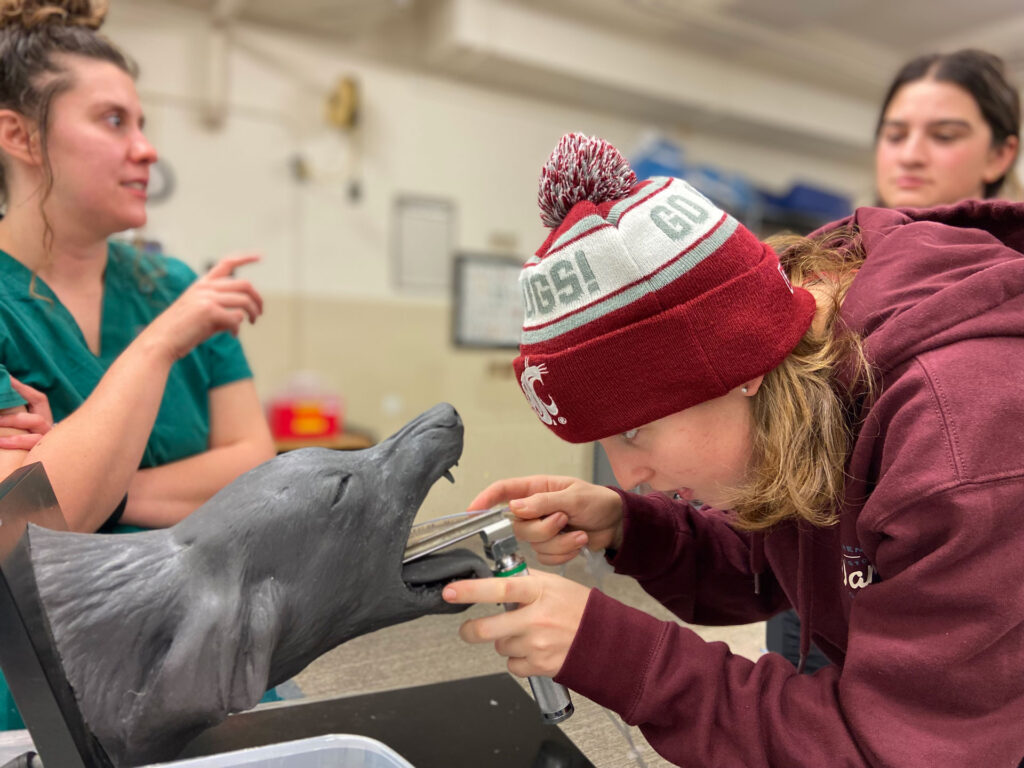
Featured club: Pre-Vet Club
The WSU Pre-Vet Club provides a source of mentorship, community, and networking for students pursuing pre-health degrees like animal sciences. Club members receive hands-on experience via suture clinics and simulation labs; they also have additional opportunities to attend workshops that offer mental health resources and assistance with vet school applications. Each year, club members tour places like WSU’s College of Veterinary Medicine and the Knott Dairy Center and hear from visiting universities with vet programs. All members are also required to complete volunteer hours. This year, the club raised enough funds to provide scholarships and suture kits for its students.
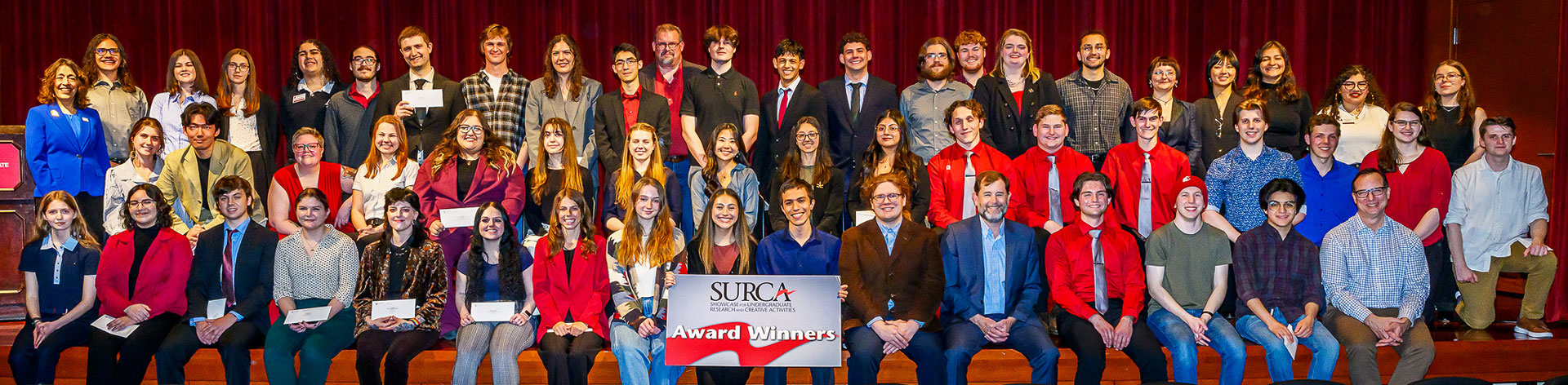
SURCA
CAHNRS students were among the hundreds of undergraduates who presented their work at this March’s Showcase for Undergraduate Research and Creative Activities (SURCA). Several CAHNRS students took home awards for their research, which spanned a wide variety of topics.
List of student award winners: Mackenzie Phelps, Tyler Boies, Kaitlyn Ipsen, Nathaniel Cooley, Elizabeth Heilman, Pedro Mendoza-Zamora, Mackenzie Potter, Jackeline Serrano Rodriguez, Lesly Valdovinos-Arevalo.
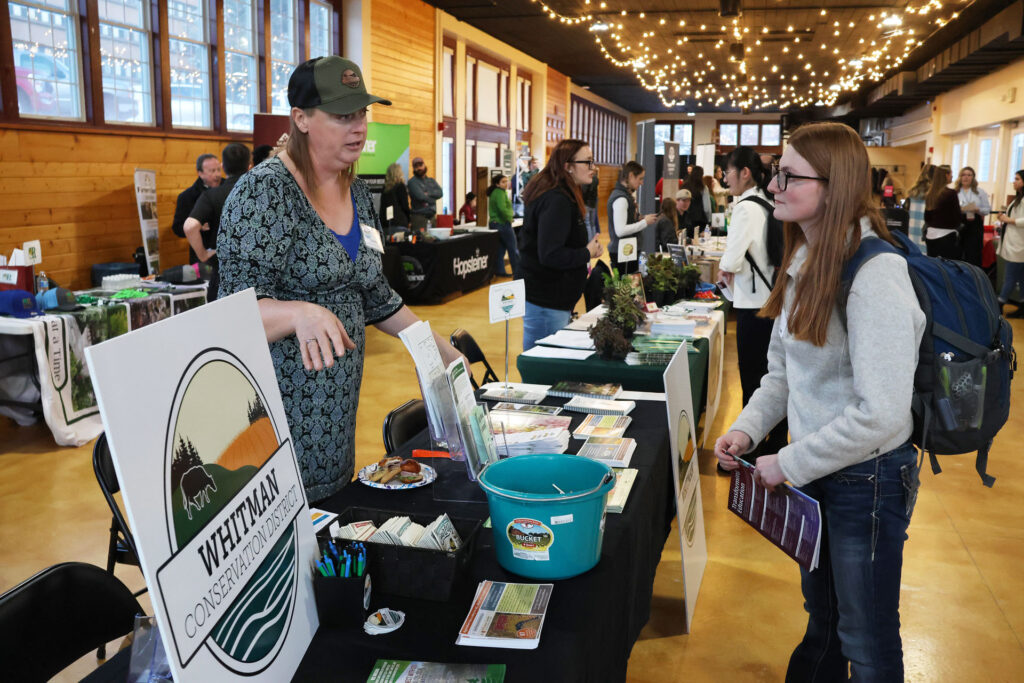
Scholarships
During the 2024-2025 academic year, CAHNRS awarded more than $1 million in scholarships to its students. At this year’s CAHNRS Networking Night, four students received scholarships of $500 apiece.
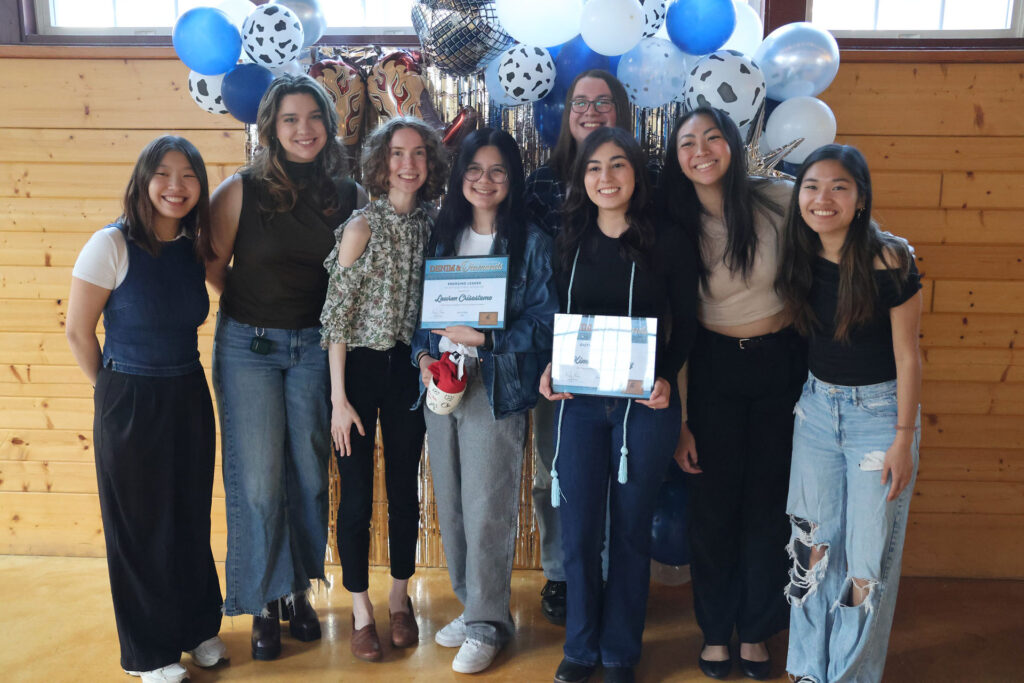
2025 CAHNRS Student Awards Ceremony Banquet
Outstanding undergraduates, graduate students, and club members were recognized during the 2025 CAHNRS Student Awards Ceremony and Banquet. The “denim and diamonds”-themed event honored 10 individual award winners, 19 scholars who were named outstanding seniors in their academic departments, and more than 30 nominees.
Faculty and Staff
22 scientists and educators in CAHNRS received promotions in tenure or career tracks for 2025.
Promoted faculty include:
Regents Professor
- Carolyn Ross, School of Food Science, WSU Pullman
Associate Professor, tenure track
- Gabriel LaHue, Department of Crop and Soil Sciences, WSU Mount Vernon Northwestern Washington Research and Extension Center (NWREC)
- Deirdre LaHue, Department of Crop and Soil Sciences, WSU Mount Vernon NWREC
- Ashley Hernandez-Hall, WSU Extension Youth and Families, Snohomish County
- Justin O’Dea, WSU Extension Agriculture/Natural Resources, Clark County
- Shanthi Manian, School of Economic Sciences, WSU Pullman
- Arjan Meddens, School of the Environment, WSU Pullman
Associate Professor, career track
- Brandon Hopkins, Department of Entomology, WSU Pullman
- Thuy Bernhard, School of Food Science, WSU Pullman (remotely based in Texas)
- Javier Gutierrez Illan, Department of Entomology, WSU Pullman
- Amber Hauvermale, Department of Crop and Soil Sciences, WSU Pullman
- Suzette Galinato, WSU Extension Agriculture/Natural Resources, WSU Pullman
Professor, career track
- Michael Wallace, WSU Extension Youth and Families, Whatcom County
Professor
- Diane Smith, WSU Extension Youth and Families, Skagit County
- James Harbertson, Department of Viticulture and Enology, WSU Tri-Cities
- Lisa DeVetter, Department of Horticulture, WSU Mount Vernon NWREC
- Jeb Owen, Department of Entomology, WSU Pullman
- Andrei Smertenko, Institute of Biological Chemistry, WSU Pullman
- Zhiwu Zhang, Department of Crop and Soil Sciences, WSU Pullman
- Brittany Cooper, Department of Human Development, WSU Pullman
- Lav Khot, Department of Biological Systems Engineering, WSU Pullman
- Sindhuja Sankaran, Department of Biological Systems Engineering, WSU Pullman
Large Grants
Research Papers of Note
The following papers featuring credited CAHNRS coauthors were published during the first quarter of 2025 in journals ranked in the top 5% of their field, based on a variety of factors.
- Examining the nexus between exporting status and CO2 productivity in Indonesian agri-based manufacturing, Mandasari, P; Luckstead, J, ENERGY ECONOMICS
- Engineering strong and tough wood fiber/polyhydroxybutyrate bio-composite: Synergistic modification, performance optimization, and mechanistic insights, Chen, ZH; Liu, WC; Boukhair, M; Bakri, MKB; Li, H; Zhang, SB, COMPOSITES PART B-ENGINEERING
- Phenotyping Alfalfa (Medicago sativa L.) Root Structure Architecture via Integrating Confident Machine Learning with ResNet-18, Weihs, BJ; Tang, Z; Tian, ZZ; Heuschele, DJ; Siddique, A; Terrill, TH; Zhang, Z; York, LM; Zhang, ZW; Xu, ZY, PLANT PHENOMICS
- The State of the Art in Root System Architecture Image Analysis Using Artificial Intelligence: A Review, Weihs, BJ; Heuschele, DJ; Tang, Z; York, LM; Zhang, ZW; Xu, ZY, PLANT PHENOMICS
- Biochar impact on soil health and tree-based crops: a review, Antonangelo, JA; Sun, X; Eufrade, HD Jr, BIOCHAR
- Recent advances in examining the factors influencing the efficacy of biocides against Listeria monocytogenes biofilms in the food industry: A systematic review, Arthur, M; Afari, EL; Alexa, EA; Zhu, MJ; Gaffney, MT; Celayeta, JMF; Burgess, CM, COMPREHENSIVE REVIEWS IN FOOD SCIENCE AND FOOD SAFETY
- Enhanced machine vision system for field-based detection of pickable strawberries: Integrating an advanced two-step deep learning model merging improved YOLOv8 and YOLOv5-cls, He, ZX; Karkee, M; Zhang, Q, COMPUTERS AND ELECTRONICS IN AGRICULTURE
- A vision-based robotic system for precision pollination of apples, Bhattarai, U; Sapkota, R; Kshetri, S; Mo, CK; Whiting, MD; Zhang, Q; Karkee, M, COMPUTERS AND ELECTRONICS IN AGRICULTURE
- Plasmids encode and can mobilize onion pathogenicity in Pantoea agglomerans, Shin, GY; Asselin, JA; Smith, A; Aegerter, B; Coutinho, T; Zhao, M; Dutta, B; Mazzone, J; Neupane, R; Gugino, B; Hoepting, C; Khanal, M; Malla, S; Nischwitz, C; Sidhu, J; Burke, AM; Davey, J; Uchanski, M; Derie, ML; du Toit, LJ; Stresow-Cortez, S; Bonasera, JM; Stodghill, P; Kvitko, B, ISME JOURNAL
- Anaerobic digestion bacteria algae (ADBA): A mathematical model of mixotrophic algal growth with indigenous bacterial inhibition in anaerobic digestion effluent, Rahat, SMHS; Dada, OI; Yu, L; Kirchhoff, H; Chen, SL, JOURNAL OF BIORESOURCES AND BIOPRODUCTS
- Towards sustainable agroecosystems: A life cycle assessment review of soil-biodegradable and traditional plastic mulch films, Dada, OI; Liyanage, TUH; Chi, T; Yu, L; Devetter, LW; Chen, SL, ENVIRONMENTAL SCIENCE AND ECOTECHNOLOGY
- A chemical-recovery-free ammonium sulfite-based alkali pretreatment of corn stover for low-cost sugar production via fertilizer use of waste liquor, Ma, SS; Shiva; Tao, HY; Dempsey, J; Chen, XW; Yuan, JX; Zhu, JY; Yuan, JS; Zhou, L; Yang, B, Bioresource Technology BIORESOURCE TECHNOLOGY
- Simplified mechanistic model for estimating leaf wetness, Dhakar, R; Amogi, BR; Kothawade, GS; Khot, LR, AGRICULTURAL AND FOREST METEOROLOGY
- Aluminum and microplastic release from reflective agricultural films disrupt microbial communities and functions in soil, Wang, K; Flury, M; Kuzyakov, Y; Zhang, H; Zhu, W; Jiang, R, JOURNAL OF HAZARDOUS MATERIALS
- Changes in Young Adult Handgun Carrying in the US, Halvorson, MA; Kuklinski, MR; Gause, E; Schleimer, JP; Terral, HF; Weybright, EH; Oesterle, S; Rowhani-Rahbar, A, JAMA NETWORK OPEN
- In-field degradation of polybutylene adipate-co-terephthalate (PBAT) films, microplastic formation, and impacts on soil health, Wang, K; Flury, M; Sun, SY; Cai, JL; Zhang, AH; Li, Q; Jiang, R, ENVIRONMENTAL RESEARCH
- Chlorine tolerance in foodborne pathogens: definitions, identification methods, and mechanisms, Wang, W; Liu, F; Huang, K; Yu, XP; Xiao, XN, CURRENT OPINION IN FOOD SCIENCE
- Comparing evapotranspiration estimations using crop model-data fusion and satellite data-based models with lysimetric observations: Implications for irrigation scheduling, Stöckle, CO; Liu, ML; Kadam, SA; Evett, SR; Marek, GW; Colaizzi, PD, AGRICULTURAL WATER MANAGEMENT
- Effects of the physical form of starter feed on the intake, performance, and health of female Holstein calves, de Castro, IRR; Leite, GBC; Carrari, IF; da Silva, LDC; Chagas, JCC; More, DD; Marcondes, MI, ANIMAL
- Implications of Pyrolytic Gas Dynamic Evolution on Dissolved Black Carbon Formed During Production of Biochar from Nitrogen-Rich Feedstock, Zhang, XX; Xu, ZB; Sun, YQ; Mohanty, SK; Lei, HW; Khan, E; Tsang, DCW, ENVIRONMENTAL SCIENCE & TECHNOLOGY
New Hires
CAHNRS hired 23 new faculty and staff in Q1, 2025:
Partners & Alumni

Featured Partner: Northwest Nursery Improvement Institute
The Northwest Nursery Improvement Institute (NNII) is partnering with CAHNRS to ensure a competitive, sustainable future for Washington state tree fruit.
NNII recently pledged $600,000 toward construction of the new Plant Growth Facility at WSU’s Wenatchee Tree Fruit Research and Extension Center (TFREC). The institute’s gift specifically funds the development of a high-tech greenhouse for accelerated cultivar development, improved pest management strategies, and optimal production of apples, pears, and other crops.
“Scientists and staff at Wenatchee are making significant contributions to the tree fruit industry in terms of insect and pathogen control, plant physiology, fruit conditioning and storage, and new plant varieties,” said NNII Manager Bill Howell. “They must have modern facilities for their studies.”
Featured Gifts and Goals
- Northwest Nursery Improvement Institute: $600,000, TFREC Plant Growth Facility
- Jonathan and Kathleen Altman Foundation: $75,000, Altman Foundation Honey Bee & Mycelium Fund
- Estate of James D. Hansen, PhD: $68,000, Akre and Johansen Fund in Entomology
- Barbara Haigh and Philip Arms: $68,000, George Nathaniel Arms Scholarship
- Albert and Pauline Leonard: $50,000, Albert and Pauline Leonard Agricultural Education Support Endowment
- H.R. Spinner: $50,000, WSU TFREC Plant Growth Facility
- Jeff and Erika Barrom: $25,000, WSU Bear Center Research
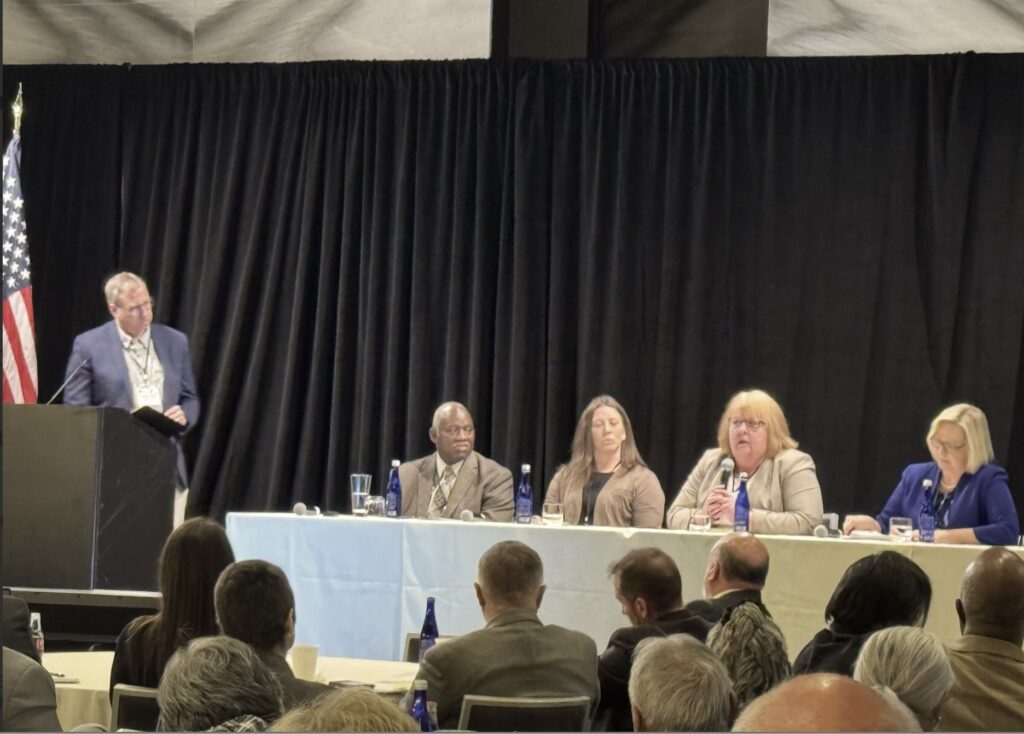
Sharing and pursuing land-grant priorities: 2025 CARET Conference
Delegates representing CAHNRS and Washington state food and agriculture joined Wendy Powers, the Cashup Davis Family Endowed Dean of CAHNRS, and colleagues from across the nation at a conference in Washington, D.C., that shares and supports the priorities of the land-grant university system.
On Feb. 23-24, one of three CAHNRS delegates to the Council for Agricultural Research, Extension, and Teaching (CARET), a program of the Association of Public and Land-grant Universities’ Council, met peers from APLU’s Board on Agriculture Assembly (BAA) during the 2025 CARET/BAA Washington Conference.
Programs and Impacts
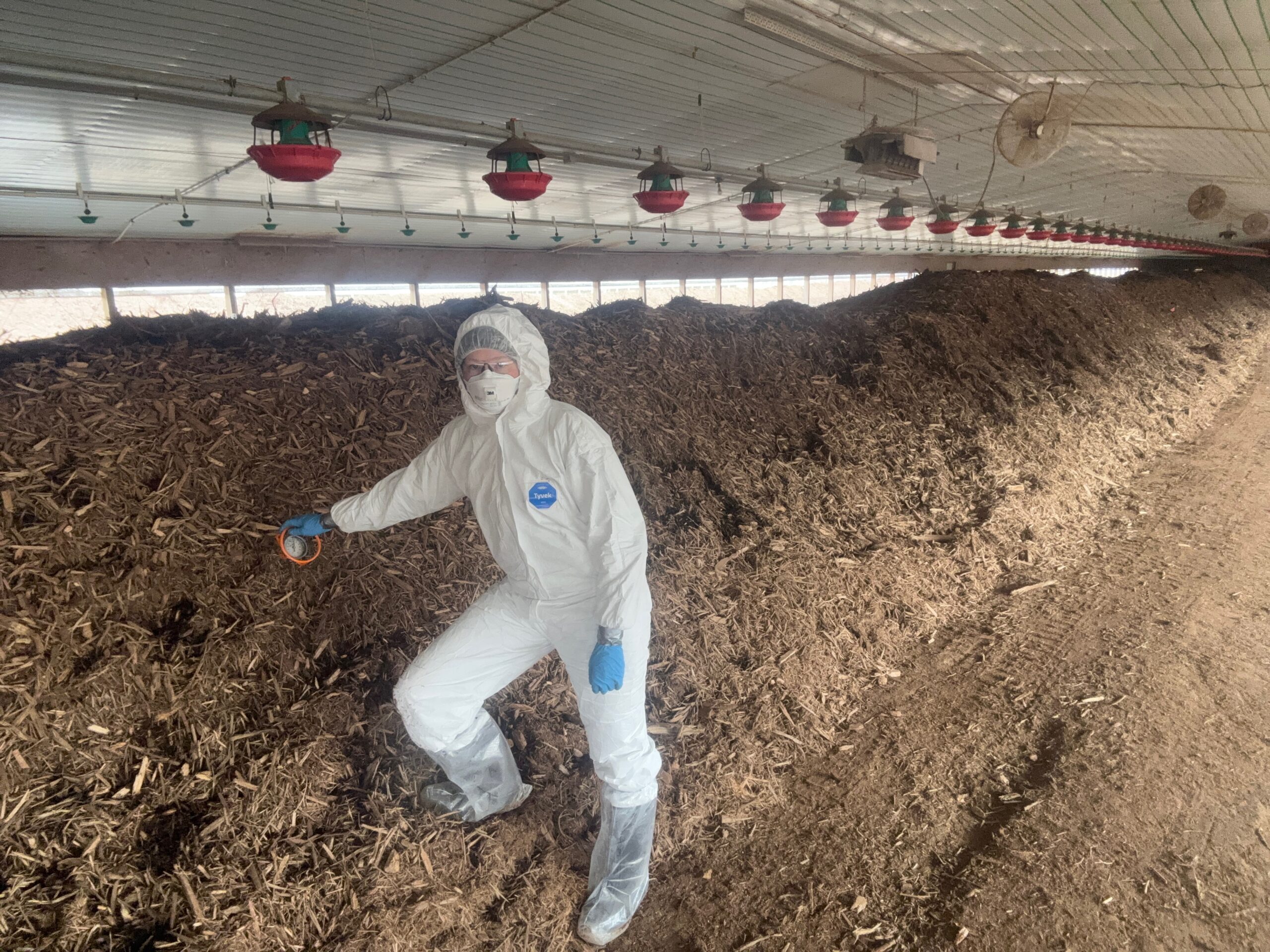
WSU Extension expert tapped to help Missourian farms in aftermath of bird flu
Rachel Wieme, a WSU Extension regional agronomist in Walla Walla County, was enlisted by the USDA in February to assist Missouri poultry farmers dealing with avian flu’s devastating effects. An expert in animal mortality composting, Wieme provided guidance on safely disposing of millions of deceased birds through on-site composting, which helps contain the virus and reduce environmental impact. Composting is considered to be more eco-friendly than other disposal methods like burning or burying, as it reduces methane emissions and repurposes nutrients for on-farm use. Wieme’s work in Missouri will enhance her efforts to strengthen food systems in Washington state, where she has been supporting composting of livestock slaughter waste for small meat processors.
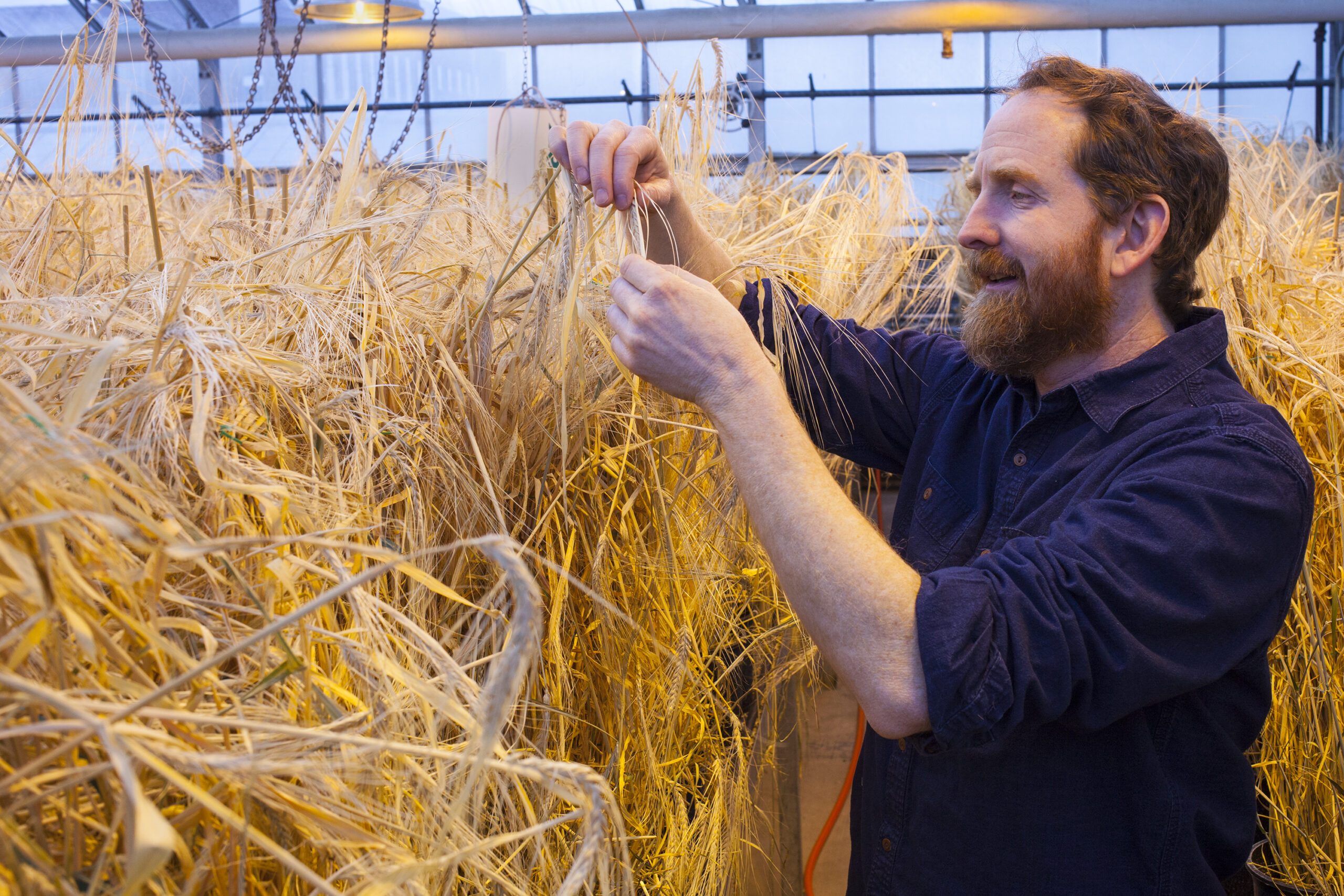
Washington Post’s ‘People Shaping Society’ article includes new WSU Breadlab Director Kevin Murphy
Kevin Murphy was highlighted in The Washington Post as one of the world’s 50 most impactful trailblazers. As the new director of the WSU Breadlab, Murphy leads a team of researchers and bakers on a mission to revitalize wheat and other grains by introducing crop regional diversity. They collaboratively challenge industrial agriculture’s push for uniformity, focusing on varieties that will be more sustainable and better adapted under a changing climate.
By developing crops like Elwha River spelt and partnering with organizations like King Arthur Baking Company, the WSU Breadlab is fostering greater genetic diversity, which will enhance crop resilience to diseases, pests, and weather changes while revolutionizing the flavor profiles of common baked goods and improving food security.
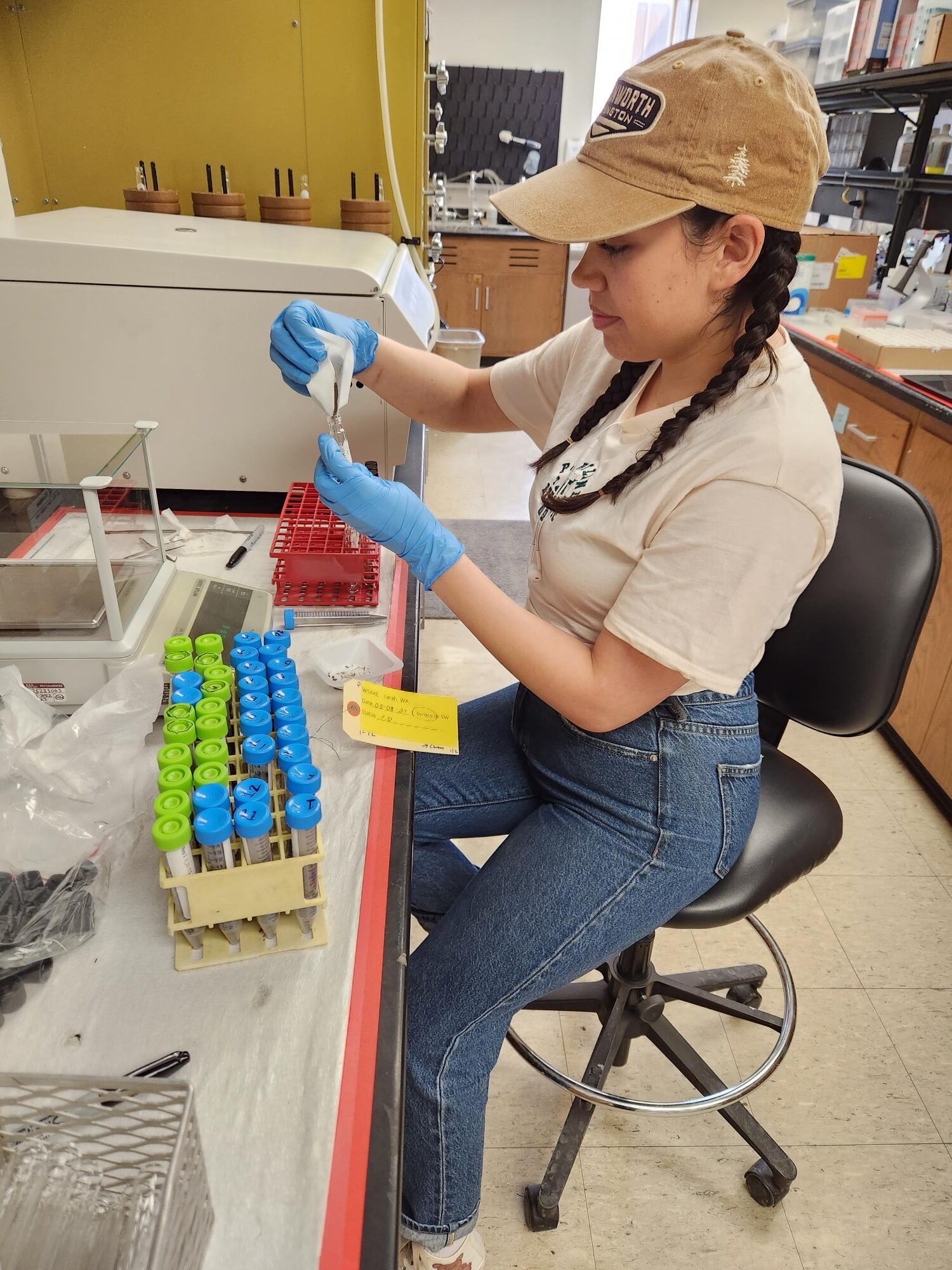
Students connect with mentors through SOAR
As a first-generation college student majoring in fruit and vegetable management and minoring in crop science, WSU senior Vanessa Arroyo-Perez found value in the new CAHNRS Student Outreach and Retention program (SOAR), which pairs students with supportive mentors. Her mentor was also the first from their family to go to college. Through shared experiences navigating university life, the pair quickly built rapport and a positive relationship. Now in its second year, SOAR is expanding opportunities for more students. Offering tailored support for everything from time management to emotional encouragement, SOAR fosters WSU community and academic achievement as well as personal and professional growth.
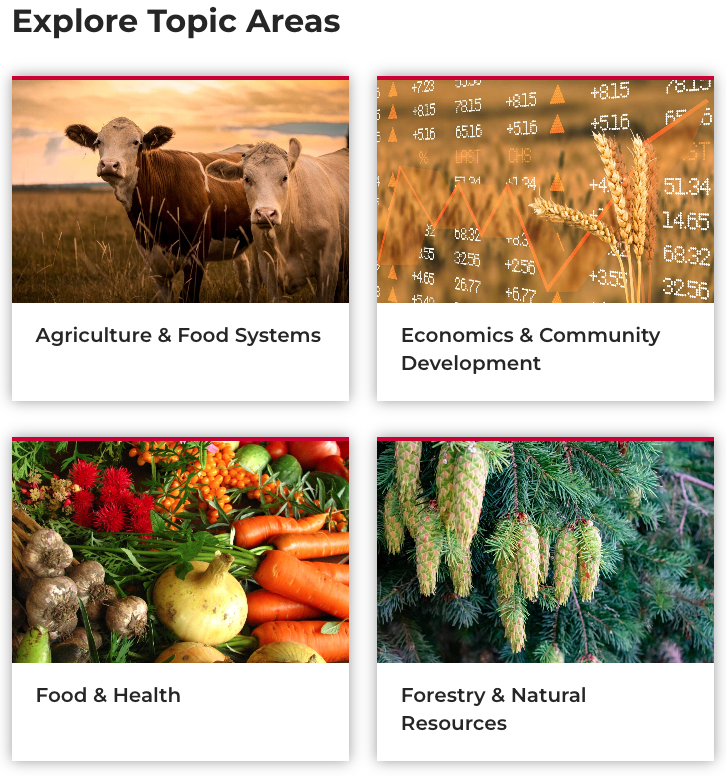
New WSU Extension website
WSU Extension connects communities across Washington state with trusted educational resources and university-supported guidance in agriculture, natural resources, community and economic development, and youth and family services. Together with the communities it serves, WSU Extension co-creates and interprets knowledge to address local challenges and foster innovation. The newly updated WSU Extension website enhances the user experience, making it easier for food producers, families, educators, entrepreneurs, local leaders, and other stakeholders to access timely, research-backed information. University innovation that addresses real-world needs, improves quality of life, and enriches and informs decisions is now more accessible than ever to those who need it.