CAHNRS brings people together in exciting ways. Across Washington and the country, our mission creates connections among agricultural producers, students, scientists, federal agencies, Extension leaders, industry partners, alumni, and individuals who share a commitment to making a difference. Our role is to turn connections into partnerships, ideas into action, and action into impact.
Our work takes on even greater importance as our state, our university, and the world around us continue to change rapidly. WSU’s Systemwide Redesign is helping the university meet evolving needs and opportunities. At the September 15 Directors+ Forum, President Cantwell presented to the entire university strategic recommendations emerging from that process. Guided by WSU’s six strategic pillars, the actions are focused on strengthening how we operate, collaborate, and create value across the university.
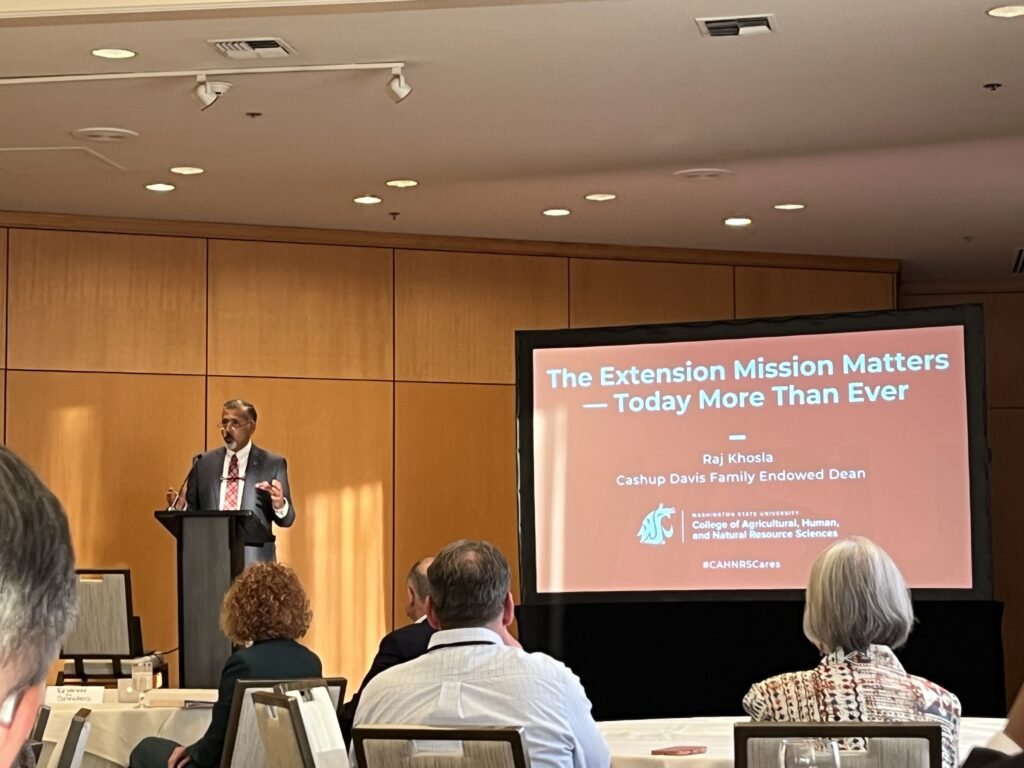
Later that day, I had the privilege of welcoming delegates from all 50 states and six U.S. territories to the National Extension Directors and Administrators Annual Meeting in Seattle. I shared a message that is fundamental to who we are: Extension remains one of the most powerful expressions of the land-grant mission and one of the greatest forces for good in modern society. I was especially pleased to receive encouraging feedback from WSU Regent Jenette Ramos and Mary Snapp, corporate vice president of Microsoft Philanthropy and a National 4-H Council board member.
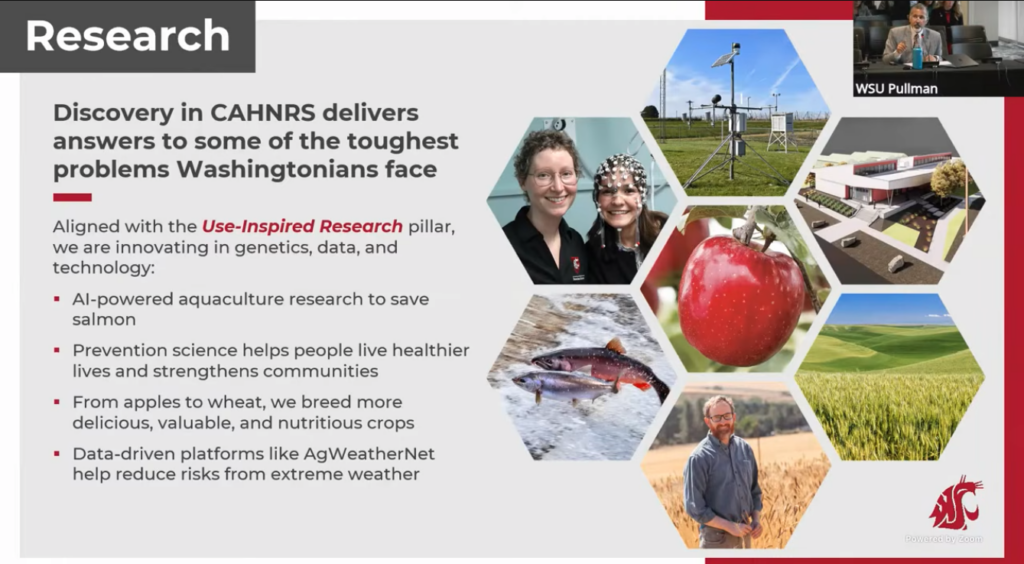
Our integration of teaching, discovery, and outreach truly epitomizes WSU’s land-grant mission. On September 17, I was invited to share that story with the Board of Regents as part of the Mission Moment series of college presentations. The discussion generated thoughtful questions and strong expressions of support, including appreciation for our continued engagement with communities, industries, and stakeholders throughout Washington. That engagement is essential because our mission comes alive wherever the people we serve live and work.
Building for the future also means investing in strong leadership. Together with Courtney Meehan, dean of the College of Arts and Sciences (CAS), I have tasked a search committee with finding the next director of the School of the Environment. We are seeking an accomplished leader who can advance the vision and opportunities of this unique dual-college school. Nancy Deringer, associate dean of CAHNRS Student Success and Academic Programs, and Keri McCarthy, associate dean of faculty in CAS, are serving as co-chairs of the search.
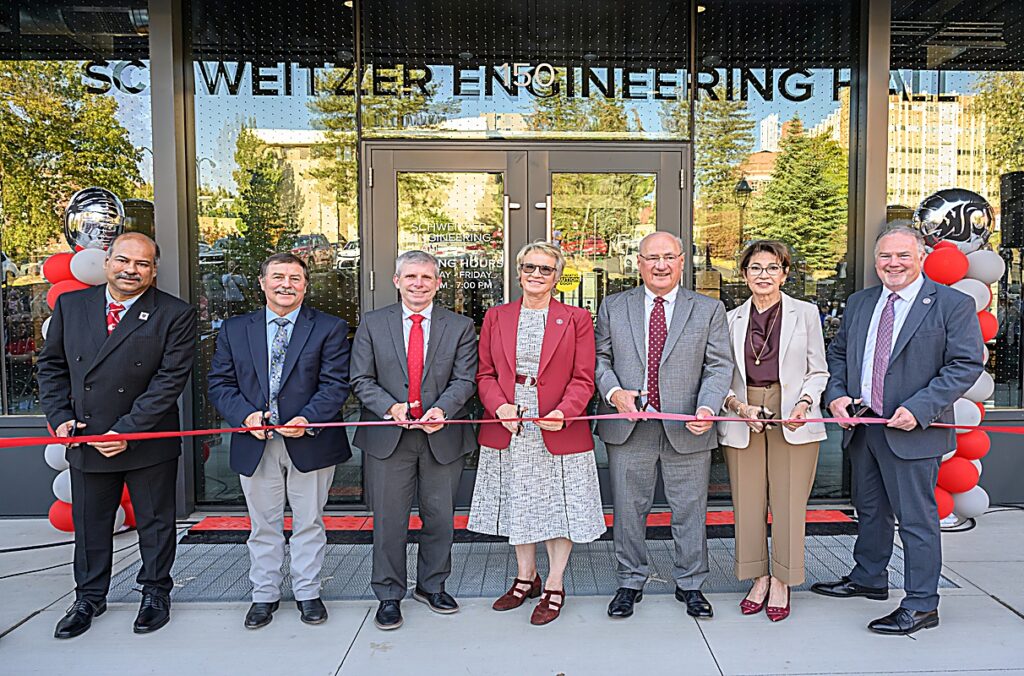
Our future is also taking physical shape through investments in spaces that enable discovery, learning, and innovation. I was delighted to join our colleagues at the Voiland College of Engineering and Architecture for the September 18 dedication of Schweitzer Engineering Hall. While there, I also had the opportunity to visit with State Sen. Mark Schoesler, a strong supporter of our mission.
More milestones are ahead. On October 14, I look forward to celebrating the dedication of the new USDA-ARS Plant Biosciences Building, followed on October 26 by the topping-off ceremony for the new Plant Growth Facility at Wenatchee TFREC. These facilities represent more than buildings; they are investments in people, ideas, scientific discovery, and the future of Washington agriculture.
Strong partnerships with Washington agriculture and our federal research agencies are a must for advancing our mission. On September 22-23, I joined President Cantwell, Provost Chris Riley-Tillman, the WSU Federal Relations team, WSDA leadership, and representatives of leading Washington commodities for the 2026 agricultural advocacy visit in Washington, D.C.
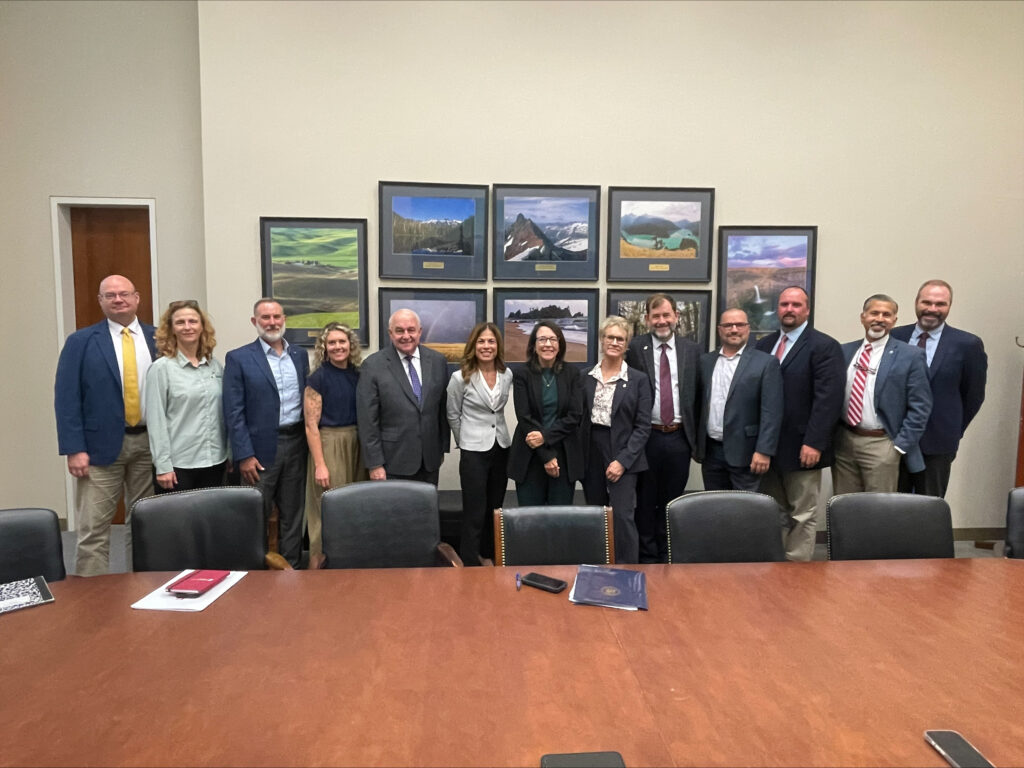
Together, we met with U.S. Senators Maria Cantwell and Patty Murray; Rep. Kim Schrier; staff for Reps. Michael Baumgartner, Marie Gluesenkamp Perez, Dan Newhouse, Rick Larsen, Suzan DelBene, and Marilyn Strickland; USDA-ARS Administrator Joon Park; Chief of Staff to the Deputy Secretary for Food, Nutrition and Consumer Services Jen Tiller; USDA APHIS Administrator Kelly Moore; and other agency leaders. These conversations highlighted the impact of federally supported research that delivers for Washington growers, communities, and consumers, while underscoring the importance of timely action on high-priority research proposals. When Washington agriculture, WSU, and our federal partners speak together around shared priorities, we amplify both our voice and our impact.
Volunteer advisors play an important role in keeping our programs relevant and responsive. On September 24, I enjoyed meeting with the School of Food Science External Advisory Council, followed on September 26 by a meeting with the newly established advisory board for Forest Ecology and Management. I shared updates on the broader CAHNRS mission with both groups. With our food science advisors, it was particularly rewarding to highlight successes that have grown from their earlier recommendations and to invite them to join us in strengthening the school’s partnerships with industry and the private sector.
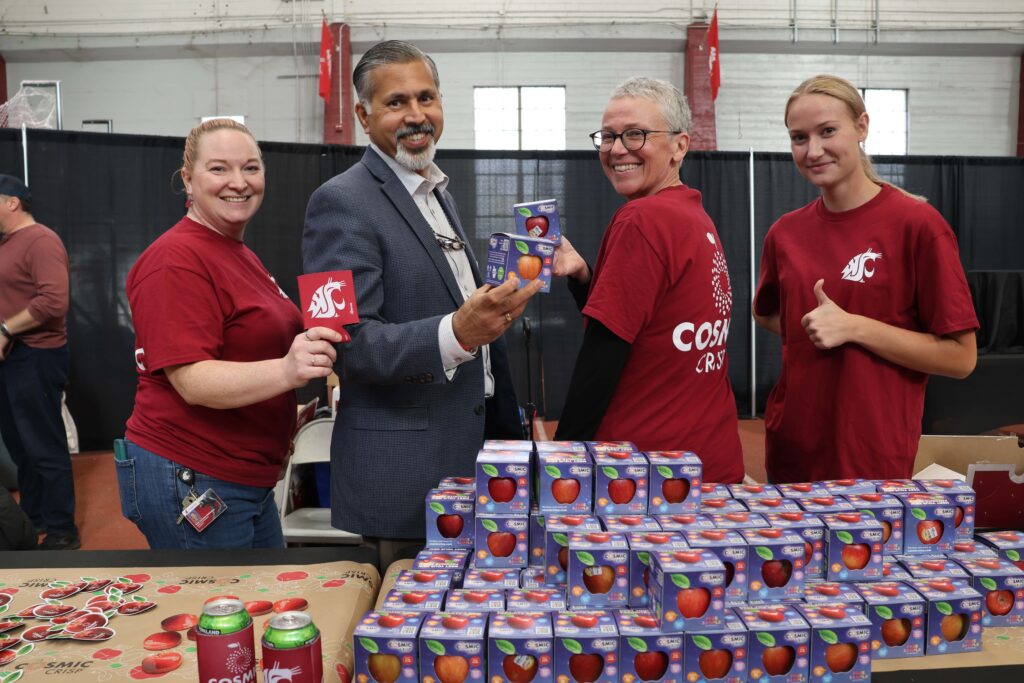
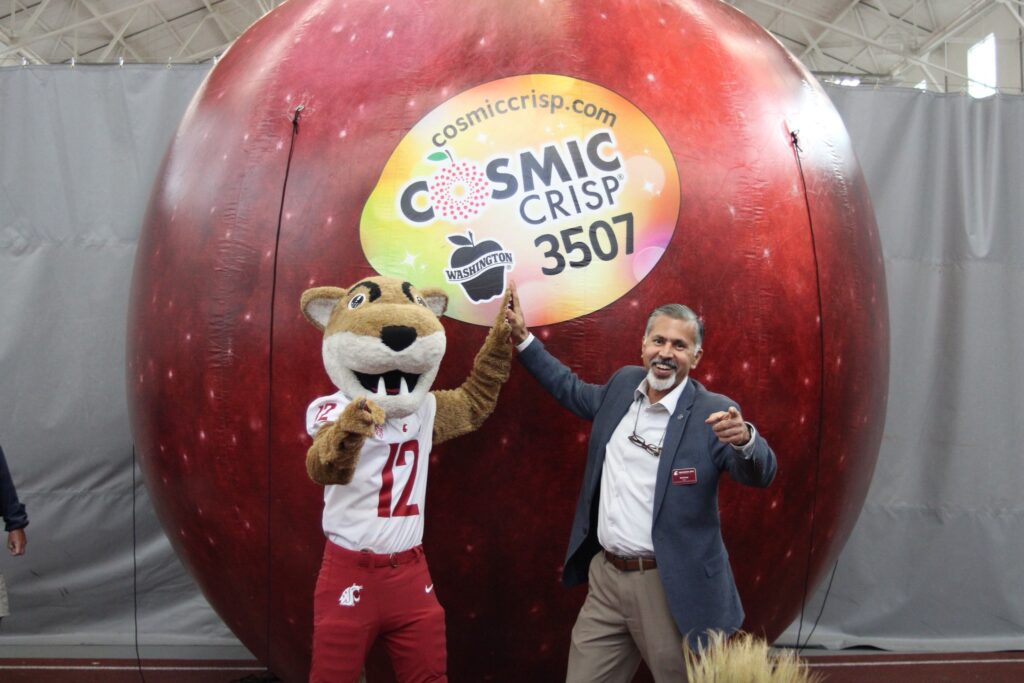
I had a great experience meeting proud Cougar alumni, student club members, and colleagues at the first fall Harvest Market held September 25 at Hollingbery Fieldhouse. Be sure to check out Ag Innovation Weekend, which includes a second Harvest Market, tractor parade, interactive machinery display, President’s Tailgate, and more, October 2 and 3.
One of the privileges of serving as dean is bringing people to the table who believe deeply in CAHNRS and can help advance its future. This month, I met in Spokane with Dan Bernardo, provost emeritus, former interim president, and former CAHNRS dean, and in Washington, D.C., with Ray Crabbs, co-chair of the CAHNRS Campaign Council. Our conversations focused on a simple but important question: How can we bring our collective experience, relationships, and passion together to create even greater opportunities for CAHNRS? I am grateful for Ray, Dan, our forestry and food science advisors, and the many partners who share their expertise, time, and energy with us.
That is the power of the CAHNRS mission. We bring people together around a shared purpose, build partnerships around possibilities, and translate those possibilities into meaningful impact for Washington and the world.
Kudos Corner
Congratulations to Lee Kalcsits, who was appointed director of the Wenatchee Tree Fruit Research and Extension Center effective October 1. His leadership, research excellence, and strong engagement with industry and stakeholders are a tremendous asset to CAHNRS.
Kory Floyd, professor and chair of the Department of Human Development, will receive the National Communication Association’s Distinguished Scholar Award at the group’s 112th annual convention in November.
Congratulations to Elizabeth Weybright, professor in the Department of Human Development, whose Northwest Rural Opioid Technical Assistance Collaborative team has received nearly $2 million in support from the Substance Abuse and Mental Health Services Administration to support improved rural behavioral health.
Congratulations to the Departments of Horticulture and Human Development. Their bachelor’s degree programs are being recognized as part of the university’s 2026 Celebration of Assessment Excellence. Kudos to assessment leaders Robby Cooper, Debbie Handy, and Kory Floyd in human development, and Cameron Peace and Stephen Ficklin in horticulture.
Raquel Venegas, a doctoral student at Prosser IAREC mentored by Professor Markus Keller in the Department of Viticulture and Enology, received the Continuing & Professional Education Scholarship from the Women of the Vine & Spirits Foundation. She will use the award to attend an international scientific conference in 2027.
Until next time, Go Cougs!
Sincerely,
Raj