This past week, I had the distinct privilege of personally delivering tenure and promotion letters to all sixteen CAHNRS faculty members advancing in rank for 2026. Moments like these stand among the very best I have experienced in my role as the dean of our college. One interaction in particular has stayed with me. A rising star in our college shared with genuine emotion, “It has been my dream since I was five years old to become a professor.” Along his journey, there were times he questioned himself, and he was overjoyed to receive this news. Tenure and promotion do not just happen automatically—it takes years of sustained excellence, impactful scholarship, meaningful engagement, and demonstrated accomplishment to get there. To each of our colleagues who advanced this year—congratulations and thank you. Your work elevates our entire college. You make us proud.
Over the past three decades of my career in higher education, I have had opportunities to visit over forty land-grant institutions across our country. Those experiences have given me a good sense of what to expect when I walk into an academic department. And yet, the CAHNRS departments I visited over the last two weeks stand apart in remarkable and inspiring ways. At the top of that list is the Department of Biological Systems Engineering (BSE), whose faculty, staff, and students welcomed me for a tour on February 9. I was struck by the incredibly high level of research underway in the conversion of biomass to energy. I visited multiple labs advancing research on sustainable aviation fuels—low-carbon, renewable jet fuels derived from agricultural residues and waste oils.
Department Chair Manuel Garcia-Pérez led our group to a former WSU poultry farm now transformed into a living laboratory for biomass conversion and bio-products. There I met graduate students, postdocs, and research scholars who work on turning raw waste into fuel and useful chemicals. Their work aligns powerfully with the new biodigester planned for the Knott Dairy Center, expected to become operational in early 2027. Together, these efforts position WSU as a state-leading institution in biofuels development.
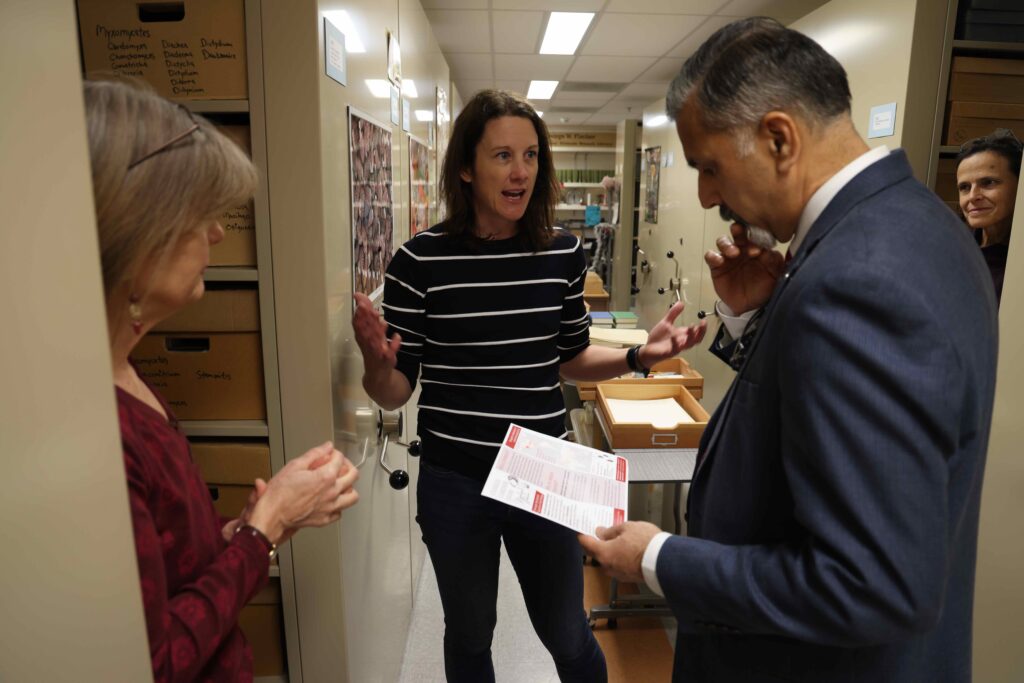
Three days later, on February 12, I visited the Department of Plant Pathology for a tour led by Distinguished Professor and Chair Lindsey du Toit. Again, I was impressed by a department pushing the boundaries of scientific discoveries. A standout was stepping into the Charles Gardner Shaw Mycological Herbarium, home to more than 76,000 fungal specimens. Assistant Professor Jana U’Ren and Collections Manager Monique Slipher guided us through this extraordinary archive. Dating back to 1915, the collection draws global visitors of all ages and is utilized by scientists from around the world who access fungi ranging in size from tiny spores to specimens more than a foot across. Located in the basement of Vogel Hall, this herbarium is quite literally one of WSU’s hidden gems, and it was a treat to meet these passionate scientists dedicated to sharing the wonders and diversity of the natural world. We must continue to amplify our message and tell our story so that hidden gems like the herbarium are no longer a secret.
The Department of Plant Pathology is also distinctive in its strong partnership with USDA-ARS. A sizable portion—eight of nine adjunct faculty, out of twenty-two total—of the department’s team are USDA-ARS scientists. These colleagues work within a separate organizational structure, yet are fully aligned with our mission and impact. The depth of the collaboration I saw is exceptional and will only grow with the upcoming completion of the USDA-ARS Plant Sciences Building on the Pullman campus later this year. Our nearly ninety-five-year WSU-USDA partnership is foundational, and we have a responsibility to support, nurture, and enhance our shared mission and impact. I am also looking forward to welcoming our newest plant pathologist, Vinicius Garnica, who will join us this June to advance research, teaching, and Extension in potato pathology. His lab will be based in Vogel Hall, adding another competency to WSU’s leadership in plant health.
Speaking of partners, I was also pleased to meet with the Whitman County Wheat Growers during their February meeting at Colfax, Washington. Their engagement and curiosity about the priorities CAHNRS is pursuing under my leadership was affirming. Our growers are essential stakeholders in the success of our college, and I deeply appreciate their commitment to staying informed and involved. I encourage all our partners to continue their support of Washington State University—when WSU does well, CAHNRS does well.
On February 13, I had the opportunity to meet with the CAHNRS Marketing and Communications team—an exceptional group whose work often operates behind the scenes but is essential to our success. This team supports us across a wide spectrum of functions, including web services, digital accessibility, Extension publications, news and marketing, graphic design, videography, and photography. I was delighted to be able to sit down with this team for lunch to learn how their expertise advances our mission. They play a crucial role in making us visible—clearly, consistently, and compellingly to our stakeholders, to university leadership, to the state at large, and to each other.
On February 16, I visited the Department of Apparel, Merchandising, Design, and Textiles where I met with faculty, staff, and students whose efforts directly influence the textile, apparel, and fashion industries. There’s a world of amazing ideas that are transforming the clothing we wear and how it is made and merchandised, and AMDT is right at the center of it. AMDT students and scientists work alongside real-world industry leaders to test emerging technologies and develop critical skills needed for successful careers in this dynamic field. I am looking forward to presenting the Dean’s Choice Award and seeing students’ amazing creative potential on display in April during the annual AMDT Fashion Show.
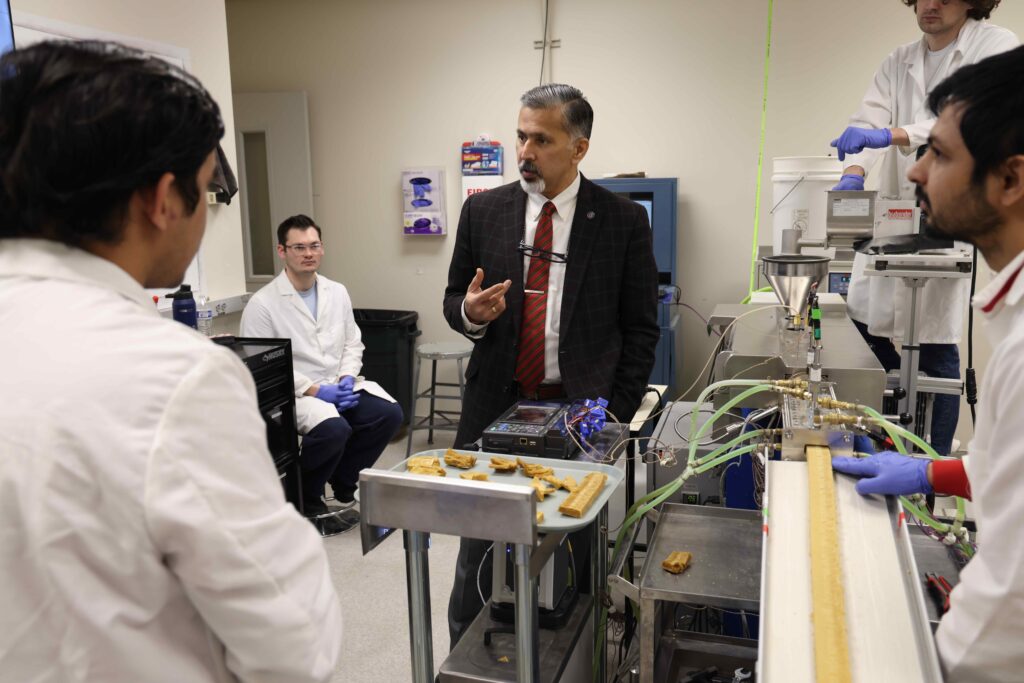
The following day, I toured the School of Food Science, visiting with researchers whose work touches one of the most fundamental aspects of human life: the food we eat. Their work spans sensory science and ingredient improvement to food processing technologies and microbiological food safety. Touring the labs and learning kitchens and seeing first-hand how our colleagues help make our food safer, more nutritious, and more economically sustainable, was truly inspirational.
Lastly, I want to extend my sincere appreciation to the more than 220 members of CAHNRS who joined me and Associate Deans Nancy Deringer, Vicki McCracken, Scot Hulbert, and Director of Finance Esther Kruse for the latest CAHNRS Town Hall on February 12. I was pleased that we were able to address the vast majority of questions on important and thought-provoking topics submitted in advance. As your dean, it’s my priority to provide consistent, transparent communication with all members of our college. With that commitment in mind, we will continue to hold town hall sessions twice each semester to keep our conversations active, our decision‑making visible, and our community connected.
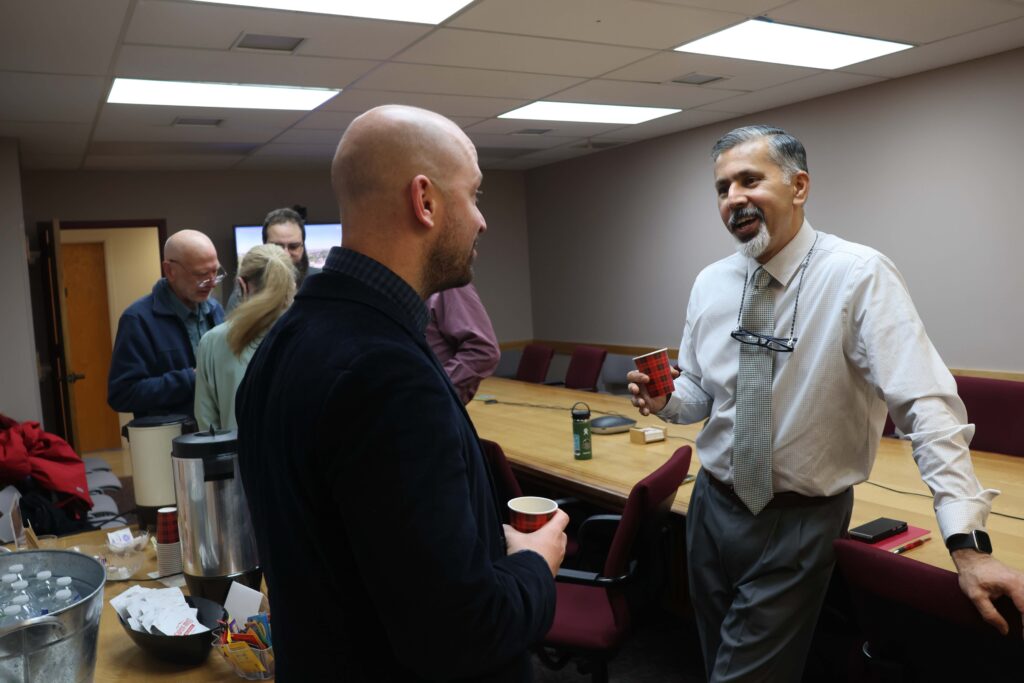
We will also continue hosting our monthly Coffee Beans with Deans gatherings. The latest hourlong session on February 18 drew close to thirty people. This gathering is your chance to share perspectives and ask questions of CAHNRS leadership. I hope to see many of you at the next session in March.
Kudos Corner
Wendy Sue Wheeler, director of the Pesticide Resources and Education Program and a member of the Department of Entomology, earned the Pesticide Stewardship Alliance’s President’s Award at the organization’s annual conference. The alliance’s highest honor, this award recognizes her outstanding leadership and involvement.
Congratulations to Kang Huang, assistant professor in Biological Systems Engineering, who received a $650,000 grant from the USDA National Institute of Food and Agriculture for new research on sustainable coatings to reduce spoilage and extend food’s shelf life.