We seem to be in what, for me, is that hectic time of the spring semester. The lively pace continues through mid-May. If your calendar is also filling up, you might want to block out some time to enjoy the Food and Agriculture Organization (FAO)’s International Day of Plant Health on May 12. The FAO website also shares a variety of interesting videos and resources.
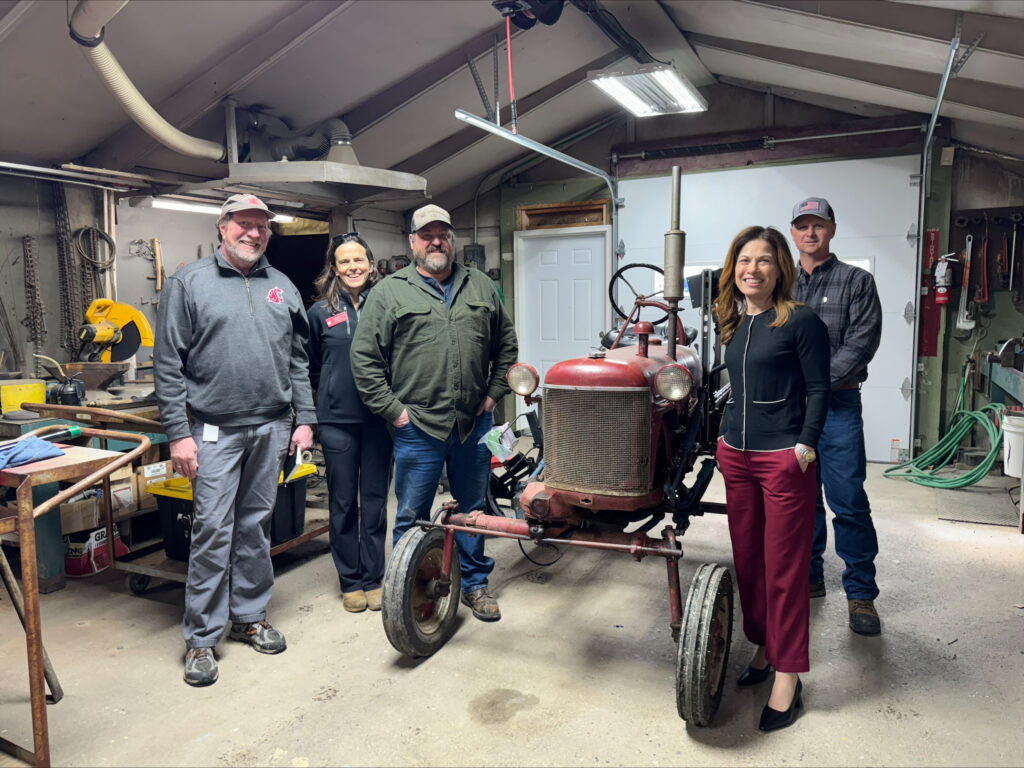
WSU Vice President for Research Kim Christen took time out of her busy schedule to visit the Mount Vernon Northwestern Washington Research and Extension Center (NWREC) on March 14 for an in-depth tour of the center and its research programs. Dr. Christen visited the Bread Lab and engaged with NWREC faculty, staff, and students conducting impactful research in vegetable seed pathology; berry and potato pathology; vegetable horticulture; soil health; soil and water; and turfgrass science. She also explored our labs, greenhouses, field research sites, and outbuildings, gaining a deeper understanding of our facilities and ongoing projects.
Markus Flury, a professor in the Department of Crop and Soil Sciences, has been traveling. Markus recently attended the 2025 American Association for the Advancement of Science meeting in Boston, where he spoke in a scientific session called “Do Microplastics in Agricultural Ecosystems Threaten Food Supply?” Markus presented an overview of microplastics and nanoplastics and represented WSU very well to a large international audience of scientists from multiple disciplines.
Last week I shared a bit about Jenny Roddewig, the last musher in the 2025 Iditarod to make it to White Mountain, where she pulled herself and her team out of the race. She made the difficult decision knowing that the next leg was the “blowhole” between Topkok Head and Bonanza Ferry bridge, often called the most dangerous stretch of the race because it is prone to whiteouts and 80 mph winds from the north. First timers like Jenny are advised not to pass this area alone because teams have drifted off course in the past. Even veteran mushers like Mitch Seavey, who finished his 29th Iditarod this year, said that the 2025 course was the longest and most challenging he has faced.
I thought a lot this past weekend about our pending budget reductions, trying to mull options, calculate savings, and anticipate impacts. It is a challenging time. It’s a time for us to stick together to get through the hard parts and consider accountability and efficiency while not forgetting collaboration and respect for one another.