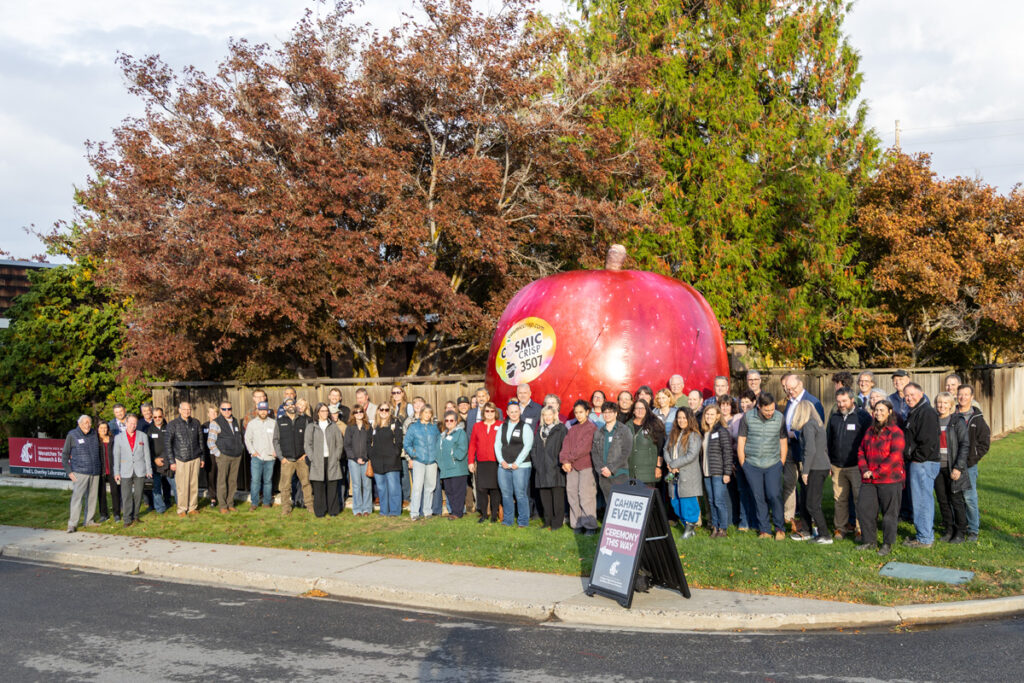
Monday, October 26.
CAHNRS stands at the intersection of tradition and transformation. Every day, our faculty, staff, students, and partners are advancing solutions that strengthen agriculture, steward natural resources, and improve lives across Washington and beyond. As we build upon a proud legacy of impact, we are creating new opportunities for discovery, innovation, and service that will shape the future for generations to come.
Over the last two weeks, our college celebrated two transformational infrastructure investments, decades in the making, that will expand our long-term capacity for discovery, innovation, and impact.
During the October 13-14 celebration of the completed USDA-ARS Plant Bioscience Research Building, it was an honor to host a delegation of leaders from across our state, region, and nation, including USDA-ARS Administrator Joon Park, multiple deputy administrators, Congressmember Michael Baumgartner, Senator Patty Murray, former Congressmember Cathy McMorris Rodgers, and state agricultural representatives. This facility stands as a powerful example of what is possible when federal partners, industry, and universities align around a shared vision. I extend my sincere gratitude to everyone whose dedication and perseverance helped bring this once-in-a-generation opportunity to fruition.
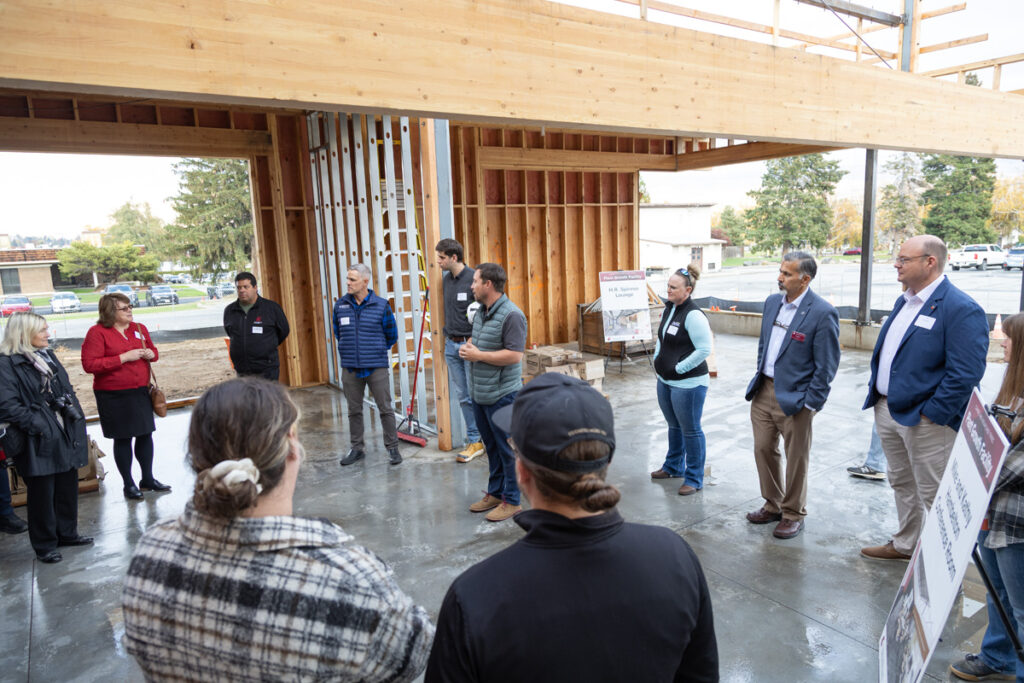
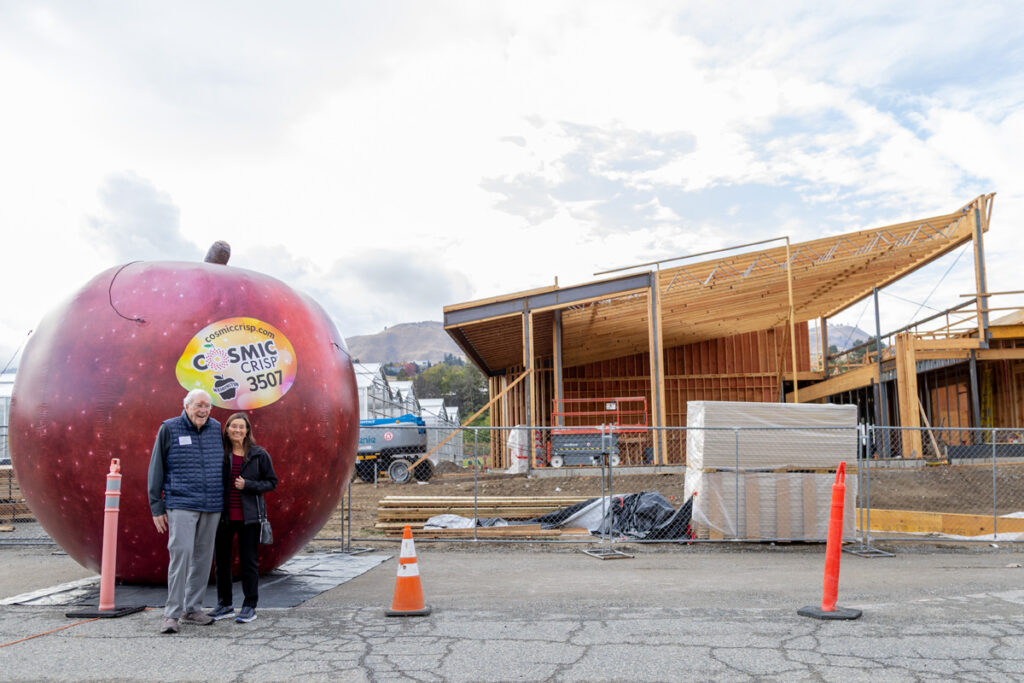
We also welcomed forward-thinking donors and leaders from Washington’s tree fruit industry on October 26 at the Wenatchee Tree Fruit Research and Extension Center to celebrate the mid-way point in the construction of the new Plant Growth Facility. Replacing 70-year-old greenhouses, this state-of-the-art facility will accelerate discovery, support next-generation agricultural innovation, and provide researchers with the tools needed to address emerging challenges and opportunities facing specialty crop production.
Our college benefits immensely from the Land Legacy Program, a visionary network of eleven working farms gifted to WSU in support of education, research, and outreach. The Land Legacy Council, which met on October 15, brings together farmers, ranchers, and partners who help guide stewardship of these extraordinary resources. Their commitment ensures that these lands continue to serve as living laboratories that advance our land-grant mission for future generations.
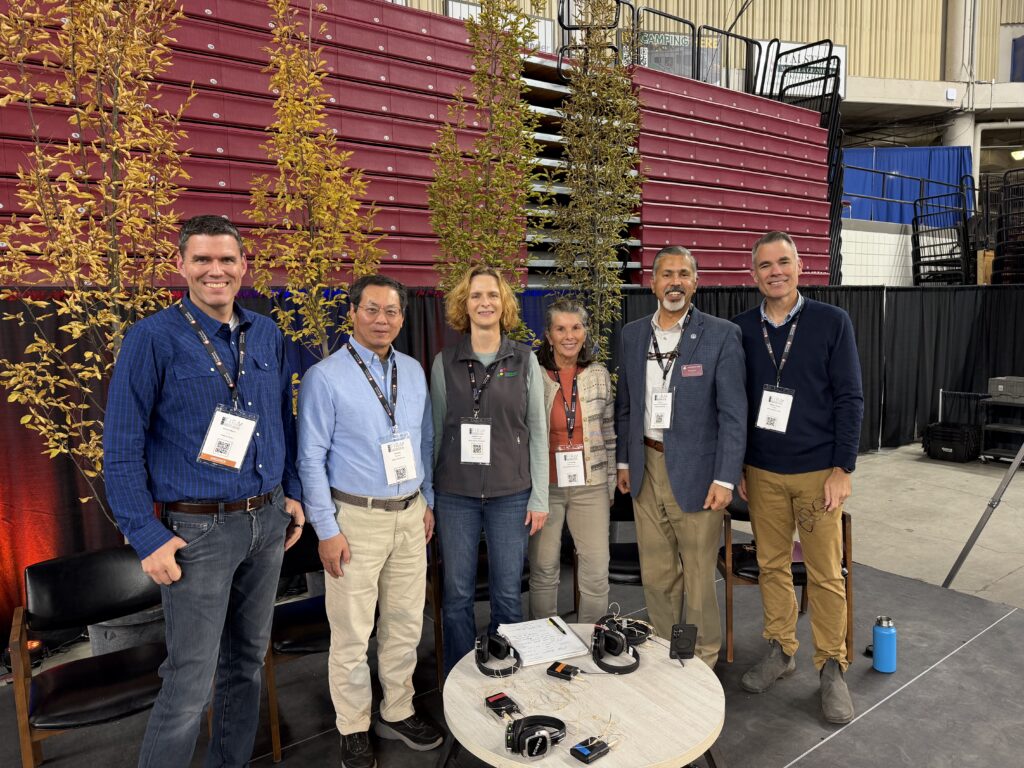
I was proud to join faculty members and Extension educators at FIRA USA, held October 20-22 in Yakima, Washington. As a strategic partner, CAHNRS helped convene innovators, industry leaders, K-12 students, and researchers from around the world to explore solutions to agriculture’s most pressing challenges. During the “Cultivating Innovation” panel, one message resonated strongly: Food security, sustainability, and agricultural resilience affect every one of us. Food does not simply appear on store shelves; it is the result of science, innovation, and the dedication of farmers. We all share a responsibility to elevate public understanding of agriculture and strengthen support for the people and systems that nourish our society.
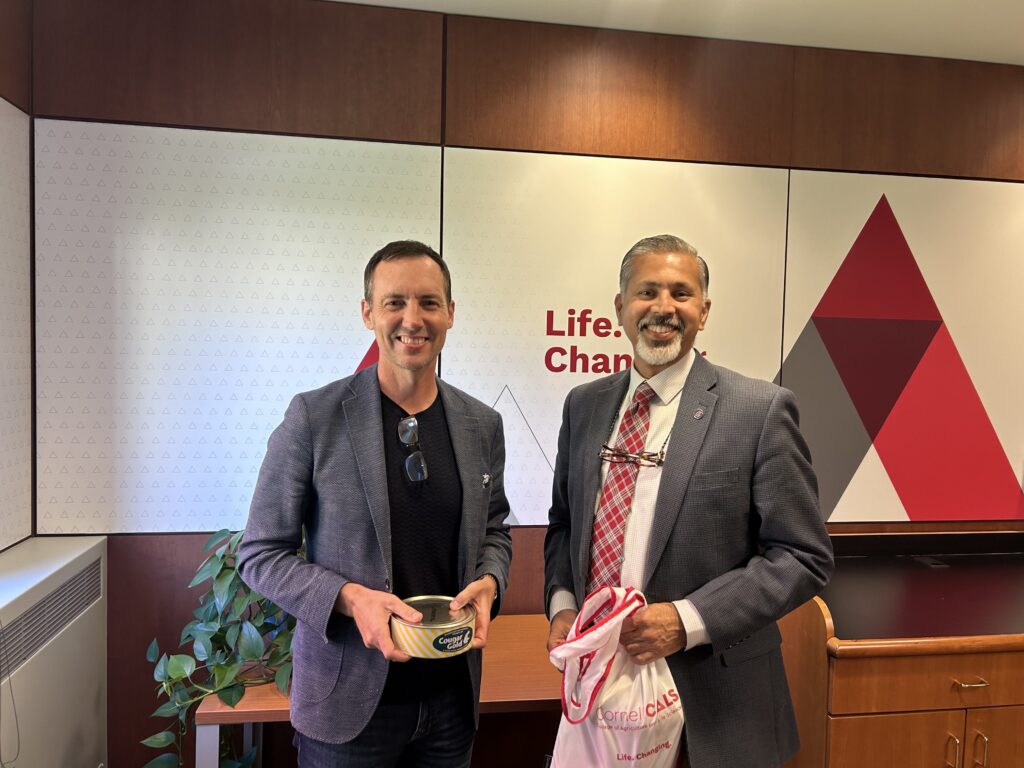
Planning continues for the proposed new school that would bring together the Departments of Crop and Soil Sciences, Horticulture, Plant Pathology, and Entomology, and the Institute of Biological Chemistry. To help inform this work, my Chief of Staff Krissi Hewitt and I recently met with colleagues at Cornell University and Virginia Tech who have successfully led comparable transitions. Their experiences highlighted an important lesson: While change can be complex, it also offers a powerful opportunity to build something stronger than what exists today. With a clear vision, thoughtful engagement, and a commitment to our shared values, we can create a structure that fosters deeper collaboration, amplifies our impact, and better positions CAHNRS to address the grand challenges facing agriculture, food systems, natural resources, and human well-being, now and in the decades ahead.
Our university is also advancing important conversations about its future through WSU’s Systemwide Redesign initiative. During the October 12 retreat hosted by President Cantwell and Provost Riley-Tillman, college leaders reviewed emerging action plans focused on strengthening institutional effectiveness, deepening regional engagement, and enhancing service to communities across the state. These discussions reflect a broader commitment to ensuring that WSU remains responsive, innovative, and impactful for generations to come.
The retreat also reinforced the importance of cultivating a culture that brings out the very best in each of us. The Cougar spirit is about being present for one another, offering support when it is needed most, and demonstrating a steadfast commitment to our community through our actions.
I encourage each of us to continue leading with respect, extending kindness, prioritizing safety, and fostering a culture of trust, collaboration, and belonging. Together, these values strengthen our community and position us to make an even greater impact across Washington and beyond.
Kudos Corner
Congratulations to Tatum Weed, newly appointed director of the WSU Mount Vernon Northwestern Washington Research and Extension Center (NWREC). Tatum is a dedicated leader who has served as acting director since April 2025 and has been associate director for both NWREC and Puyallup REC since 2017.
Jean Dodson Peterson was selected to serve as interim chair of the Department of Horticulture starting November 1. A professor and founding chair of the Department of Viticulture and Enology, she will provide leadership and continuity for the horticulture department during a time of transition. Thanks go to Stephen Ficklin for his service as chair since 2022.
Anna Warner, associate professor of agricultural education, was recognized by WSU’s Center for Civic Engagement for outstanding work promoting civic and community engagement. Through a partnership with the Palouse Empire Fair, Warner’s AgEd 110 students gained hands-on experience working alongside FFA and 4-H members.
Kudos to School of the Environment doctoral students Georgia Isted and Anastasia McConachie, who presented at the Washington Cooperative Fish and Wildlife Research Unit annual meeting in Seattle. McConachie won the Gilbert B. Pauley Award for best presentation for her talk on early-life exposure to 6PPD-quinone in coho salmon.
Kirti Rajagopalan, associate professor in Biological Systems Engineering, and colleagues from CSANR and the School of Electrical Engineering and Computer Science lead one of four ideas selected in the Washington State Academy of Sciences’ Growing with AI Call for Ideas. Their idea aims to develop an AI-powered tool that helps farmers prepare for climate change.
Kudos to our faculty who secured over $2.4 million in newly announced WSDA Specialty Crop Block Grants, including Landon Charlo, Michelle Moyer, Scott Harper, Tianna DuPont, Rui Liu, Tim Waters, Meijun Zhu, Lisa DeVetter, Kate Evans, Matt Whiting, Carol Miles, Suzette Galinato, Markus Keller, and the WSU Food Systems Program.
Until next time, Go Cougs!
Sincerely,
Raj