One of WSU’s greatest strengths is that our mission is larger than any one college. The challenges we seek to address, from food security and environmental stewardship to workforce development and community well-being, are broader than organizational boundaries. They require collaboration, shared expertise, and a commitment to working across disciplines.
At CAHNRS, we are proud to partner with colleagues throughout WSU to educate students, advance discovery, and deliver solutions that improve lives and livelihoods across Washington and beyond. Much of this important work happens behind the scenes, but its impact is felt every day.
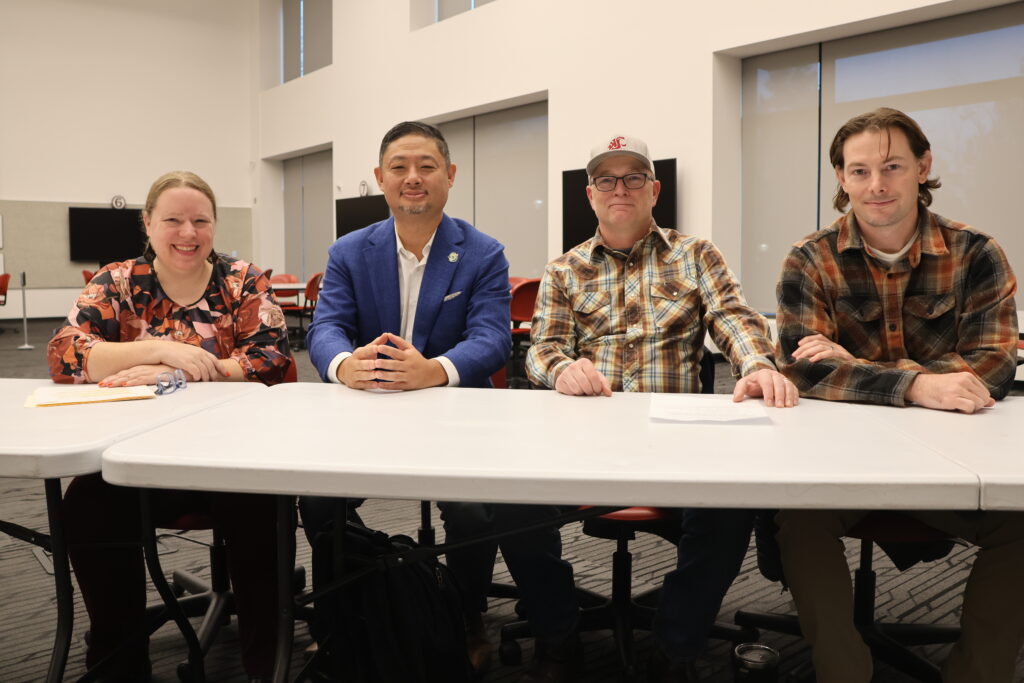
One example is our collective commitment to supporting first-generation college students. Our Student Success team, recruiters, academic advisors, faculty, and student organizations are part of a university-wide network dedicated to helping students succeed and thrive. That commitment was highlighted during WSU’s First-Gen Celebration Week, November 2-6, which included conversations led by School of the Environment faculty members Mark Billings and Austin Himes, who shared insights about meaningful careers in forestry, public lands, and environmental equity.
First-generation students represent the future of higher education and the future workforce. Here in CAHNRS, 37 percent of our students are first-generation, and more than 41 percent of our incoming students identify as first-generation. These numbers remind us that expanding access and opportunity is not simply an aspiration. It is part of our responsibility as a land-grant institution. I am deeply grateful to everyone who helps these students feel supported, connected, and positioned for success.
Another valued partnership is with the College of Veterinary Medicine (CVM). I recently met with Dean Dori Borjesson to explore opportunities for even stronger collaboration, including expanded access to hands-on learning experiences for veterinary students. These conversations reflect a shared commitment to preparing the next generation of professionals while strengthening the connections between our colleges. I am also honored to help identify leadership that will advance our collective mission by serving as co-chair of the search process for CVM’s next dean.
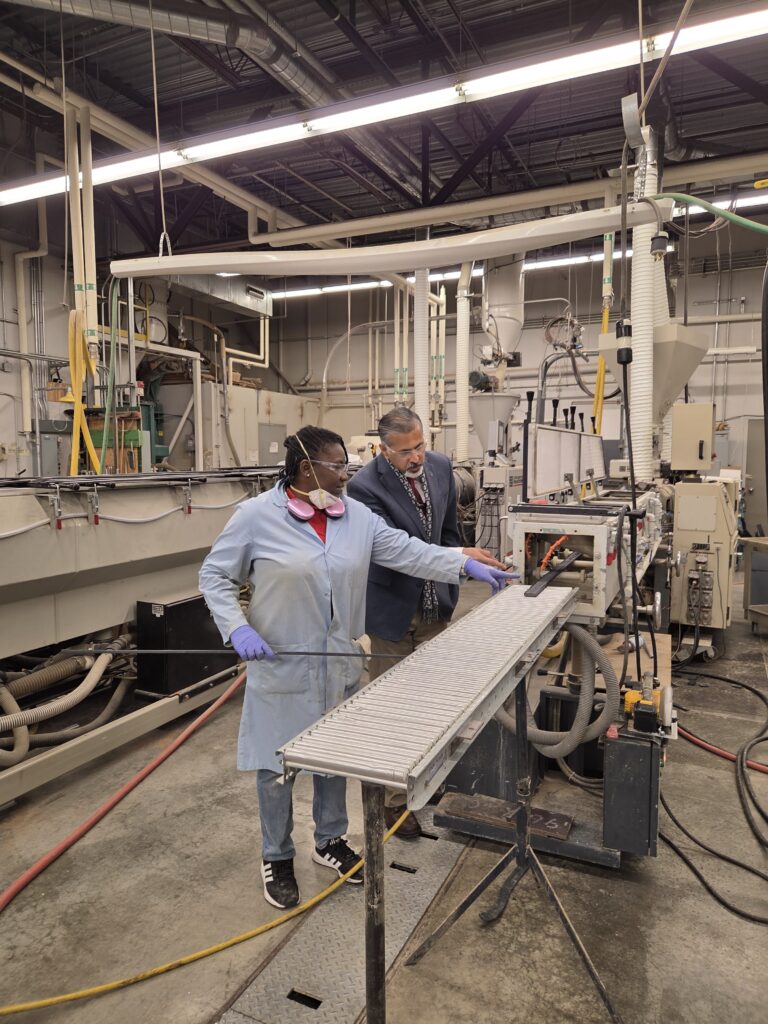
Collaboration also drives innovation. The Composite Materials and Engineering Center (CMEC) is a remarkable example of the long-standing partnership between CAHNRS and the Voiland College of Engineering and Architecture. During a recent visit with Professor and CMEC Director Vikram Yadama and his team, I saw firsthand how researchers are transforming agricultural and industrial byproducts, from plastic mulch to hazelnut shells, into innovative building materials and climate-smart products. This is the power of interdisciplinary research: We can turn today’s challenges into tomorrow’s opportunities while creating economic and environmental benefits for society.
We are likewise working closely with colleagues in the College of Arts and Sciences, the Voiland College of Engineering and Architecture, and the Office of Research to explore future investments in the Franceschi Microscopy and Imaging Center. For more than six decades, this world-class facility has enabled discovery by providing researchers and students with powerful tools to explore questions beyond the limits of human sight. Strategic partnerships such as these ensure that WSU remains at the forefront of scientific innovation and education.
On November 4, I joined colleagues from across the university at the Faculty & Staff System Forum hosted by President Elizabeth Cantwell. The message was both clear and timely: Higher education is operating in a new environment, and our continued success depends on our willingness to embrace change, think differently, and align our resources with our highest priorities. The conversation reinforced that change is not about doing less, but about creating the capacity to do our most important work even better in service to our teaching, research, and Extension mission.
That message resonated deeply because CAHNRS has already undertaken two significant initiatives that align closely with this vision. Through BOOST (Business Operations Optimization and Strategic Transformation), we are reimagining how we deliver administrative and operational support to improve effectiveness, efficiency, and service across the college. At the same time, we are advancing the creation of a new school that will bring together five academic units into a stronger, more collaborative structure designed to elevate academic excellence, expand opportunities for students, strengthen research innovation, and amplify our impact across Washington and beyond. These efforts reflect a simple but important belief: By embracing thoughtful change today, we position ourselves to better fulfill our land-grant mission tomorrow and build an even stronger future for CAHNRS.
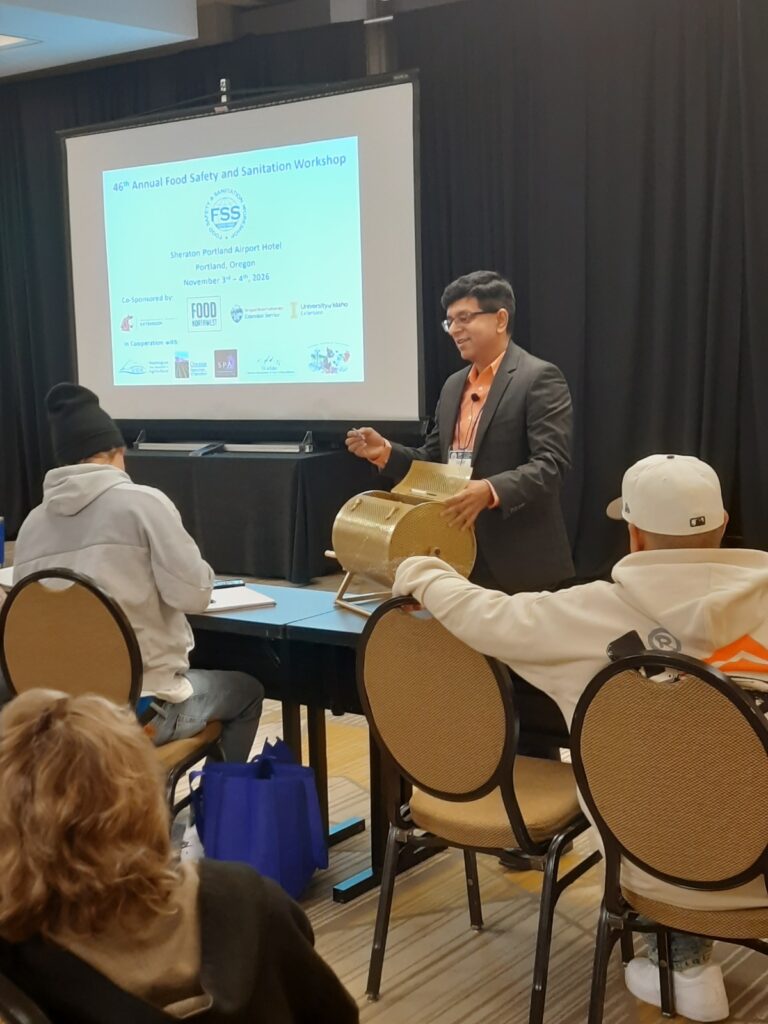
Our collaborations extend well beyond campus. On November 4, I attended the Food Safety and Sanitation Workshop in Portland, Oregon, led by Professor Girish Ganjyal and WSU’s Food Processing Extension Program. The largest U.S. food safety workshop organized by any land-grant Extension program, this event focused on practical solutions and brought together about 300 industry partners, regulators, universities, line-workers, and food processing professionals. What impressed me most was the immediacy of its impact. Participants left with knowledge and tools they could apply immediately in their workplaces, helping strengthen food safety systems and support communities throughout the region. This is Extension at its best: connecting knowledge to action and delivering tangible public benefit.
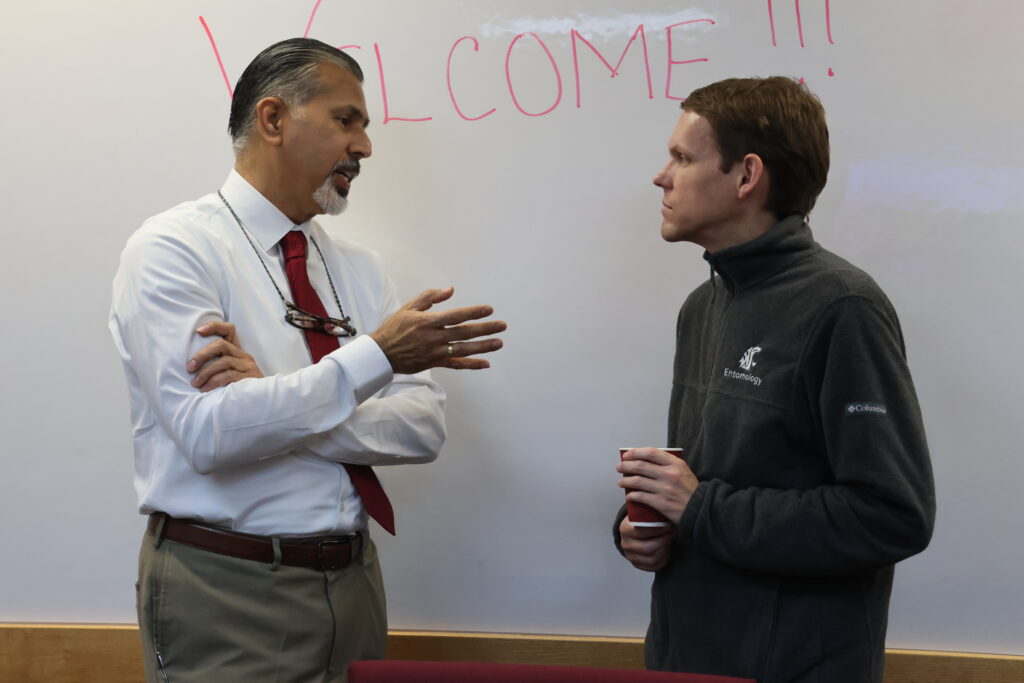
At the same time, we continue to strengthen connections within our own college community. The recent Coffee Beans with Deans gathering brought together colleagues from across CAHNRS, including many first-time attendees. These opportunities to connect, listen, and learn from one another help foster the sense of community that makes our college stronger. That collaborative spirit is central to the success of CAHNRS, and it is essential to fulfilling the mission of WSU. Together, we are educating future leaders, advancing knowledge, strengthening communities, and creating solutions that improve lives.
Finally, as we honor Veterans Day this week, I want to express my sincere gratitude to all veterans within the CAHNRS community and WSU. Thank you for your service, sacrifice, and commitment to our nation. We are proud to count you among our colleagues, students, alumni, and friends.
Kudos Corner
Jennifer Duckworth, associate professor in the Department of Human Development, is co-leading the development of tools that reduce cannabis-related driving risks in young adults. Her work was recently funded by a $132,443 award from the National Safety Council.
The WSU Sensory Science Center is celebrating its 20th anniversary. View a video showcasing memories from panel participants.
Kudos to Extension Specialist Patricia Townsend and other members of the Extension- and School of the Environment-supported Washington State Naturalist Program. It was named Program of the Year by the Alliance of Natural Resource Outreach and Service Programs.
Tessa Berendsen, a CAHNRS intern in the Small Fruit Horticulture Program at the Northwestern Washington Research and Extension Center, won the undergraduate poster competition at the 2026 WSU Plant Science Symposium for her work comparing raspberry cultivar responses to acute and chronic heat stress. Kudos to co-authors Micah Evalt and Brian Maupin for their contributions to Tessa’s work.
Until next time, Go Cougs!
Sincerely,
Raj