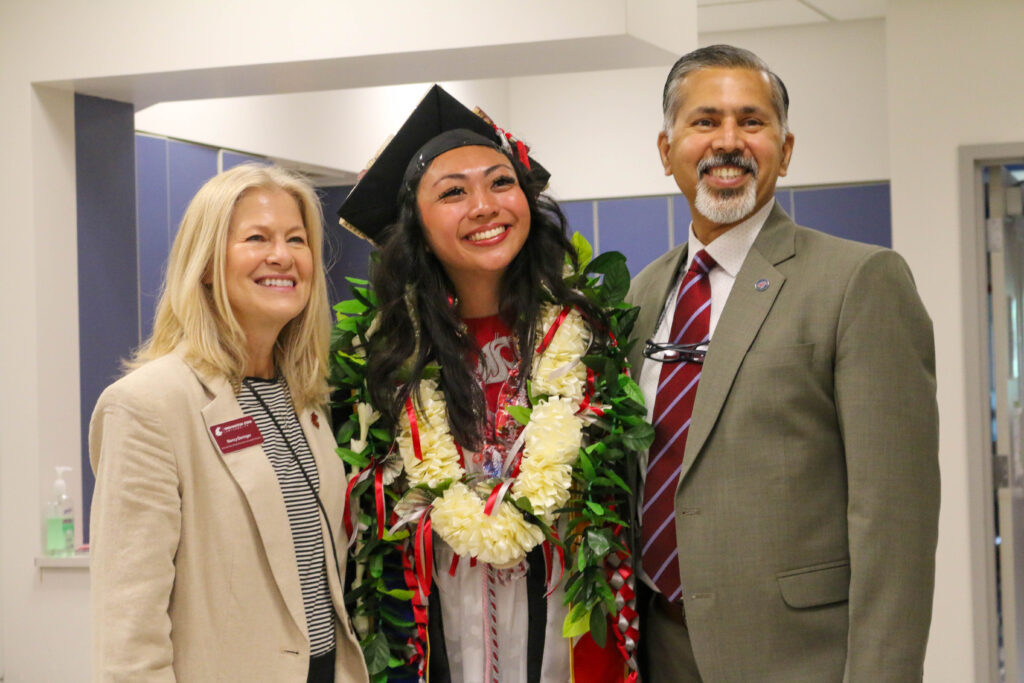
As we bring this academic year to a close, we do so with a deep sense of pride and purpose. The past weeks have been filled with powerful moments not only for me as dean, but for our entire CAHNRS community. While classes have concluded for the summer, our work, grounded in discovery, innovation, and impact, continues without pause.
WSU Commencement, held on May 9 at Beasley Coliseum, was profoundly moving. Words cannot easily express what I felt standing on that stage and conferring degrees to more than 180 graduates. I was reminded that our work extends far beyond classrooms and laboratories. It transforms lives and livelihoods. It shapes futures. It strengthens communities. What we do truly matters.
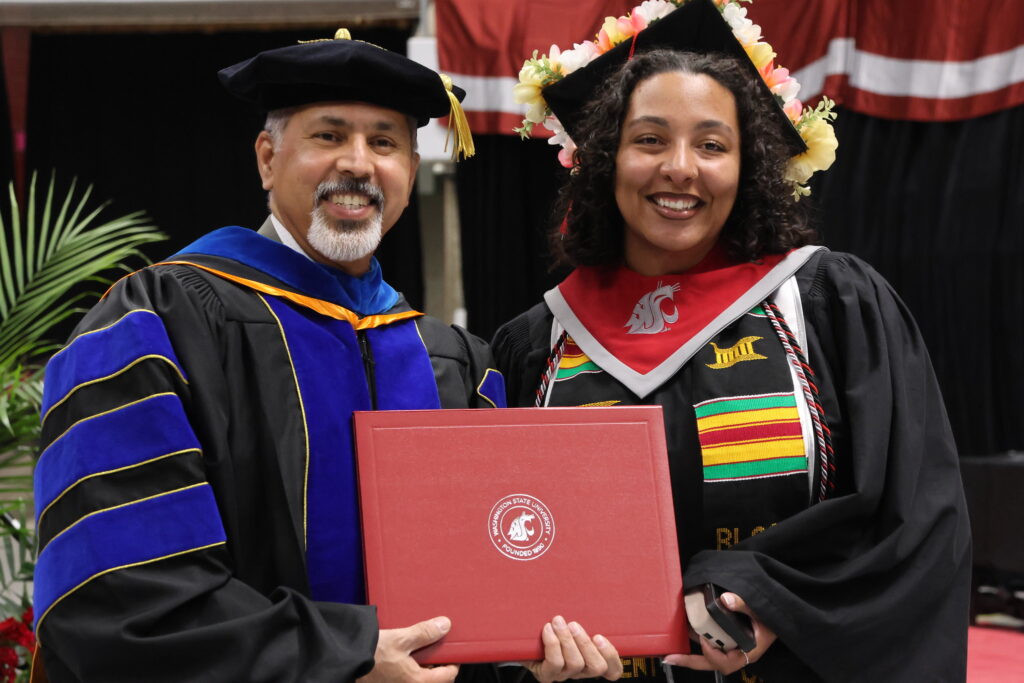
Across our departmental celebrations, I had the privilege of witnessing the joy and pride of students and their families in the Department of Animal Sciences and the School of Food Science. I watched students’ and parents’ eyes light up as they shared their experiences from the past four years. The gratitude expressed through handshakes, conversations, and shared memories made clear that these milestones are more than personal victories; they are collective accomplishments for families and our entire community.
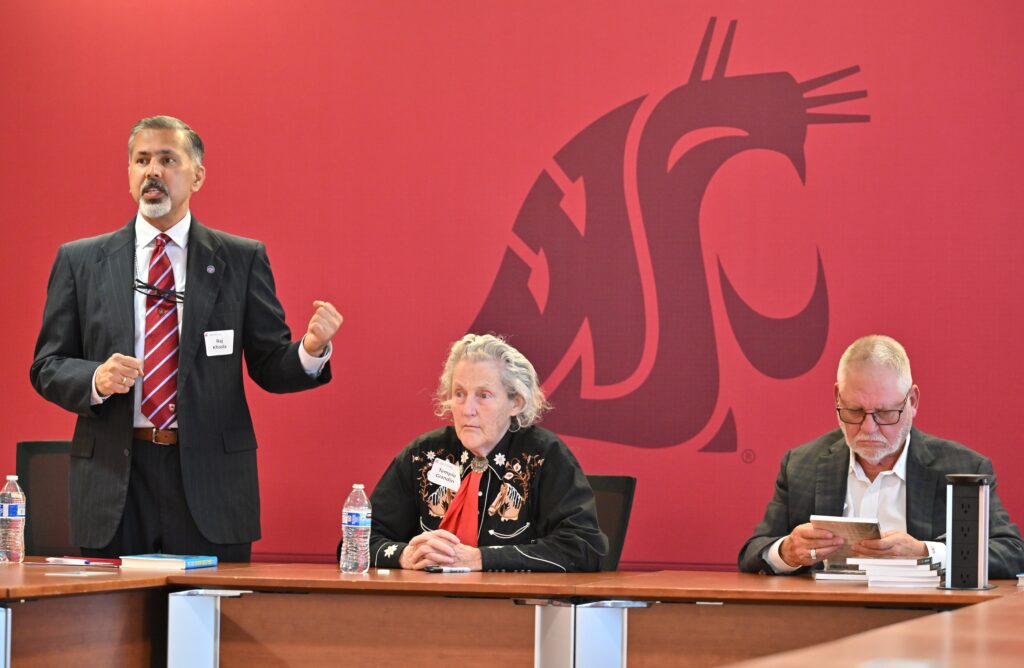
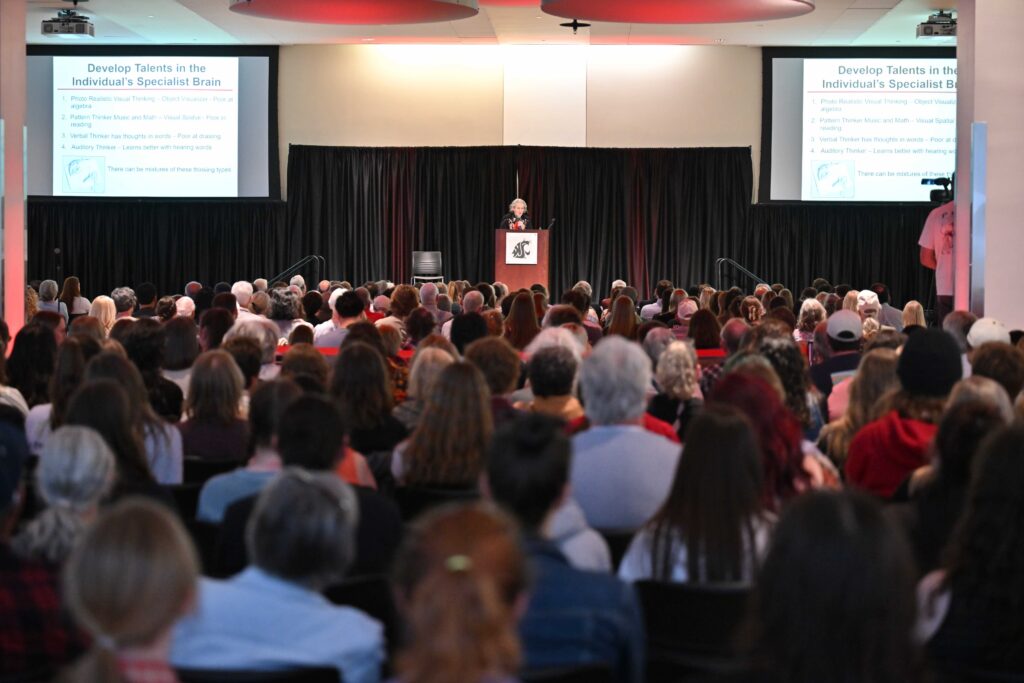
Earlier that week, on May 6, we launched the inaugural Cashup Davis Family Endowed Dean’s Distinguished Lecture series. Hosting Dr. Temple Grandin, world renowned author, inventor, and autism advocate, was both an honor and a humbling experience. Her message about the importance of diverse perspectives and ways of thinking resonated with tremendous impact, drawing more than 1,000 attendees. This landmark event was made possible through the extraordinary generosity of alumnus Gordon Davis and the Davis family. Their vision and commitment support the college and continue to elevate what is possible at CAHNRS. It was great to see Gordon again and welcome him to campus.
I joined WSU Regent Douglas Picha for a tour on May 4 of the Puyallup Research and Extension Center. We learned about a new, federally supported aquaculture resilience center, met faculty members Jen McIntyre, John Stark, Michael Phelps, Anand Jayakaran, and REC Director Todd Murray, and left very impressed. I also met with Stacey Crnich, CEO of GoodRoots Northwest. This Pierce County nonprofit is interested in placing one of its innovative smart food lockers at the REC to help families access healthy foods.
On May 7, I joined the Ag & Food Systems and Integrated Plant Sciences retreat with faculty in horticulture, crop and soil sciences, entomology, and plant pathology for conversations on innovation, adaptability, and strategic growth. I invited this team to think boldly and act decisively, embracing change while remaining grounded in excellence. I encouraged them to consider every idea as we build the next generation of impactful programs.
At the same time, we continue to strengthen interdisciplinary collaboration across the university system and through external partnerships. I met with Associate Professor Laura Bartley and Professor David Crowder, champions of the interdisciplinary Molecular Plant Sciences program, to discuss its history, impactful graduates, and strong alumni network. I also met with Tammy Barry, dean of the Graduate School and vice provost for graduate education, as I seek collaborative ways to work with the Graduate School and other colleges across the WSU system to support interdisciplinary programs and more.
Celebrating student achievement remains central to our mission. At the CAHNRS Honors event, we recognized the exceptional accomplishments of students who earned a place on the Dean’s Honor Roll with a GPA of 3.5 or higher. These students’ dedication and academic excellence reflect the very best of CAHNRS, and it was inspiring to see so many families join in honoring their success.
Our college continues to invest significantly in critical infrastructure and long-term sustainability. The Board of Regents’ approval of the $13.5 million WSU Creamery revitalization project marks a transformative step forward. This investment will modernize our capabilities and expand opportunities for student learning, research, and industry engagement.
Looking ahead, we remain focused on ensuring that our people and our infrastructure are positioned for continued excellence. Collaboration with campus partners in facilities and operations is essential as we grow and invest in our future. I met Olivia Yang, associate vice president for Facilities Services, and invited her to a follow-up visit with college leadership.
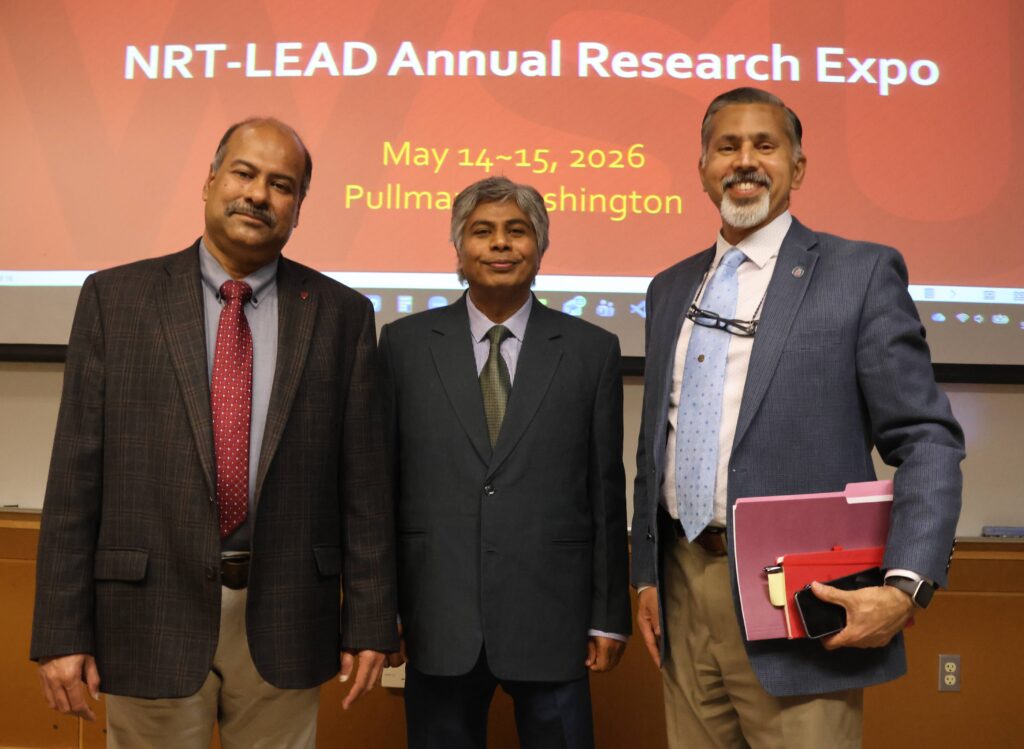
I was also pleased to give concluding remarks May 15 at the research expo of the NextGen Robotics Training Leadership, Entrepreneurship, and Adaptive Design program. Funded by the National Science Foundation, this program helps graduate students prepare to lead in emerging technologies such as robotics and autonomous systems. Their innovation exemplifies the interdisciplinary strength of CAHNRS and our role in shaping the future of science and technology.
Finally, welcoming more than 2,900 students and guests to Pullman for the 96th Washington FFA Convention and Expo was a powerful reminder of our enduring connection to the next generation. For decades, CAHNRS and FFA have shared a commitment to leadership, learning, and service. Many of these young individuals will one day join our community and continue this legacy of excellence.
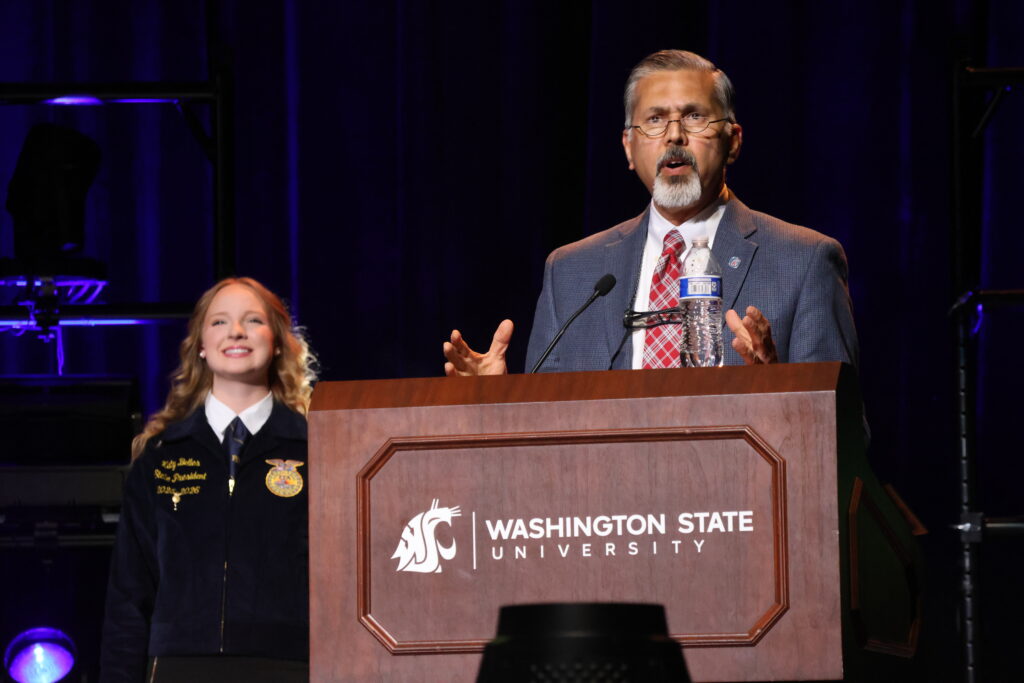
As we look forward, I am inspired by what we have accomplished together in this academic year and even more energized by what lies ahead. I am encouraged by the Board of Regents’ decision to limit the university-wide budget reduction to 1%, particularly in contrast to the 3%, 5%, and 10% reduction scenarios we examined earlier this spring. I also appreciate the thoughtful leadership of President Cantwell and Provost Riley-Tillman in advancing a strategic, differentiated approach, with reductions ranging from 0–15% across the university. Within this framework, CAHNRS has been asked to reduce its core budget by approximately $500, representing about 1% of our base budget. Thank you for your dedication, your creativity, your service, and your unwavering commitment to our mission. Together, we will continue to lead, to innovate, and to make a lasting difference.
Kudos Corner
Kudos to Sadikshya Poudel, doctoral student in crop and soil sciences and a newly selected member of the 2026 National Association for Plant Breeding Borlaug Scholars cohort. This nationally competitive program recognizes and supports outstanding future leaders in agricultural research.
Clara Hill, research associate in the Department of Human Development, was awarded $100,000 by the Washington State Health Care Authority for a fourth year of dissemination of the “Letting Go and Staying Connected” handbook. The goal is to reach at least 10,000 first-year students’ families across four universities this fall.
Impacts for improved bee nutrition by Priya Chakrabarti Basu and Brandon Hopkins in the Department of Entomology were highlighted as part of World Bee Day by the Association of Public and Land-grant Universities’ Board on Agriculture Assembly. View “From Hive to Habitat: How Land-Grant Universities are Protecting Bees” here.
Until next time, Go Cougs!
Sincerely,
Raj